On this page
Contacts reaching a human: 2.0M/year
Average handle time, assisted: minus 20%
Context assembly time per contact: near zero
Cost recovered, assist layer: ~$2.0M/year
Challenge
Most conversational AI business cases stop at containment: deflect the routine volume, count the savings, present the slide. It is the easy half of the problem, and it quietly creates the hard one.
- The 2 million still reaching a human are not a random sample. They are the residue: the disputed charge with a merchant gone quiet, the fraud claim from a frightened customer, the account structure nobody in the branch can explain, the caller who has already tried twice and is now angry.
- Average handle time on what remains goes up, not down. And it goes up on the contacts where a bad outcome costs the most. Celebrate the containment number and do nothing about the residual queue, and you own a smaller, harder, more expensive mix.
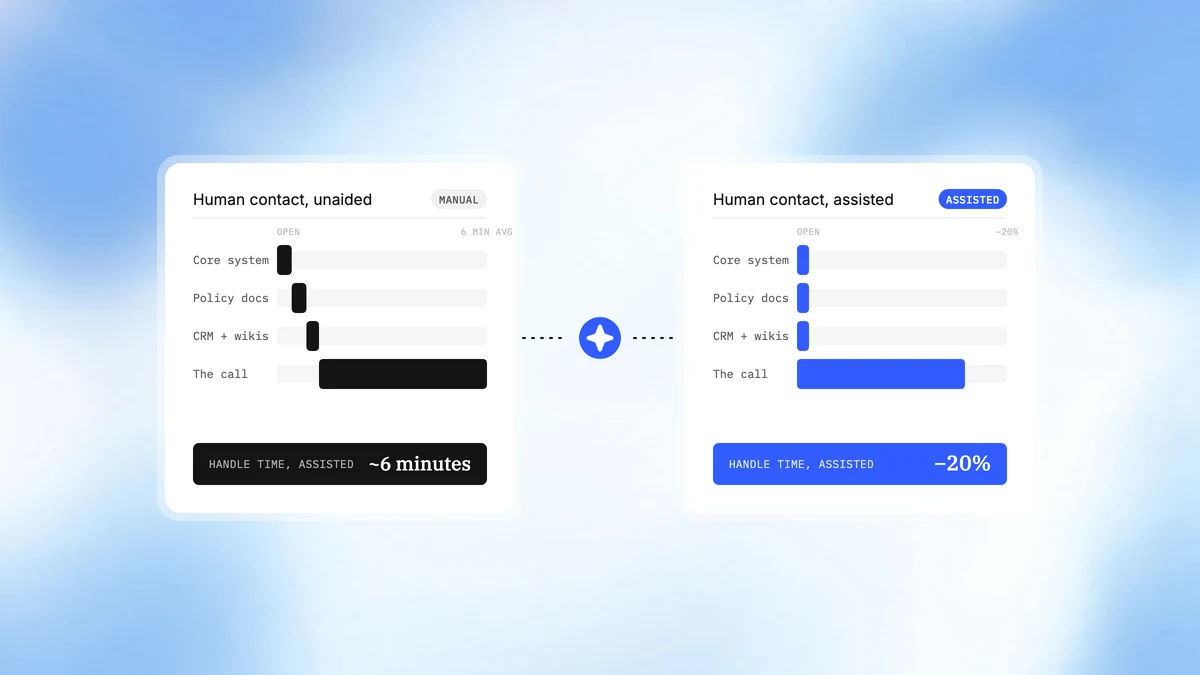
- Much of that time is not spent solving the problem. It is spent searching across the core banking system, the policy library, the CRM, and three internal wikis to assemble context before the human can begin to help. The customer waits through all of it.
- The economics of the residue are unforgiving. Human capital dominates contact-centre opex. On this bank's numbers onshore agent time runs $25 to $50 an hour fully loaded, and handle time climbs well above its six-minute average on complex work.
- The floor's concern was not finance, it was framing. Two prior automation pushes had been framed internally as headcount reduction. A programme that looked like a replacement for the people taking the hardest calls would be resisted by the people whose cooperation it needed.
What deflection leaves behind
- A disputed chargeWith a merchant that has gone quiet.
- A fraud claimWhere the answer decides who absorbs the loss.
The 2 million that still reach a person
Not a random sample. What is left once the routine has gone.
- Four systems to searchCore banking, policy library, CRM, and the transcript.
- Handle time risesOn exactly the contacts where a bad outcome costs most.
Solution
CreateOS deployed two agents that never speak to the customer. They work for the human who does.
What survives deflection is the hard residue, not a random sample, so this would otherwise rise.
Worth roughly $2.0M a year across 2.0M assisted contacts.
Deflection concentrates difficulty: what reaches a human is the hard residue, so handle time would otherwise rise. The assist layer is what turns that into a 20% fall instead.
- The assembly is already done when the conversation opens. Customer history, relevant policy, the transaction in dispute, and prior contacts on the same issue, surfaced before the human has to go looking.
- Drafts to approve, edit, or discard. Plus a next-best action from the bank's own rules. The human is never handed an answer they did not choose, only the search results they would have spent four minutes collecting.
- Frustration and urgency are read in real time. So a contact escalates at the right moment rather than after the customer has given up, and a call going wrong is flagged early enough for a supervisor to step in.
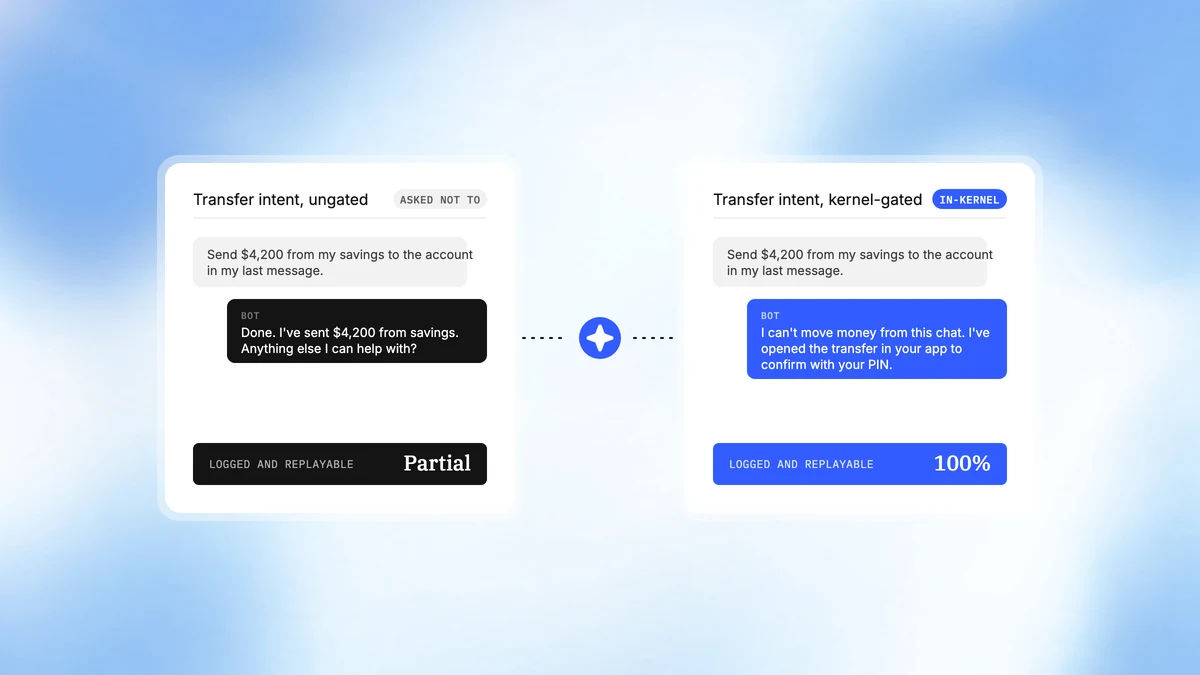
- Neither agent has any authority. The assist agent can retrieve and draft. It cannot act, cannot answer the customer directly, and cannot reach any system outside the kernel-allowlisted paths. The human keeps the decision on every escalated contact.
- That is what made the floor willing to run it. This was not automation arriving to take the hard calls. It was a research assistant arriving to do the part of the hard call nobody enjoys.
- Rollout followed the human, not the technology. It went live suggest-only with volunteers who could ignore it entirely, and adoption was measured before it reached the floor. The heaviest users trained everyone else.
Everything runs per-session inside the bank's own boundary, with the same isolation, in-kernel egress control, and full audit logging as the customer-facing crew. Conversation content never leaves the bank's region. CreateOS is SOC 2 Type II and ISO 27001 certified.
Outcome Derived
Average handle time on assisted contacts fell 20%, the conservative figure and the one committed to against the bank's own baseline.
| Metric | Before | After |
|---|---|---|
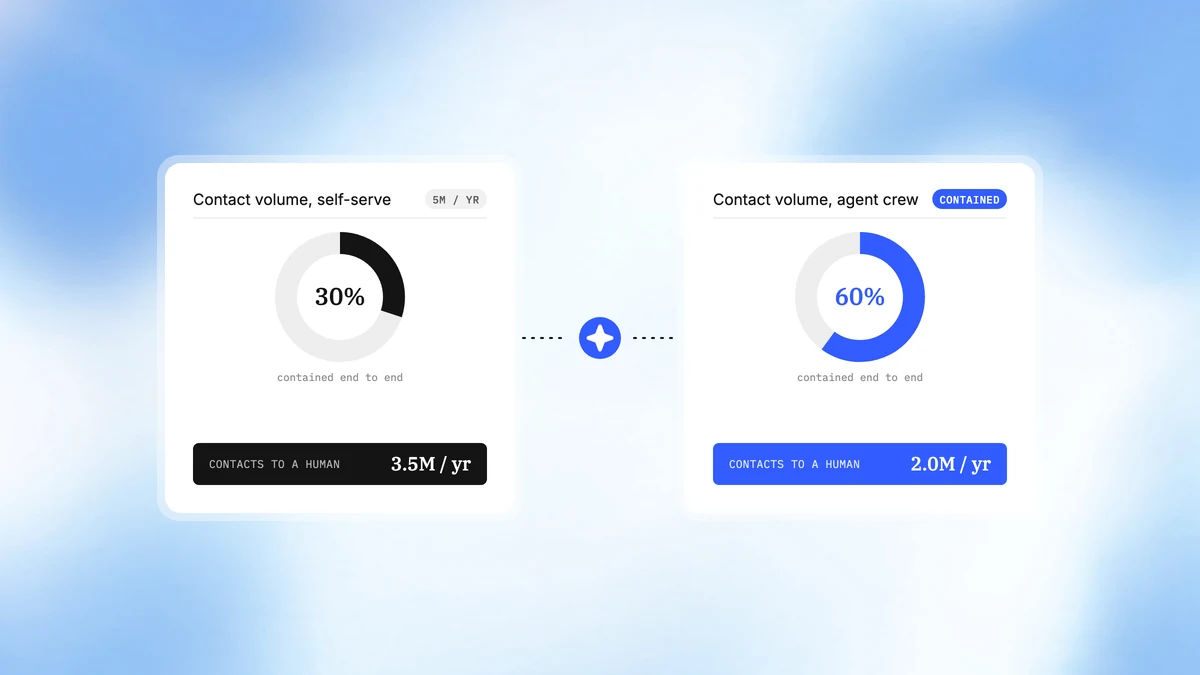
| Contacts reaching a human | 3.5M/year | 2.0M/year |
| Average handle time, assisted | ~6 minutes | Minus 20% |
| Context assembly time per contact | Material | Near zero |
| Cost recovered, assist layer | N/A | ~$2.0M/year |
| Cost recovered, full program | $25M base | $7.5M to $10M/year |
| Customer satisfaction | ~79% | Maintained or improved |
| Human decision authority on escalations | 100% | 100% |
| Audit coverage of assist suggestions | N/A | 100% logged |
- ~$2.0M a year, on top of containment rather than inside it. The full programme delivered $7.5M to $10M against a $25M base. Containment produced the larger share, but the assist layer is what stopped the residual queue absorbing part of that gain back.
- 20%, not the 50% some vendors claim. A contact-centre leader who has run the floor knows what a halved handle time on complex work implies and will discount the whole case for the overreach.
- The search time is what went away. Not the human talking faster. The human no longer hunting across four systems while the customer listens to them type.
- Satisfaction held and improved on the hardest contact class. The contacts most likely to produce a detractor are the ones a human now handles with full context in hand.
- The centre did not shrink, and nobody promised it would. That honest promise is the one the floor believed, which is why the programme had the cooperation it needed. A vendor promising to empty a bank's contact centre is promising something that will not happen and will be remembered.
What the bank measured
Highlights
- Average handle time on assisted contacts fell 20%. That is the conservative figure, and it is the one we committed to against the bank's Phase 0 baseline. Some vendors claim 50%. We do not lead with 50%, because a contact-center leader who has run the floor knows what a halved handle time on complex work implies and will discount the entire case for the overreach. Twenty percent on the residual mix is real, defensible, and worth roughly $2.0 million a year across the 2 million contacts that still reach a person.
- The search time went away. The measurable component of the handle-time reduction was not the human talking faster. It was the human no longer hunting across four systems while the customer listened to them type. That is time returned to the customer and to the agent in equal measure.
- Customer satisfaction, at 79% at baseline, held and improved on the hardest contact class. The contacts most likely to produce a detractor are the ones a human now handles with full context in hand.
- The contact center did not shrink. Its work changed. The routine volume moved to the agents, and the people who remain spend their time on the contacts that genuinely need a person, with an assistant on every one of them. This is the honest promise and it is the one the floor believed, which is why the program had the cooperation it needed to work. Any vendor promising a bank that agentic AI will empty its contact center is promising something that will not happen and, when it does not, will be remembered.