At a Glance
| Metric | Before | After |
|---|---|---|
| Onboarding cycle time, corporate | Weeks | 1 to 2 days |
| Cost per corporate KYC review | $2,250 | $1,150 to $1,350 |
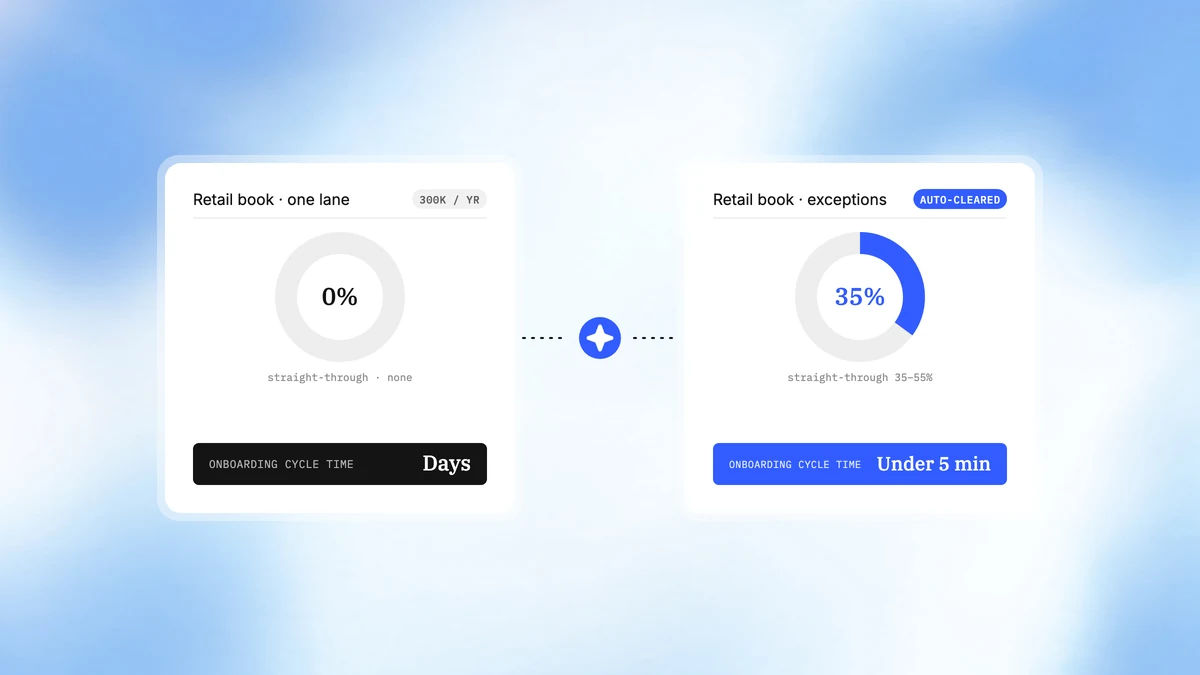
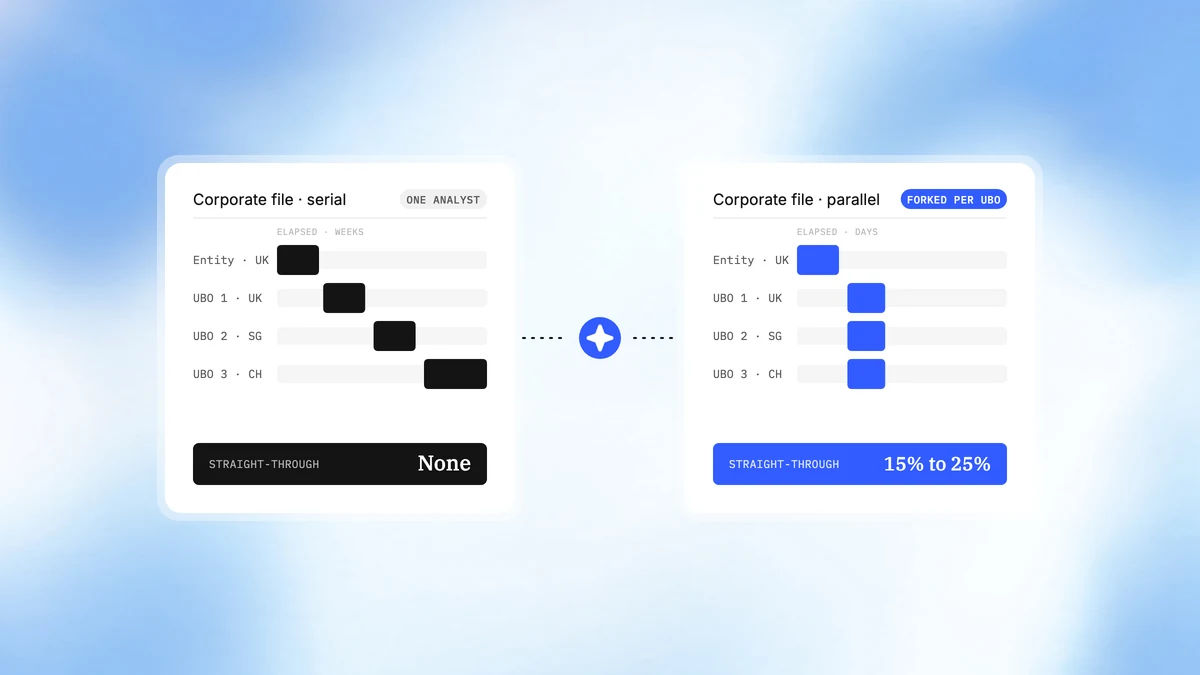
| Straight-through processing | None | 15% to 25% |
| Beneficial owners processed | Sequentially | In parallel, no marginal delay |
| Document extraction accuracy | Variable, manual | 95% to 99% |
| Manual processing time | Baseline | Down 78% |
| Fraud detection | Baseline | Up 45% to 61% |
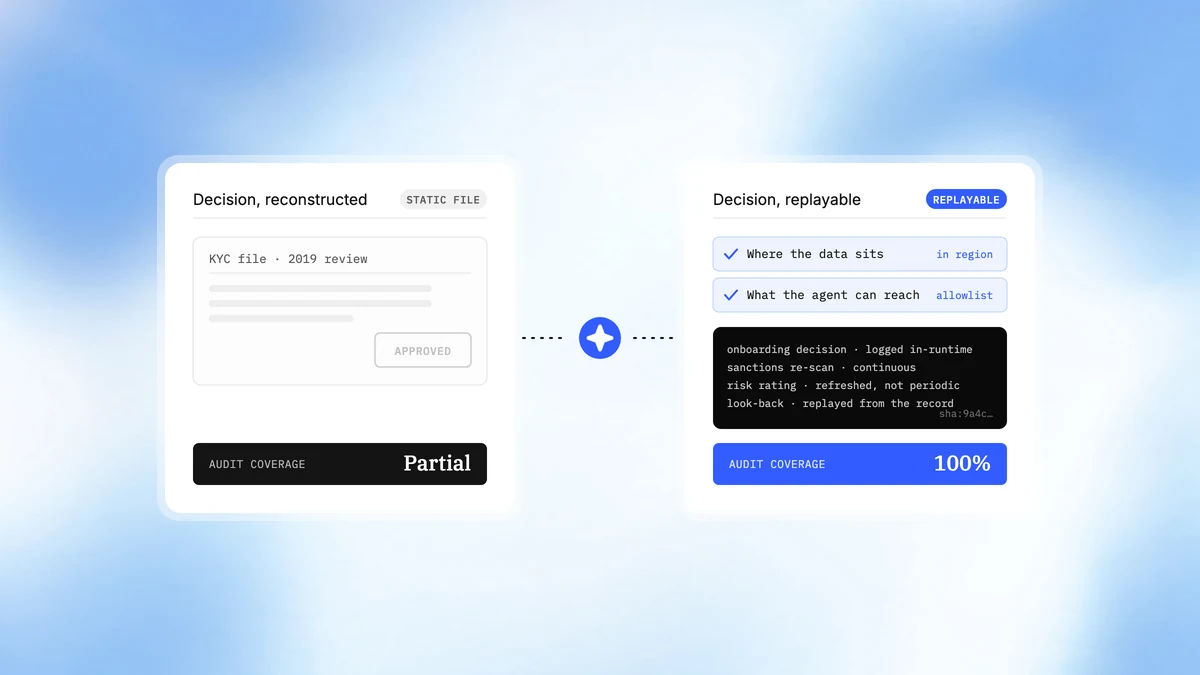
| Audit coverage of ownership chain | Partial | 100% replayable |
Annual cost reduction on the corporate book: $7.2M to $8.6M.
The corporate file no longer unfolds one analyst at a time. It unfolds all at once.
Challenge
A retail applicant is one person with one passport. A corporate applicant is a question that keeps unfolding.
- Behind each entity sits a structure. A holding company, sometimes two, sometimes in a different jurisdiction, and behind that the natural persons who ultimately own or control it.
- Every beneficial owner needs what a retail applicant needs. Identity verified, documents authenticated, sanctions, PEP, and adverse-media screening run, a risk rating computed. One corporate file is many retail files.
- $2,001 to $2,500 per corporate KYC review. At 8,000 clients a year on a $2,250 midpoint, that is an $18.0M line before anything else in onboarding is counted. A large institution can spend up to $35M.
- Weeks, because the steps are serialised behind one analyst. No single step is slow. The case stalls every time it waits on a document the client has not sent.
- The highest-value customer has the worst experience. The corporate client is worth a hundred times the retail one, and it is the corporate client sitting in the longest queue.
- More analysts and better checklists did not touch the constraint. The work is inherently parallel and was being executed serially.
The corporate KYC line
8,000
Corporate clients reviewed a year
$2,250
Cost per corporate review, midpoint
$18.0M
A year, before anything else in the onboarding chain
Solution
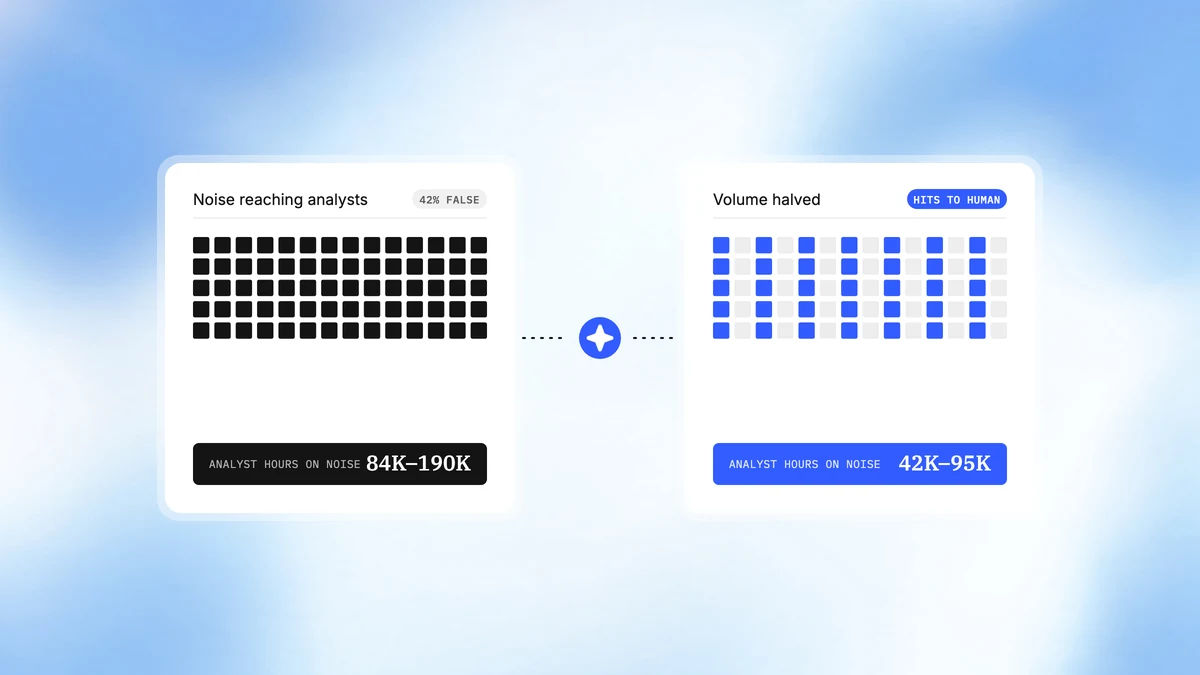
- Clean files clear straight through, with the rationale recorded. Anything the system is not confident about routes to a named human, so analysts see exceptions rather than volume.
- Documents are read and verified rather than keyed. Identity documents, proofs of address, and income records extracted and authenticated, with the untrusted-file handling in the tightest boundary in the system.
- Screening noise is absorbed before it reaches a person. Sanctions, PEP, and adverse-media alerts are worked the way an analyst would work them, so what arrives at the queue is worth a human.
- Beneficial owners are resolved and screened in parallel. One configured environment forks per person, so a corporate structure unfolds all at once rather than one analyst at a time.
- Every decision carries a replayable rationale. Including the clears, logged as the work happens rather than reconstructed on request.
- Customer data stays inside the bank's boundary. Control plane and storage in the bank's own region, each case in its own guest kernel, with egress allowlisted in the kernel to approved list and registry providers and nothing else.
- The regulated decision stays with a human. Every genuine hit and every low-confidence case goes to a named reviewer by policy. CreateOS is SOC 2 Type II and ISO 27001 certified.
Outcome Derived
The corporate file no longer unfolds one analyst at a time. It unfolds all at once.
- $7.2M to $8.6M a year on an $18.0M corporate line. 40% is the conservative floor we commit to in a pilot, 48% the top of our own modelled range rather than a published benchmark. Cost per case falls from $2,250 to roughly $1,150 to $1,350.
- The corporate cut is smaller than the retail cut, honestly stated. Retail falls by around 70%, corporate by 40% to 49%, because a corporate file carries irreducible judgment that a retail one does not.
- Weeks to one or two days. The number the business side cares about, on a segment where the account is worth orders of magnitude more than a retail one.
- Where the savings come from, in order of size. Parallel processing of beneficial owners, which removes the queue entirely; de-duplication and pre-clearing of screening false positives across the structure; then the document and extraction work.
What changes across the corporate book
- 15-25%
Clears straight through
From none. Simple single-jurisdiction structures first, humans on every exception.
- 78%
Less manual processing time
Mostly from resolving beneficial owners in parallel rather than in a queue.
- 95-99%
Document extraction accuracy
Against variable manual keying, and measured against the bank's own files first.
What We Would Prove, and How
- Weeks 1 to 2, baseline. Measure the bank's actual cost per corporate review, cycle time, average number of beneficial owners per file, straight-through rate, and false-positive rate. This becomes the contract's yardstick and protects both sides in procurement.
- Weeks 2 to 6, build and integrate. Stand up the agent crew, integrate to the bank's document store, corporate registries, identity sources, and screening providers along allowlisted paths, deploy self-hosted inside the bank's boundary. Corporate integration surface is wider than retail and this is planned for openly.
- Weeks 6 to 8, shadow run. Agents process real corporate files in parallel with the human team without making binding decisions. Ownership chains resolved by the agent are compared against the chains resolved by analysts. Missed control relationships, not just missed persons, are what gets watched.
- Week 8 onward, controlled go-live. Straight-through processing switched on for simple structures first, single-jurisdiction entities with a shallow ownership chain, expanding into layered and cross-border structures as the audit record builds. Humans on every exception throughout.
Success criteria, agreed up front: cost per corporate review down at least 40%, cycle time under 2 days, corporate straight-through rate of 15% or better, extraction accuracy of 95% or better, 100% audit coverage of every automated decision and every link in every ownership chain.
Highlights
- Compresses corporate onboarding from weeks to 1 to 2 days.
- Removes $7.2M to $8.6M a year on an $18.0M corporate KYC book (40% pilot floor).
- Beneficial owners process in parallel with no marginal delay per additional person.
- Corporate straight-through processing of 15% to 25%; more human review legitimately survives than in retail.
- 100% audit coverage of every automated decision and every link in every ownership chain.
Frequently asked questions
How does KYC automation for banks handle beneficial ownership?
It resolves and screens beneficial owners in parallel rather than sequentially. One configured environment forks per person, so a corporate structure unfolds all at once instead of one analyst at a time. Every beneficial owner still gets what a retail applicant gets: identity verified, documents authenticated, sanctions, PEP, and adverse-media screening, and a risk rating.
Why is the corporate saving smaller than the retail one?
Because a corporate file carries irreducible judgment that a retail file does not. This blueprint models retail cost per case falling by around 70% and corporate by 40% to 49%, with corporate straight-through processing at 15% to 25%. Stating that gap is deliberate. More human review legitimately survives on a corporate book.
What gets audited on a corporate onboarding decision?
Every automated decision and every link in every ownership chain. Full audit coverage of both is a success criterion agreed before go-live, alongside cost per corporate review down at least 40%, cycle time under two days, corporate straight-through processing of 15% or better, and extraction accuracy of 95% or better.
How do you prove the agent resolved the ownership chain correctly?
With a shadow run. Agents process real corporate files in parallel with the human team without making binding decisions, and the ownership chains the agent resolves are compared against the chains analysts resolved. Missed control relationships, not just missed persons, are what gets watched. Go-live starts on shallow single-jurisdiction structures and widens from there.