At a Glance
| Metric | Before | After |
|---|---|---|
| Audit coverage of automated decisions | Partial, reconstructed | 100%, replayable |
| Regulatory look-back | Manual project, weeks to months | Query against the decision record |
| Document blast radius | Host-level exposure | Contained to a disposable micro-VM |
| Data egress control | Policy and configuration | Allowlisted in the kernel via eBPF |
| Data residency | Vendor-dependent | Bank's own region and boundary |
| Certification posture | Gate to procurement | SOC 2 Type II, ISO 27001 |
| Periodic refresh cost | Full manual cost per review | Down 40% to 48% |
| Cases paused awaiting input | Consuming compute or lost | State held, zero compute, resumed intact |
Annual cost reduction on perpetual refresh: $13.6M to $16.3M.
The security review becomes a step in the process rather than the end of it. And the largest untouched cost line in the KYC function gets automated.
Challenge
Most bank onboarding pilots do not fail in the proof of concept. The demo works and the compliance team likes it. Then the file lands with information security.
- The questions are about the runtime, not the model. Where does the customer's data physically sit, what can the agent reach on the network, and what exactly was logged when it made a decision.
- The usual vendor answer ends the deal, and it should. The agents run on someone else's cloud, egress is governed by a config file, and the audit trail is whatever the application chose to log.
- An auto-clear is a regulated decision. A programme that clears a file it cannot explain has not automated compliance, it has industrialised an indefensible version of it.
- Onboarding processes untrusted files by design. Documents arriving from the open internet, into a system holding the bank's most sensitive customer data.
- Refresh is where the obligation actually lives. Periodic review cycles go stale between them, and a risk rating computed eighteen months ago is not evidence of current diligence.
The same question, asked of two layers
The usual vendor answer
What the review needs
Where does customer data sit?
Where does customer data sit?
Someone else's cloud, someone else's region
The bank's own region and boundary
What can the agent reach?
What can the agent reach?
Governed by a configuration file
Allowlisted in the kernel via eBPF
Where does an untrusted document run?
Where does an untrusted document run?
Host-level exposure
A disposable micro-VM per case
Why was that file cleared?
Why was that file cleared?
Reconstructed on request
Logged as the work happens
Solution
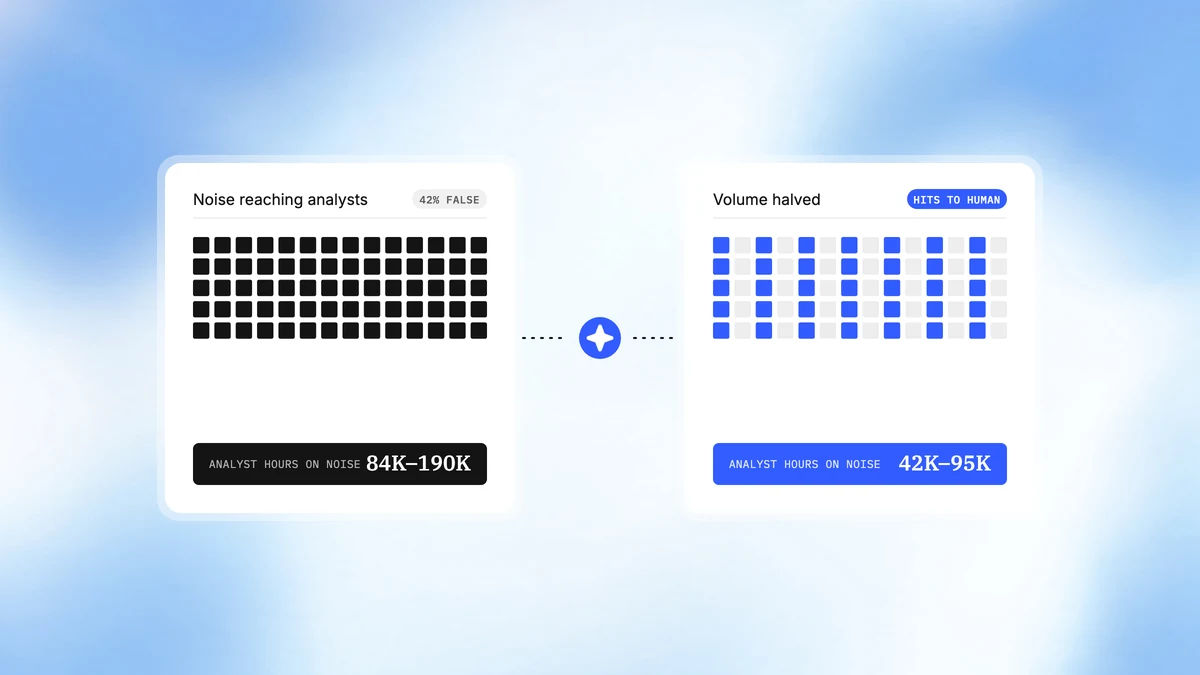
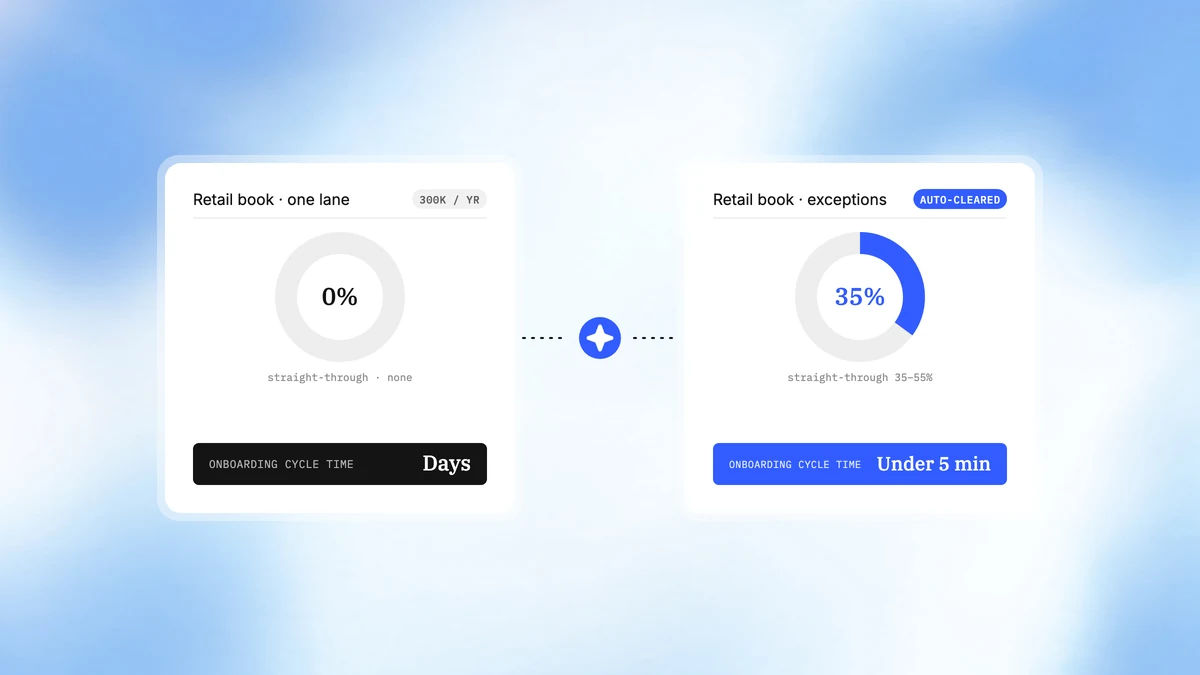
- Clean files clear straight through, with the rationale recorded. Anything the system is not confident about routes to a named human, so analysts see exceptions rather than volume.
- Documents are read and verified rather than keyed. Identity documents, proofs of address, and income records extracted and authenticated, with the untrusted-file handling in the tightest boundary in the system.
- Screening noise is absorbed before it reaches a person. Sanctions, PEP, and adverse-media alerts are worked the way an analyst would work them, so what arrives at the queue is worth a human.
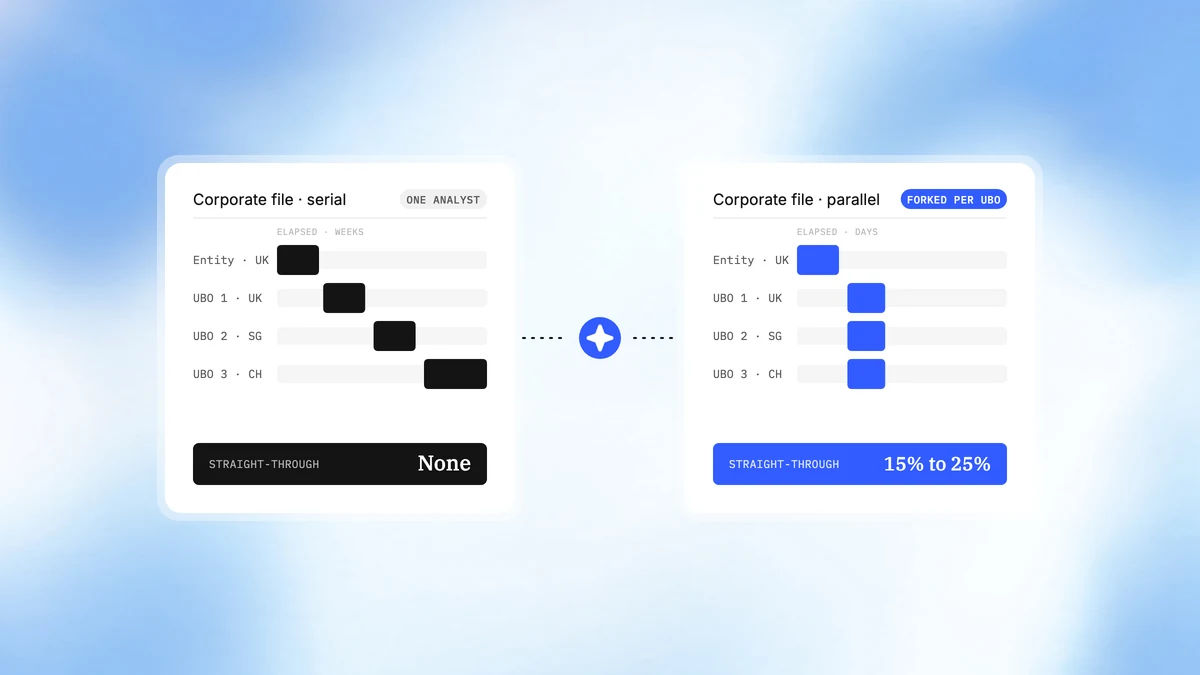
- Beneficial owners are resolved and screened in parallel. One configured environment forks per person, so a corporate structure unfolds all at once rather than one analyst at a time.
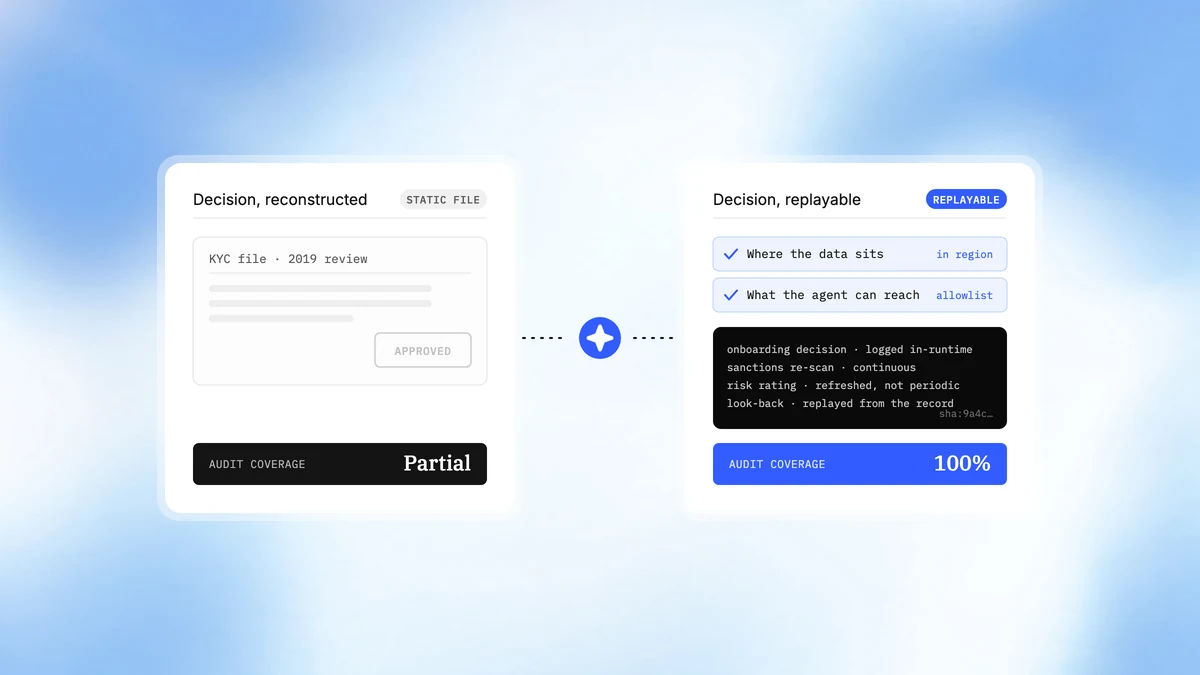
- Every decision carries a replayable rationale. Including the clears, logged as the work happens rather than reconstructed on request.
- Customer data stays inside the bank's boundary. Control plane and storage in the bank's own region, each case in its own guest kernel, with egress allowlisted in the kernel to approved list and registry providers and nothing else.
- The regulated decision stays with a human. Every genuine hit and every low-confidence case goes to a named reviewer by policy. CreateOS is SOC 2 Type II and ISO 27001 certified.
Outcome Derived
The value here is that the programme ships at all, which is the outcome the bank had failed to reach before.
- The security review ends in approval, not conditions. Where does the data live and what can the agent reach now have structural answers: the control plane is in the bank's region and the egress path does not exist.
- 100% of decisions replayable, including every auto-clear. Written as the work happens rather than reconstructed on request, so a file cleared three years ago has a chain of reasoning behind it.
- Refresh becomes continuous rather than periodic. A risk rating stops going stale between review cycles, which is where the obligation actually lives.
- The audit trail is the deliverable, not a byproduct. In a regulated onboarding programme that is the product, and we built it as one.
What We Would Prove, and How
- Weeks 1 to 2, baseline. Measure the bank's current audit coverage, look-back cost and cycle time, refresh volume by risk band, and cost per refresh. Establish the information-security requirements the deployment must satisfy, in writing, before anything is built.
- Weeks 2 to 6, build and integrate. Deploy self-hosted inside the bank's boundary. Stand up the agent crew with kernel-level egress allowlists agreed and signed off by the bank's security team, source by source. Integrate to the document store, identity sources, and screening providers along those approved paths only.
- Weeks 6 to 8, shadow run. Agents process live cases without binding decisions. The decision log is tested the way a regulator would test it: pick a closed case at random and replay it end to end. That test is run by the bank's own audit function, not by CreateOS.
- Week 8 onward, controlled go-live. Automated refresh switched on for the low-risk band first, expanding through medium and into high-risk as the audit record accumulates and the bank's audit function signs off on each expansion.
Eight weeks, and what binds at each one
- 01
Weeks 1 to 2, baseline
Reads The bank's current audit coverage, look-back cost, refresh volume by risk band
Held The yardstick the contract is written against
- 02
Weeks 2 to 6, build inside the boundary
Reads Egress allowlists agreed and signed off by the bank's security team, source by source
Held A deployment on approved paths only
- 03
Weeks 6 to 8, shadow run
Reads Live cases, processed without binding anything
Held A decision log the bank's own audit function replays at random
- 04
Week 8 onward, controlled go-live
Reads The low-risk band first, then medium, then high
Emits Automated refresh, each expansion signed off separately
Success criteria, agreed up front: 100% audit coverage of every automated decision, every decision replayable on demand by the bank's audit function without CreateOS involvement, refresh cost per case down at least 40%, zero egress outside the signed-off allowlist across the full pilot period.
Containment, egress, residency, and certification claims describe the CreateOS platform. Cost figures are drawn from published industry benchmarks (Fenergo, Statista, ComplyCube, BCG) applied to a representative bank profile. Refresh volume, cycle, and per-review cost are stated assumptions and are replaced with client actuals in the Phase 0 baseline of every engagement.
Highlights
- Removes $13.6M to $16.3M a year on perpetual refresh, the largest single line across the four KYC use cases.
- 100% audit coverage of automated decisions; look-backs become a query against the record, not a project.
- Document blast radius contained to a disposable micro-VM; egress allowlisted in the kernel via eBPF.
- Data residency in the bank's own region and boundary; SOC 2 Type II and ISO 27001 certified.
- This use case makes the other three purchasable. Lead with it when the CISO or procurement is in the room.