Preliminary memo production: Under 90 minutes
Document data extraction: 3x to 5x faster
Deal-team capacity on assembly: Most of it reclaimed
CIMs screened per week: Limited by deal flow
Challenge
A middle-market private equity firm with twelve investment professionals receives roughly 200 confidential information memoranda a year, and every one has to be read before anyone can say no. The firm was not short of tools. It was short of a place to run them.
- 1,200 analyst hours, thirty working weeks. At six hours a document across 200 documents, all of it burned on preliminary screening before due diligence starts on a single deal.
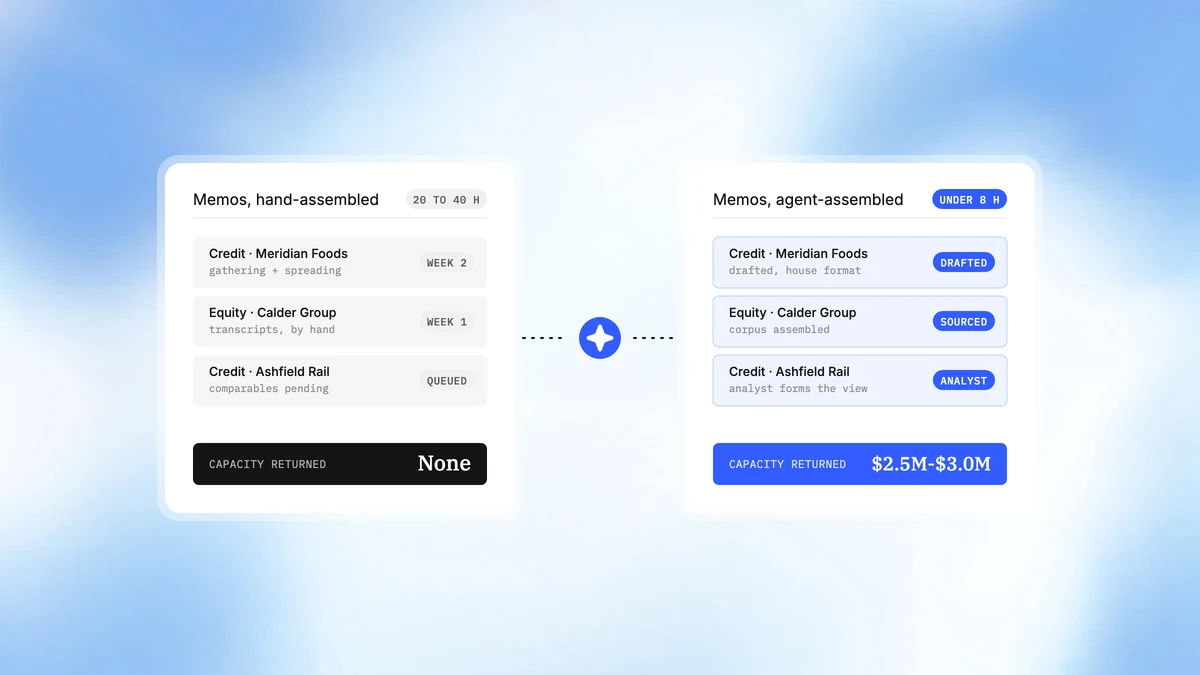
- The cost is what the hours are made of. The firm pays for judgment and spends a third of it on gathering and formatting. Across the median PE firm, 35% of deal-team capacity goes to memo assembly rather than analysis.
- The associate spreading a CIM on Thursday. Is the same person who was supposed to be forming a view on the sector.
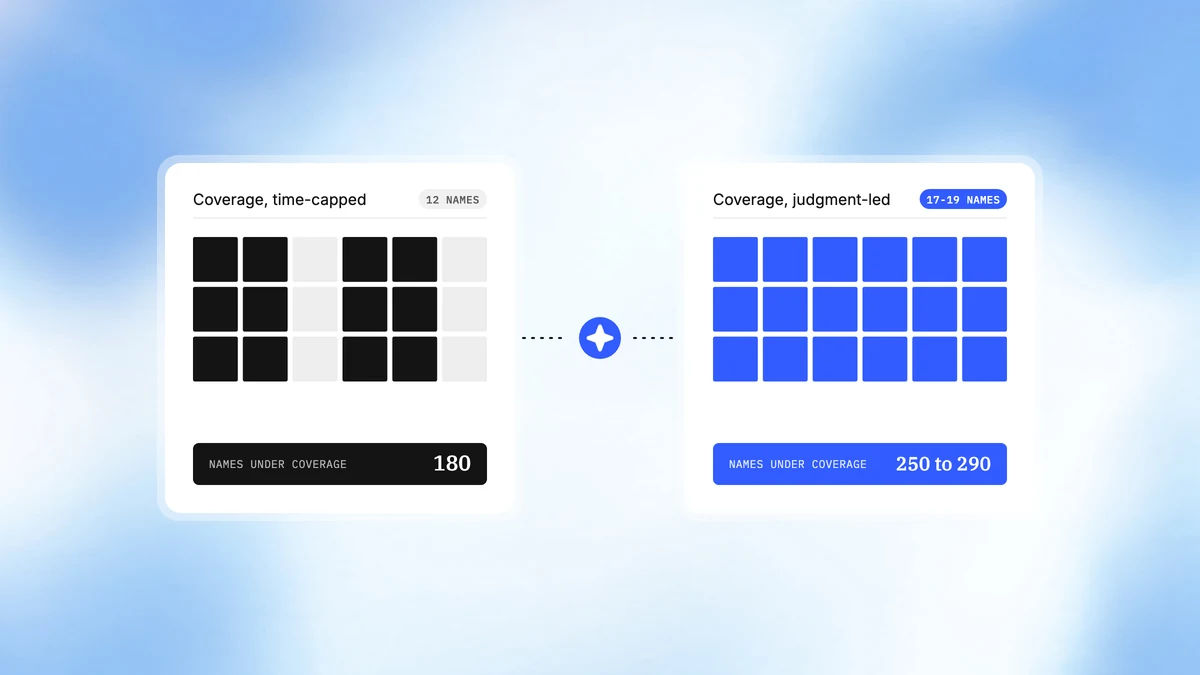
- It narrows the funnel. When a preliminary memo takes most of a working day, the team screens the deals it can get to rather than the deals it should see. Bankers run tight processes, and a firm needing three days arrives late to the ones worth winning.
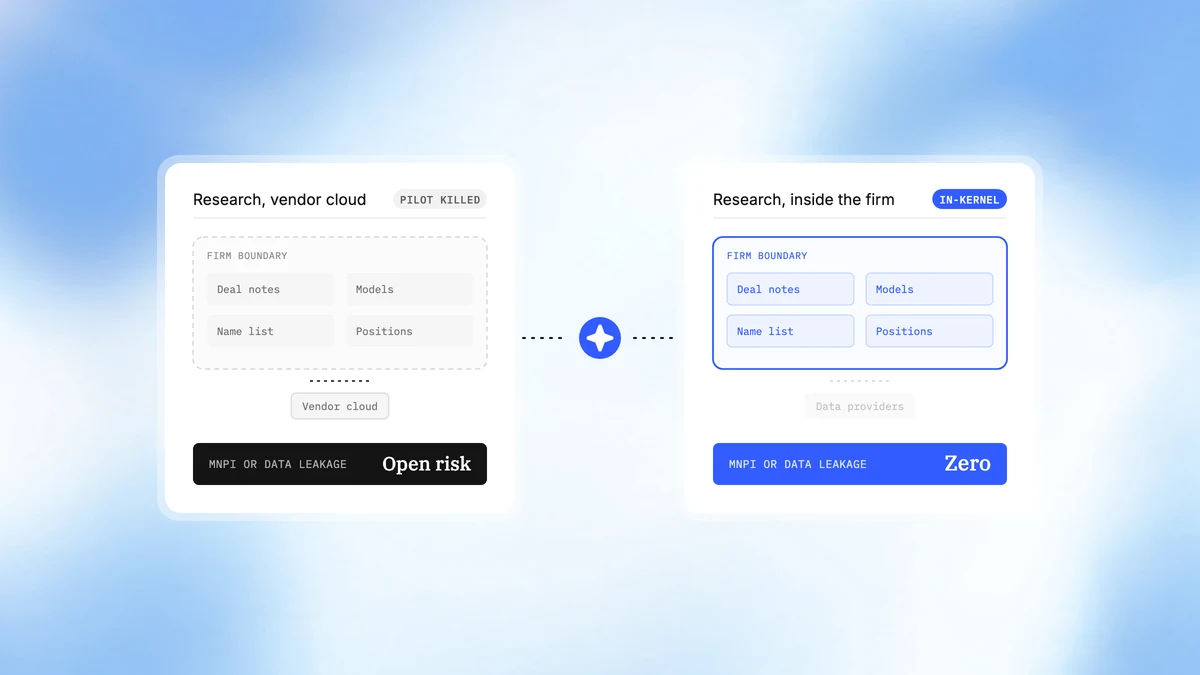
- Every serious tool wanted the CIM in a vendor cloud. A CIM is the most confidential document a banker sends, covered by an NDA the firm signed, and what the firm is looking at is itself information it does not want leaving the building.
What preliminary screening costs
200
Confidential memoranda received a year
6 hrs
To read and spread one
30 weeks
1,200 analyst hours, on twelve investment professionals
Solution
CreateOS built and deployed a crew of specialized agents that take an inbound CIM from "received" to a sourced, structured preliminary memo in the firm's own template, with every number traceable to the page it came from.
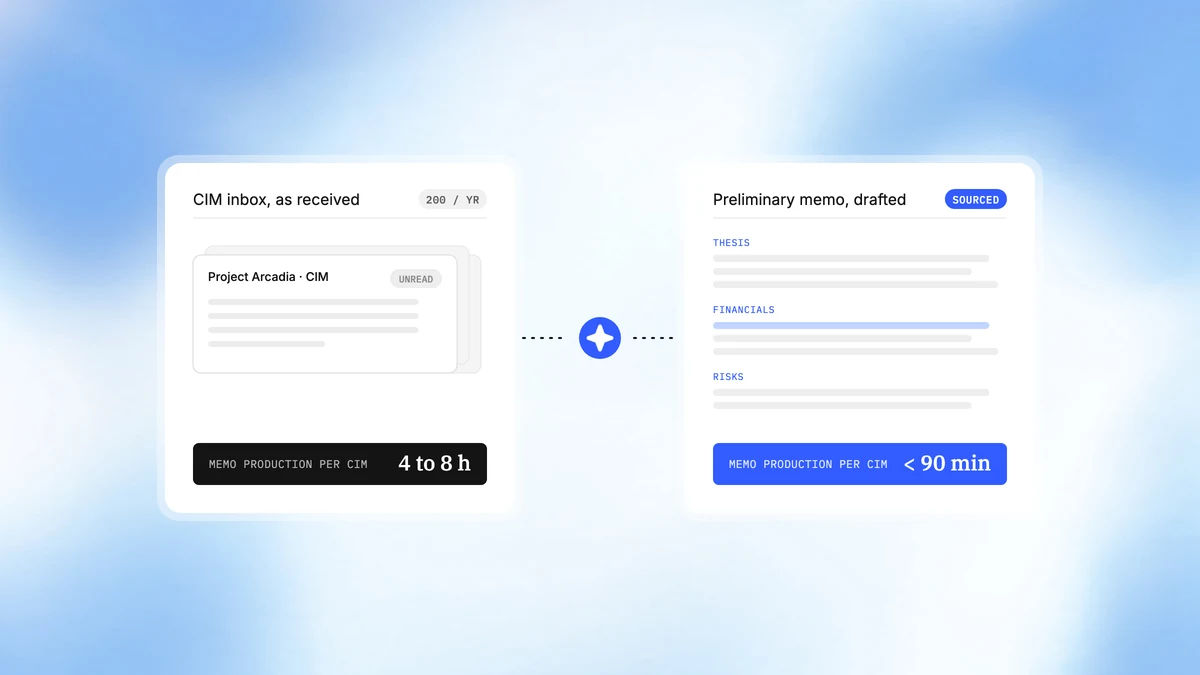
Two hundred CIMs a year
Four to eight hours of a trained analyst each, most often to reach a pass.
under 90 minper memo
The associate opens a draft
Corpus assembled and financials spread, every number traceable to its page.
The CIM, the data-room extracts, and the fact of what the firm is looking at never leave the boundary.
- The working corpus assembles itself. From the CIM, the data room, market data, filings, news, and the firm's own internal notes on the sector and the sponsor.
- Financials spread, comparables built, scenarios run. With the generated analytical code executed inside a contained environment rather than on an analyst's laptop.
- The first draft arrives in the firm's own format. Structured the way the investment committee reads, so the associate opens a memo instead of a blank page.
- Nothing enters the memo unsupported. Every claim, number, and assertion is grounded in a traceable source, so a figure carries the page it came from.
- MNPI is screened inline, on corpus and draft. Against the firm's own information-barrier policies, with anything that should not be there flagged.
- A research environment forks per deal. So a Friday batch of six CIMs processes in parallel rather than stacking in one associate's inbox. Work waiting on a data refresh pauses instead of burning compute.
- The firm's intentions cannot leak outward. Control plane and storage run inside the firm's own infrastructure, and egress is allowlisted in the kernel so gathering agents reach approved data providers and nothing else. The path does not exist. Each deal workstream is walled in its own guest kernel.
CreateOS is SOC 2 Type II and ISO 27001 certified. Most agent builders own the prompts and rent the runtime. We own both, which is the only configuration that lets a firm point agents at the documents that actually matter.
Outcome Derived
The associate now opens a drafted, sourced memo on Monday morning instead of building one on Thursday.
| Metric | Before | After |
|---|---|---|
| Preliminary memo production | 4 to 8 hours | Under 90 minutes |
| Document data extraction | Baseline | 3x to 5x faster |
| Deal-team capacity on assembly | 35% | Most of it reclaimed |
| CIMs screened per week | Limited by analyst hours | Limited by deal flow |
| Claim grounding | Inconsistent, manual check | 100% cited and traceable |
| MNPI and data-leakage incidents | Open risk | Zero, enforced in-kernel and self-hosted |
| Audit coverage of sources and steps | Partial | 100% logged |
- Roughly 1,100 to 1,300 analyst hours returned a year. Compressing the memo to under ninety minutes and reclaiming the conservative 60% to 70% of assembly capacity returns 720 to 840 hours directly, with the surviving full memos and diligence reviews contributing several hundred more.
- $165,000 to $195,000 of capacity, screening alone. At a fully-loaded $300,000 analyst cost, on a twelve-person firm, scaling linearly with deal flow and headcount. The contract is written against the firm's own measured baseline.
- A capacity story, not a cost cut. The firm did not remove an associate, it stopped spending one on spreading CIMs. The constraint on deals screened moved from analyst hours back to deal flow, which is where a PE firm wants it.
- Return enhancement is context, not a promise. Firms adopting generative AI in the investment function are associated with 3% to 5% higher annualized returns. That is an association across adopters, not a causal claim about a memo tool, and we do not price against it.
- The investment decision stays human. The agents gather, extract, model, and draft. The analyst interprets, challenges, and forms the view. What changes is that the thinking is the first thing they do that day rather than the last.
What We Would Prove, and How
Weeks 1 to 2, baseline. Measure the firm's actual memo production time, the share of deal-team capacity spent on assembly, and current screening coverage. This becomes the contract's yardstick and protects both sides.
Weeks 2 to 6, build and integrate. Stand up the agent crew, integrate to the firm's data providers, document store, data rooms, and internal research along allowlisted paths, encode the information-barrier policies, deploy self-hosted inside the firm's boundary, scoped to one coverage area.
Weeks 6 to 9, augmented run. Associates produce memos with the agents alongside their normal process. Compare draft quality and time against the firm's own output, confirm every claim is grounded and the MNPI controls hold, tune.
Week 9 onward, controlled rollout. Expand across coverage areas and strategies as the grounding record builds, with the analyst owning the judgment throughout.
Success criteria, agreed up front: memo production time down at least 50%, assembly capacity materially reclaimed, 100% of claims grounded and traceable, zero MNPI or data-leakage incidents, 100% source-and-step audit coverage.
Highlights
- The firm's preliminary screening line ran at 1,200 hours. Compressing the memo from six hours to under ninety minutes, and reclaiming the conservative 60% to 70% of assembly capacity that CreateOS commits to in a pilot, returns 720 to 840 of those hours directly. The full memos that survive screening, roughly twenty a year at twenty to forty hours each, contribute several hundred more. Diligence reviews save a further twenty to thirty hours apiece.
- This is a capacity story, not a cost cut. The firm did not remove an associate. It stopped spending an associate on spreading CIMs. Same team, same cost line, and the funnel widened: the constraint on how many deals get screened moved from analyst hours back to deal flow, which is where a PE firm wants it. Preliminary views now land inside a banker's process rather than after it.
- The agents gather, extract, model, and draft. The analyst interprets, challenges, and forms the view, and the investment decision stays human by fiduciary necessity. Nothing in this system decides whether to do a deal. What it does is make sure that when the associate sits down to think, the thinking is the first thing they do that day rather than the last.