Litigation Document Review
Review large litigation document sets for relevance, issues, and risk, with every call cited and logged.
What It Does
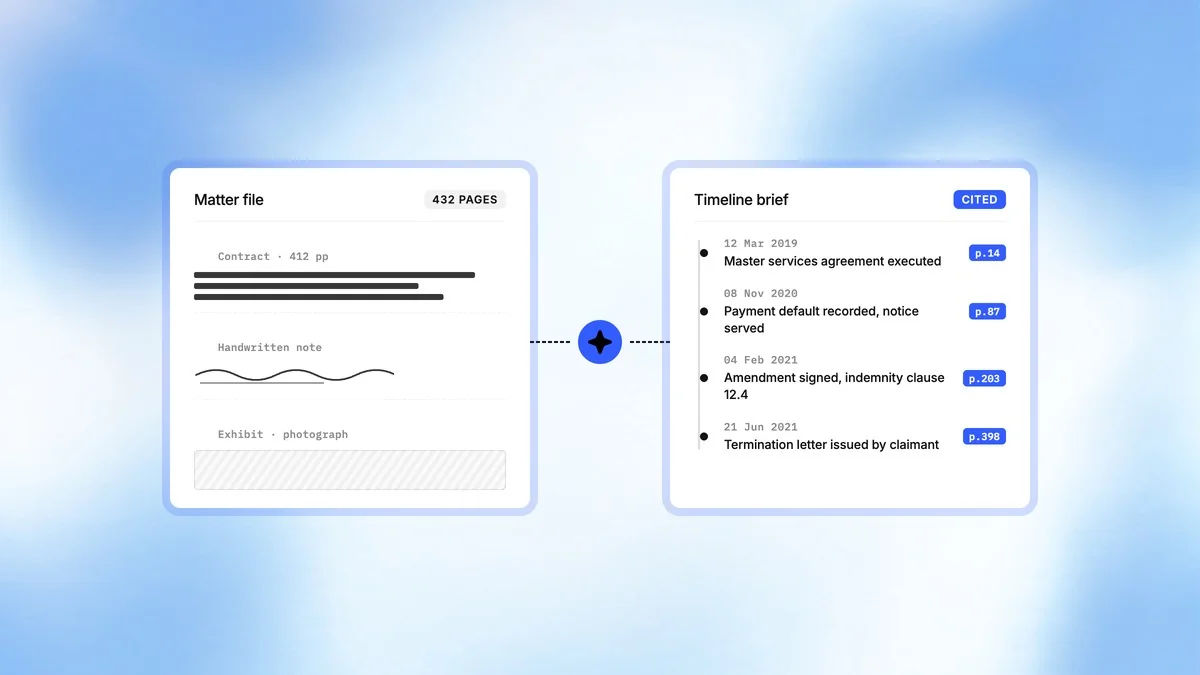
The agent reads each document, tags relevance and issues, and surfaces the passages that matter with a citation back to the source. A lawyer reviews before anything is relied on.Without it: Associates spend nights reading thousands of pages to find the few that matter. The work is slow, expensive, and easy to get wrong under deadline.
- Tags against the issue list for that matter, not a generic relevance score
- Sends documents it cannot read cleanly to re-OCR instead of tagging them blind
- Carries a tag forward when the same document reappears in a later production
- Writes tags into the review platform under the agent's own reviewer ID
Illustrative example
A second production drops 12,400 items into the review platform, sorted only by custodian. The agent tags each against the five pleaded issues, quotes the paragraph beside every hot call, and holds the poor scans back for re-OCR instead of tagging them blind. The associate opens the hot set first and accepts or overturns every tag before any of it is relied on.
DMS
Matter files, scans
eDiscovery platform
The produced set
Matter management
Pleaded issue list
Litigation document review
SuggestStarts when
A document set is produced or collected for a live matter
How far it goes
it proposes, and a person approves before anything commits
Issue tags
Written under agent ID
Source passages
Quoted beside each tag
Reviewer summaries
Drafted
More Legal Agents
Contract review and redlining
Check contracts against your playbook, flag risky terms, and propose redlines for a lawyer to approve.
Clause extraction and comparison
Pull key clauses across a contract set and compare them side by side, each linked to the source.
Deposition and transcript analysis
Turn long transcripts into searchable summaries, key admissions, and contradictions, cited to the line.