On this page
Pilot on one line: baseline, shadow, live with sign-off on holds, readout.
Escapes caught and false holds reported together, so caution is not counted as improvement.
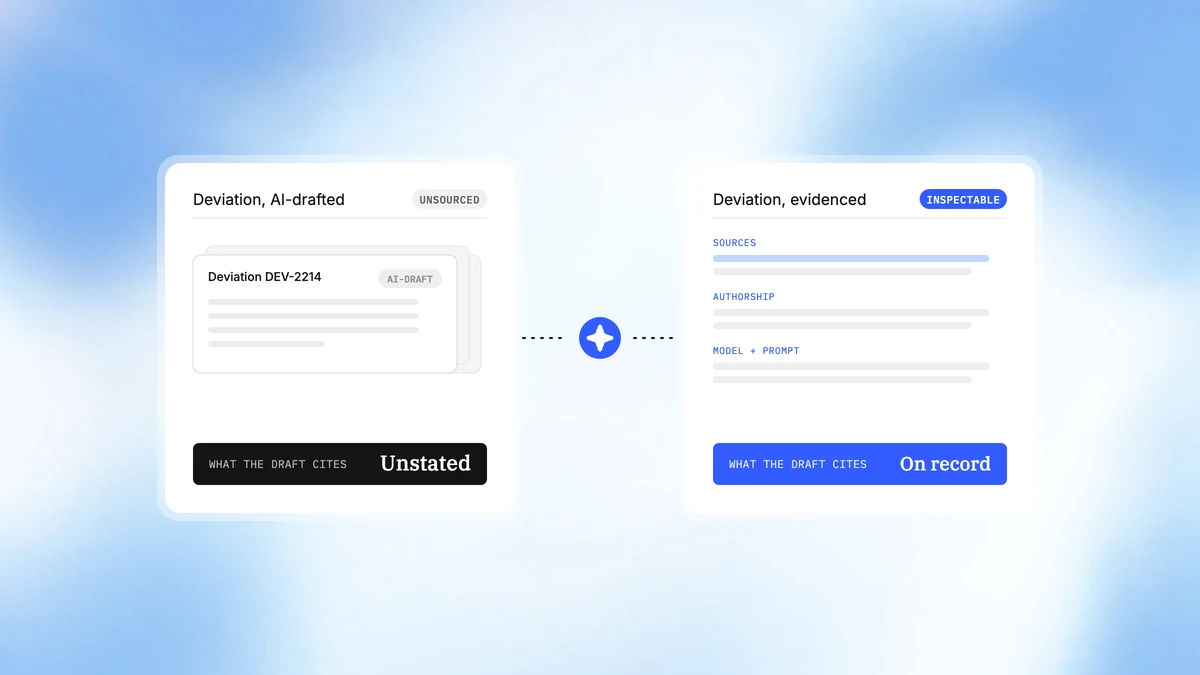
Image, verdict and reasoning retained against the unit they describe.
Challenge
A defect missed at inspection does not stay on the line. It ships, and the cost multiplies at every step it survives, ending as a customer escape, a warranty claim, or a recall.
- The cost grows with distance from the line. The same defect is cheapest at the station and most expensive at the customer.
- An inspection model drifts quietly. Performance degrades without announcing itself, and the first signal is often the escape.
- A hold is a production decision. Stopping or holding output is consequential enough that nobody wants an unattended tool making the call.
Two errors, counted together
A false hold
- Good output stoppedA production decision taken against a part that was fine.
- Trust in the system erodesEnough of them and the line starts overriding it by habit.
An escape
- Cost grows with distanceCheapest at the station, most expensive at the customer.
- The first signal may be a recallDrift degrades quietly and does not announce itself.
Solution
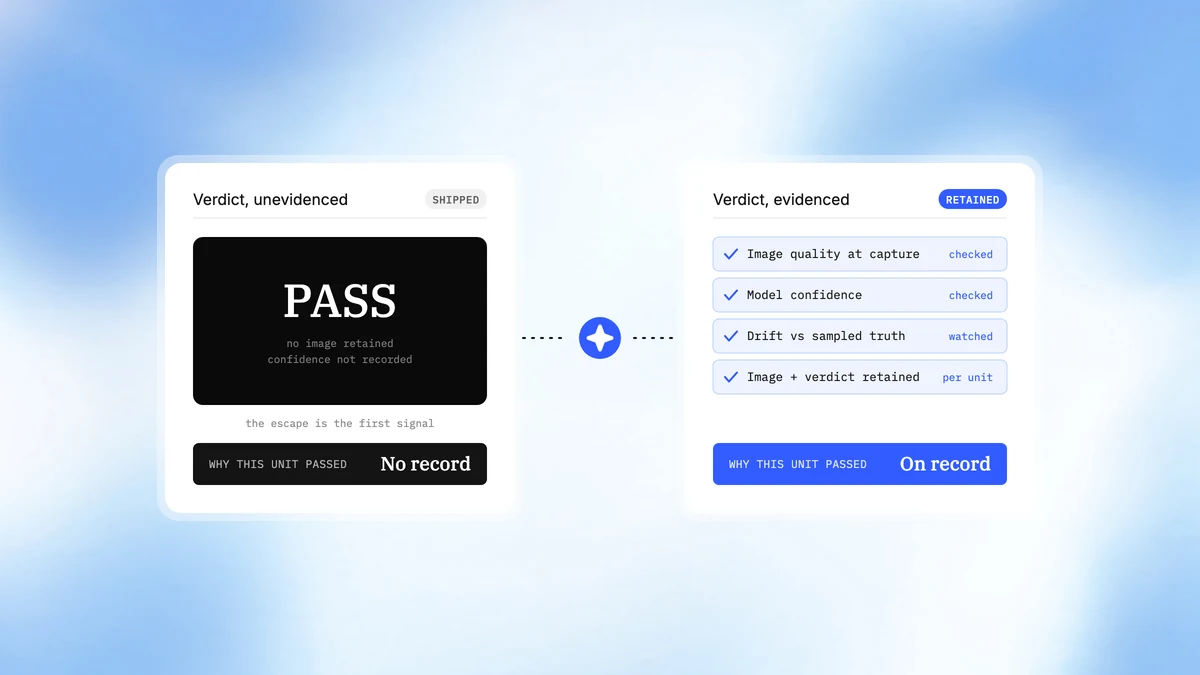
A vision model returns a verdict. Whether that verdict can be trusted depends on the image, the confidence and the station, and all three are checked before it counts.
- Inspection calls checked before they act. Image quality, model confidence and station state verified so a bad input cannot produce a confident verdict.
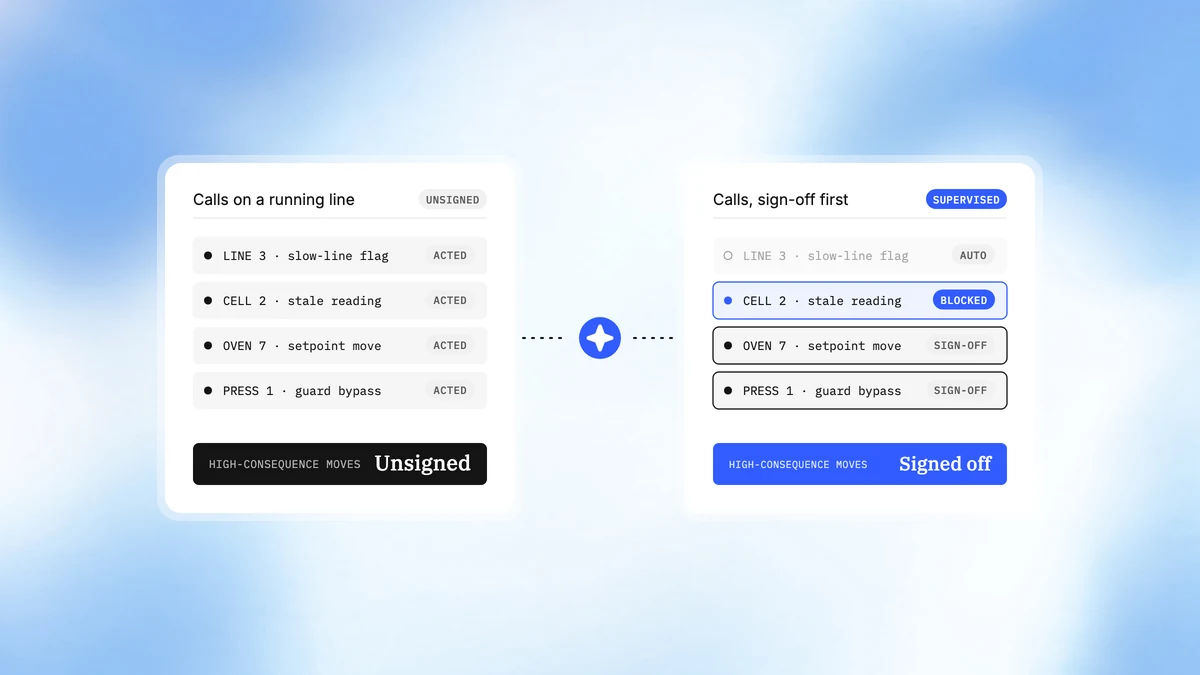
- Holds routed for sign-off. A hold on production waits for a person, with the evidence attached.
- Drift surfaced against sampled ground truth. Comparison runs continuously rather than at review time.
- Every call retained with its image and verdict. So a decision can be revisited when a claim arrives.
Why a Camera Passes a Defect It Has Never Seen
A vision model compares a part to the defects it was trained on. Shown something outside that set, it does not know it is guessing. It returns the closest answer it holds, and the closest answer to an unfamiliar defect is usually a pass.
- Unfamiliarity has to be its own verdict. Not a low score on the familiar scale. A part that does not resemble what the model was trained on is flagged as unfamiliar and held for an inspector before it can move down the line.
- Confidence is checked, not trusted. A confident verdict on a degraded image is the dangerous combination. Image quality, exposure, focus and station state are verified before the verdict counts at all.
- Drift does not announce itself. Performance degrades quietly, and the first external signal is often the escape. Comparison against sampled ground truth runs continuously rather than at review time.
- The test worth running this week. Ask whoever supplied the vision system what happens when a defect it has never seen arrives on the line. If the honest answer is that it passes, that is the gap, and it is the same gap on every camera.
Two Errors, Counted Together
One escape can cost more than a year of scrap. A shift's worth of false rejects can cost more than the escape being watched for. A quality lead is squeezed by both, and fixing one by worsening the other is not an improvement.
The escape
- It gets more expensive with distance. The same defect is cheapest at the station and most expensive at the customer, and by then the record that would explain it is furthest away.
- It is caught by holding, not by looking harder. The unfamiliar part is stopped and put in front of a person. On a defect nobody has trained for, that is the only reliable move.
The false reject
- It is quiet and continuous. Good product scrapped as suspect costs material, the labour already in the part, and an inspector's time to re-check the pile and confirm most of it was fine.
- It is measured before anything is enforced. The shadow phase reports the good parts the line is scrapping now, so the pilot's gain cannot be a line that simply became more cautious.
Outcome Derived
This is a 60 to 90 day pilot on a single line, cell, category or product family. The figures below are what the pilot measures against a baseline captured in its first two weeks. They are targets and instrumentation, not results already delivered.
- Escapes caught before shipment. Measured against the escape baseline for the pilot line.
- False holds not incurred. Tracked so the gain is not simply a more cautious line.
- A retrievable record per unit. Designed so a warranty claim resolves to the inspection evidence for that unit.
Highlights
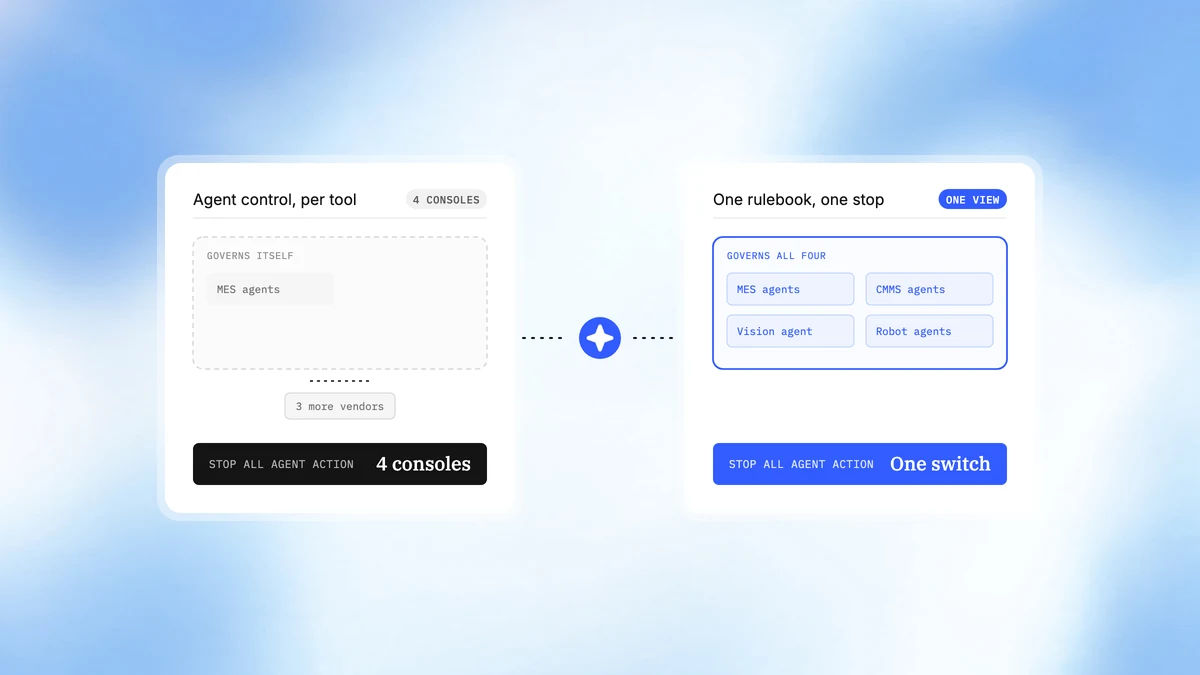
- A second check sits behind the cameras already on the line. The models and the hardware stay.
- A part showing something outside what the model was trained on is routed to a person instead of receiving a confident automatic verdict.
- False rejects are measured in the same pass as escapes, because a line scrapping good product every shift is the quieter of the two losses.
- A hold on production waits for a person, and the plant sets which characteristics can never be called automatically at all.
- Image, verdict, reasoning, model version and sign-off are retained per unit, so a warranty claim resolves to the evidence for that unit.
Frequently asked questions
Do we replace the vision cameras we already bought?
No. The existing models and hardware keep making the routine calls. This is a second check behind them that catches the calls they should not have made alone, and keeps a retrievable record for every part that passes the station.
How does it catch a defect the model has never seen?
By treating unfamiliarity as its own verdict. When a part shows something outside what the model was trained on, it is flagged and routed to a human inspector rather than receiving a confident automatic pass. That is the case a camera cannot handle, because its closest answer to an unfamiliar defect is usually a pass.
Will this create more false rejects and slow the line?
The shadow phase measures the good parts the line already scraps, and false holds are reported alongside escapes throughout. The plant sets which calls the camera still makes on its own, so routine throughput is not touched and caution is never counted as an improvement.
What do we have when a customer complaint arrives?
The image, the verdict, the reasoning, the model version that produced it and the person who signed off, retained against the unit they describe. The claim resolves to that unit's own evidence instead of a reconstruction of what the line was doing that week.