On this page
Pilot on one spend category: baseline, watch-only, enforce, readout.
Every buying action scored against policy with nothing blocked.
The pilot reports in committed dollars, not in policy compliance percentages.
Challenge
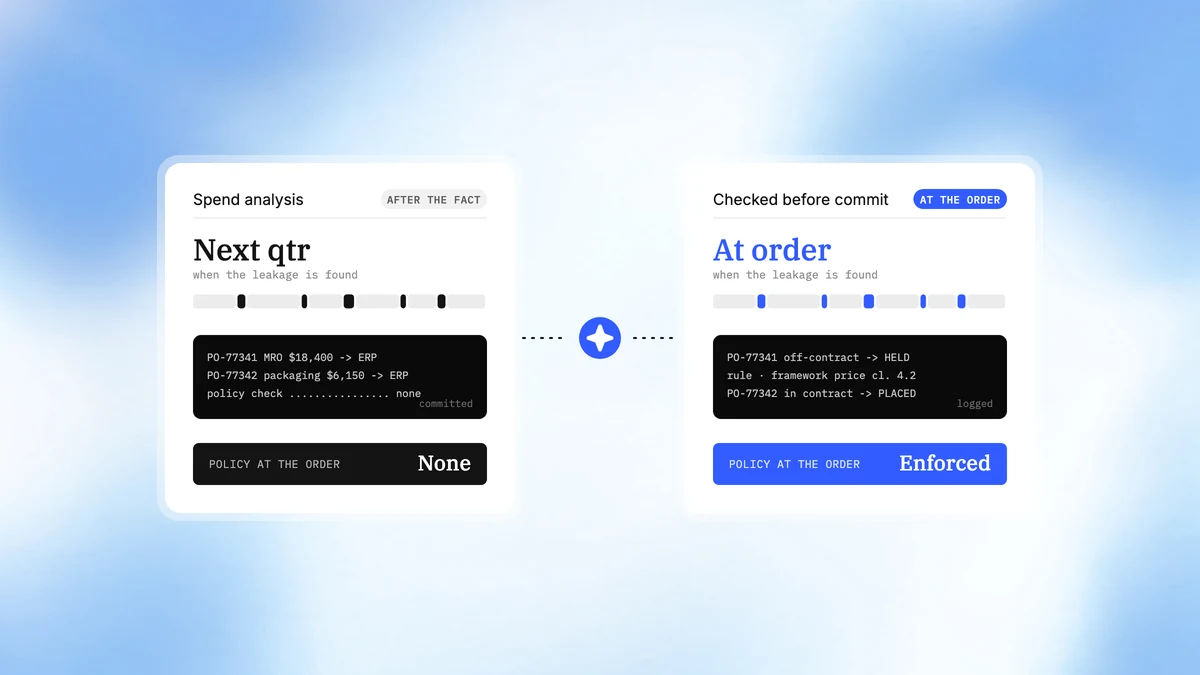
Off-contract buying and price leakage are found in the spend analysis, which is to say after the money is committed. By the time a category manager sees the pattern, the purchase orders are placed and the terms are set.
- Detection happens after commitment. Spend analytics describe what already happened.
- The leakage is distributed. No single order is large enough to trigger review; the aggregate is.
- Policy exists and is not enforced at the point of action. Rules live in a document, not in the path an order takes.
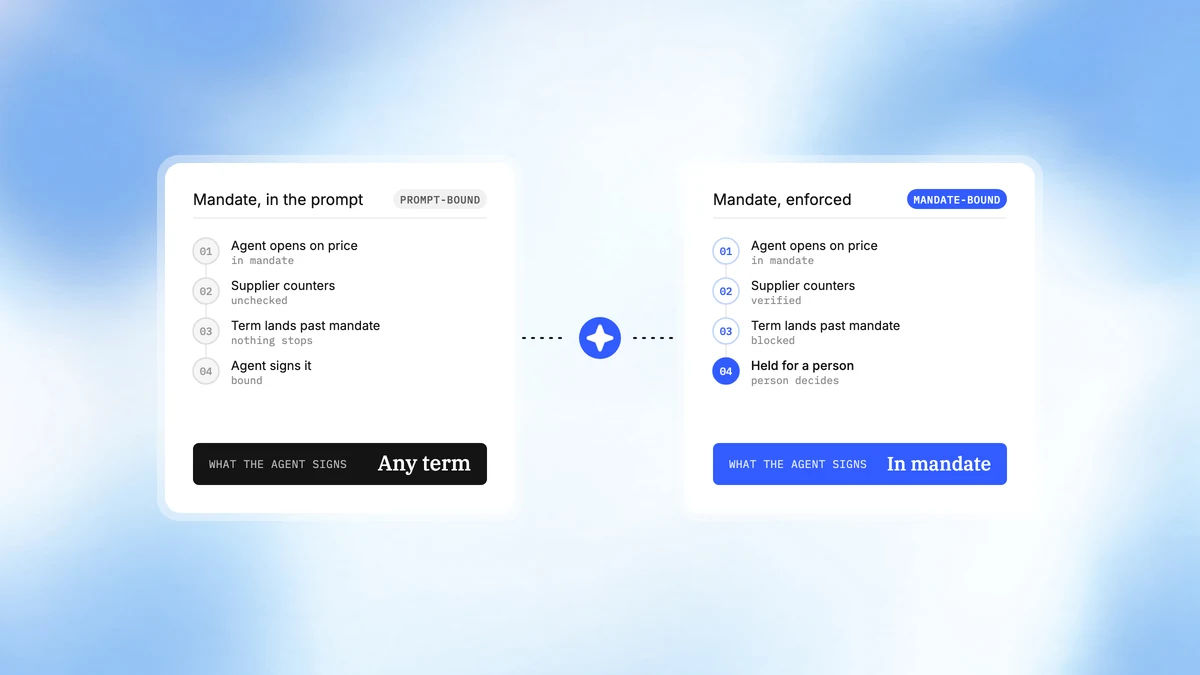
What is read before a dollar commits
- 01
A buying action is proposed
Reads One order, deliberately unremarkable in size
Emits A commitment, unless something stops it
- 02
Contract coverage, not catalogue availability
Reads Agreements already held, and the agreed rate for this spend
Held Off-contract buying stops here rather than in next quarter's analysis
- 03
Price, duplicates and supplier standing
Reads Negotiated tolerance, open commitments elsewhere, risk tier right now
Held Drift outside the band is held, with the clause attached
- 04
Allow, or hold for the category owner
Reads The held order, with the reason written
Emits Nothing else. It never changes a price, picks a supplier or edits a contract.
Solution
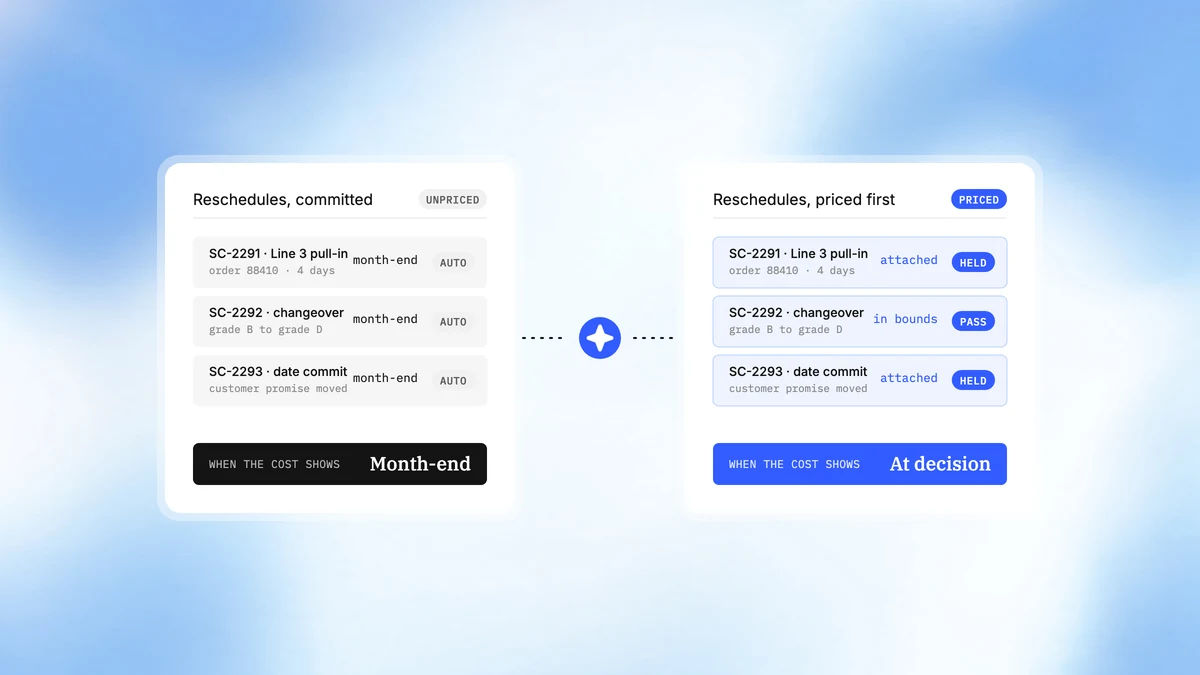
Price leakage is not found in a quarterly review. It is stopped at the moment of commitment, against live ERP rather than last month's extract.
- Checked against the contract, not the catalogue. Contract coverage, agreed pricing and supplier status are verified before the order is placed, so the price is right and not merely available.
- Leakage stopped at the order, not in the analysis. No single off-contract buy is large enough to trigger review. The aggregate is, and by then the money is committed.
- Off-policy actions held for the buyer. With the contract term and the deviation attached, so the decision is informed.
- Every action and exception recorded. Including the orders that were prevented, which is where the saving is evidenced.
Why Every Tool in the Path Misses This
Each system in the buying path is authoritative for its own corner and blind to the rest. The requisition system checks the requisition. The contract repository holds the contract. The ERP records what already happened.
- Nothing owns the moment of commitment. The question that matters, whether this specific commitment should happen at all, is asked by no system in the chain. Spend analytics answer it weeks later, which makes it a report rather than a control.
- The data that would have caught it already exists. The invoice, purchase order, contract and supplier data that flags the off-contract buy or the drifting price is already in the buyer's own systems. It just never reaches the commitment in time to change it.
- The leakage is deliberately unremarkable. No single off-contract order is large enough to trigger a review. The aggregate is, and by the time the aggregate is visible the money is committed and the terms are set.
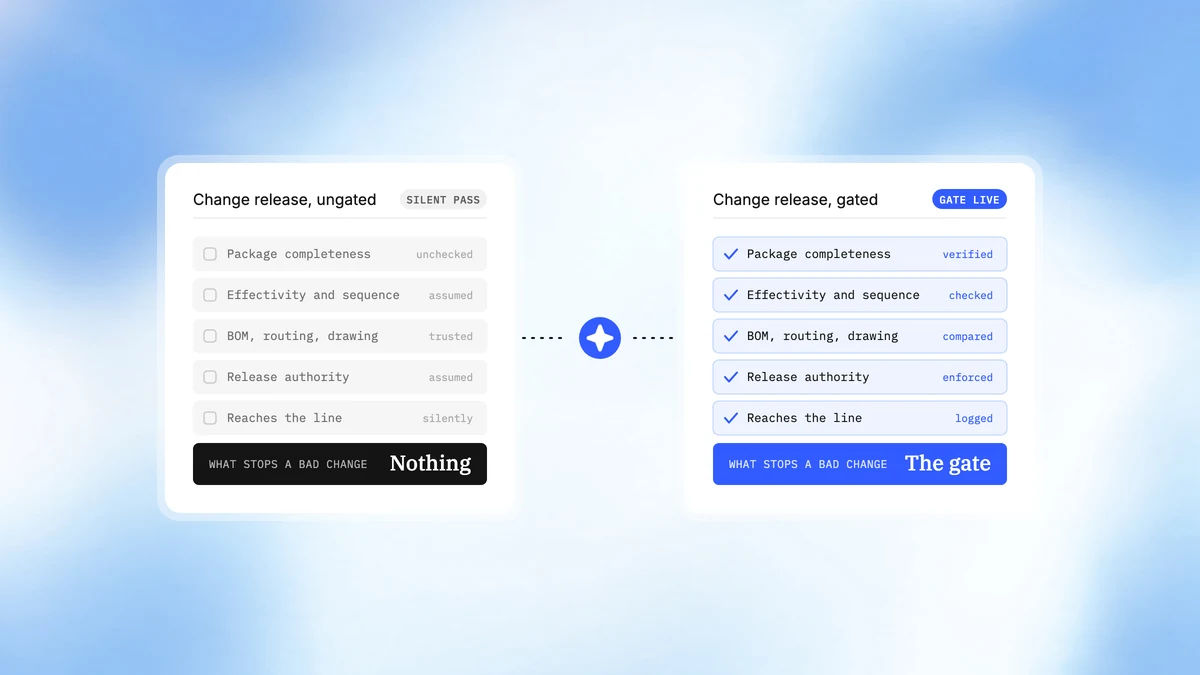
- Policy without a path is documentation. Rules living in a document depend on a buyer recalling them under time pressure. Rules on the write path apply identically on a quiet Tuesday and at quarter end.
What the Checkpoint Reads Before a Dollar Moves
- Contract coverage, not catalogue availability. Whether this spend is covered by an agreement already held, and at which agreed price. Available at a price is not the same as correct at a price, and the two are easy to confuse in a requisition screen.
- Price against negotiated tolerance. The line price is compared to the agreed rate and its tolerance band, so drift is caught at the order rather than during invoice reconciliation when the goods are already in.
- Duplicate commitments. Whether another team already has an open commitment against the same requirement. Duplicates are common where two sites buy the same thing under different part descriptions.
- Supplier standing at this moment. Active, approved, and inside their risk tier now, checked against the buyer's own list rather than against the requisition's assumption about who is approved.
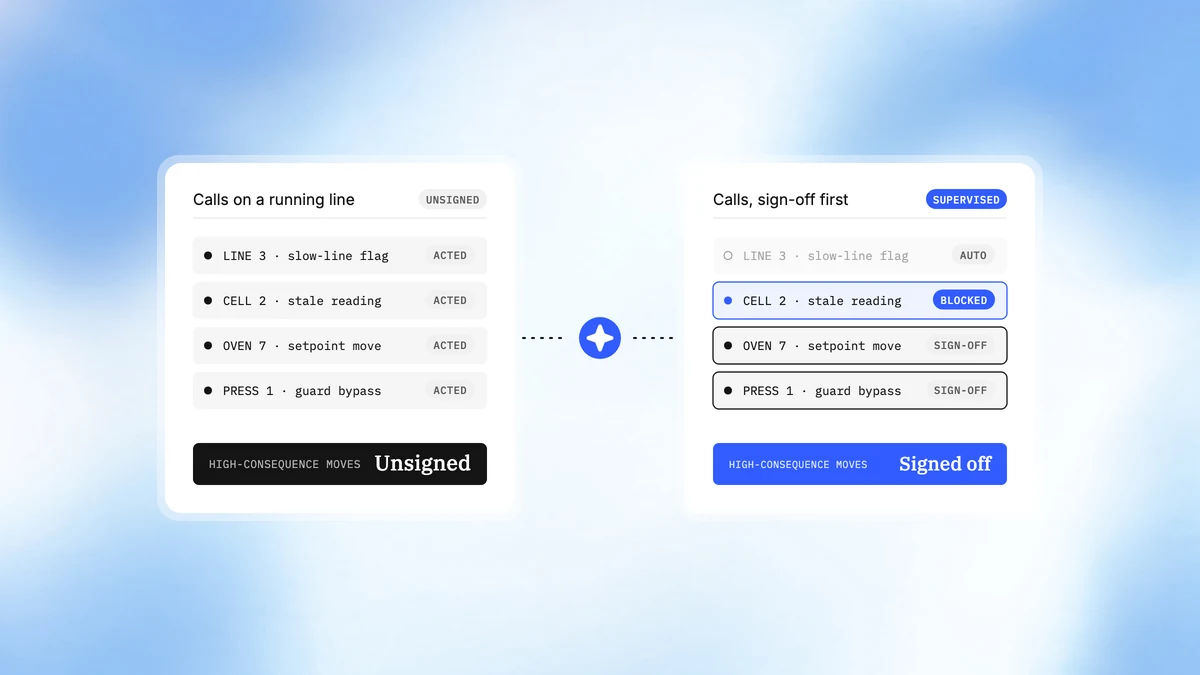
- What it never writes. It does not change a price, choose a supplier or edit a contract. It allows the action, holds it, or hands it back with the deviation named. A checkpoint that can rewrite the order is not a checkpoint.
A checkpoint with a stake in the outcome is not a checkpoint.
CreateOS sells no procurement suite, no sourcing platform and no negotiation agent, which is the only reason its verdict on your own rules is worth anything.
Outcome Derived
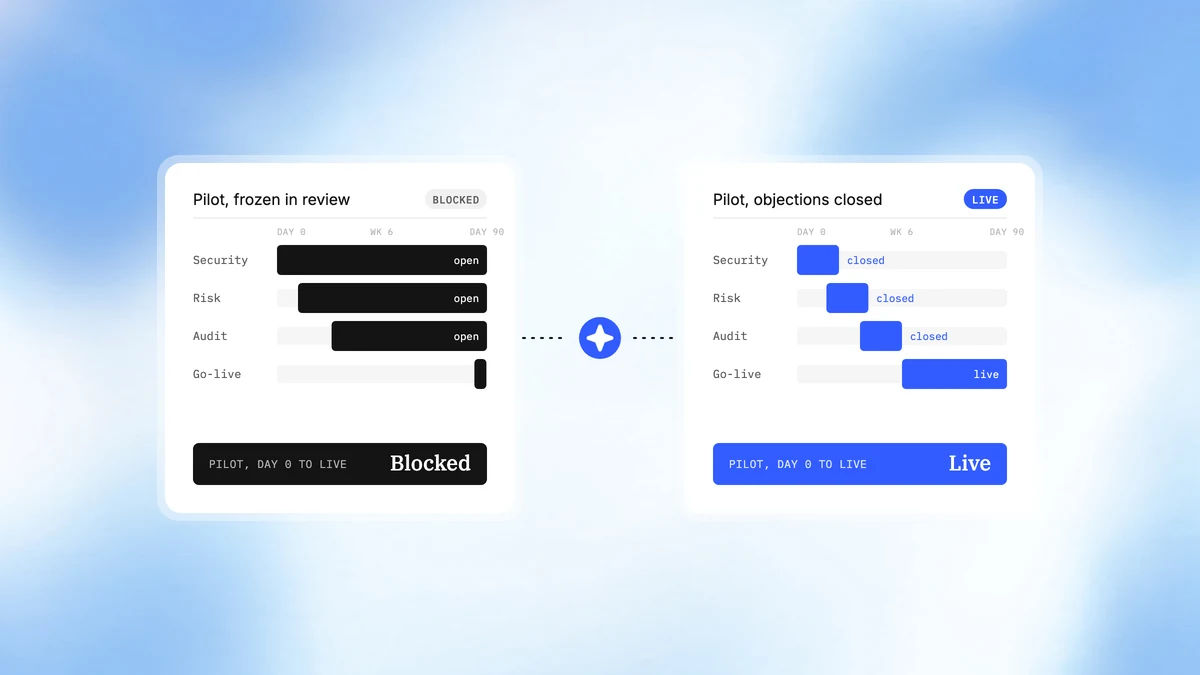
This is a 60 to 90 day pilot on a single line, cell, category or product family. The figures below are what the pilot measures against a baseline captured in its first two weeks. They are targets and instrumentation, not results already delivered.
- Off-contract spend stopped before commit. Counted per held order, with the rule that held it.
- Price variance against contract. Measured on the pilot category against the weeks 1-2 baseline.
- Spend under management. Tracked as the share of actions passing through the checkpoint.
Highlights
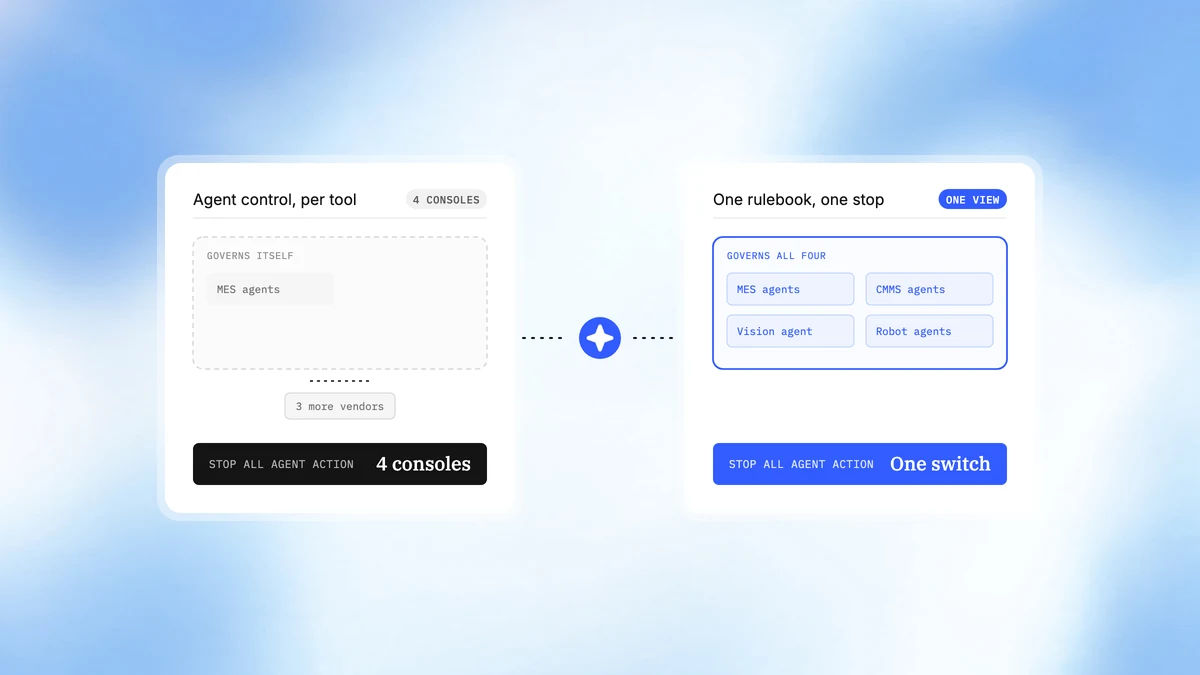
- One checkpoint sits in front of the moment money is committed, whether a buyer placed the order or a tool proposed it.
- Contract coverage, agreed pricing, supplier standing and duplicate commitments are checked against live ERP, not against last month's extract.
- Supplier risk is checked before a purchase order commits, so a supplier who slipped onto a watchlist stops receiving orders automatically rather than after someone notices.
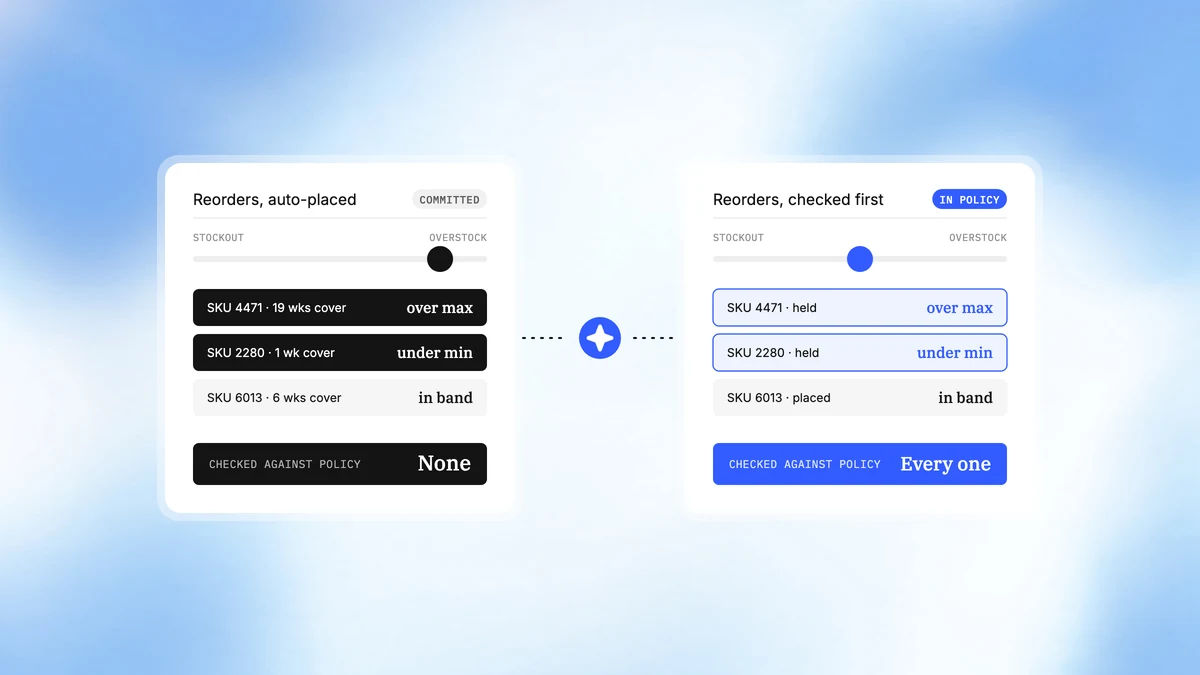
- Low-risk reorders and consolidations flow through. Anything committing money above the threshold reaches a buyer with the contract term and the deviation attached.
- The readout is in committed dollars with an audit trail behind it, which is the form a CFO can act on.
Frequently asked questions
Do we replace our procurement tools?
No. The requisition system, the contract repository and the ERP all stay. The checkpoint sits in front of the moment a commitment is made and checks it against your own policy and live ERP. What changes is that a rule now sits on the path an order takes, not only in a document.
What gets stopped?
An order outside contract coverage, a price above the negotiated tolerance, a duplicate of a commitment already open, or a supplier who is no longer active or has moved outside their risk tier. Each is handed back with the contract term and the deviation attached so the buyer decides with the facts in front of them.
Will this slow buyers down?
Low-risk reorders and consolidations pass without waiting. Only commitments above the thresholds you set reach a person, which means buyers stop rubber-stamping everything and review the small share where their decision actually changes the number. A held order arrives with the contract term and the deviation already attached, so it is one approve or reject rather than an investigation.
How does this handle supplier risk?
Supplier standing is checked before the order commits rather than during a periodic review. A supplier who slipped onto a watchlist stops receiving new commitments at the next order, instead of continuing to receive them until someone spots the pattern in a quarterly analysis.