On this page
Pilot across two agent groups already running: baseline, watch-only, take control, readout.
Both groups observed and every action scored, with nothing held.
A single control that stops all agent action across vendors.
Challenge
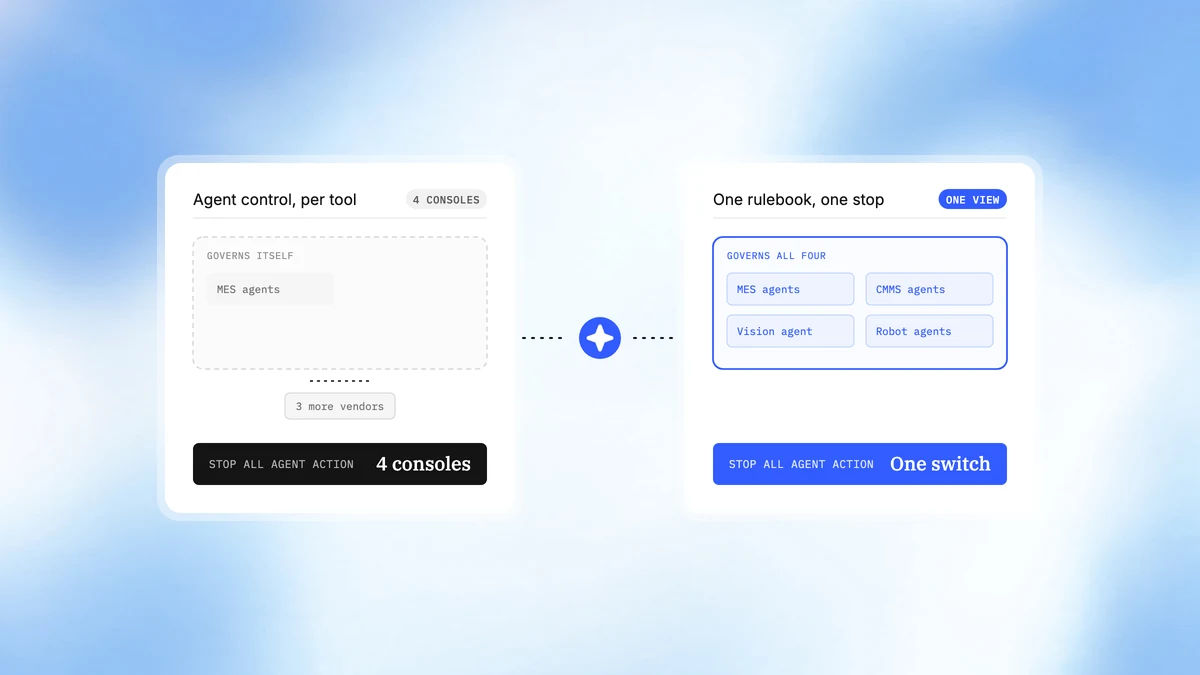
Agents from several vendors are already acting on the factory, each governed by its own console and its own rules. There is no single view of what they are doing and no single way to stop them.
- Each vendor governs only itself. Per-tool controls cannot see or stop another vendor's agent.
- Interactions are nobody's responsibility. One agent's action becomes another's input, and no console shows the chain.
- Stopping everything means stopping each thing. In an incident, the operator works console by console.
Four vendors, and the layer none of them ships
- Each vendor governs only itselfPer-tool controls cannot see or stop another vendor's agent.
- One agent's action is another's inputA chain no single console shows.
One boundary, written once
What may be touched, what needs a person, what is never permitted.
- One off-switch, not four consolesPause one agent or all of them, from one place.
- Held, not silently droppedA stopped action is recorded with its vendor and the reason.
Solution
Four vendors' agents already act on the plant, and they keep acting. What changes is that every action lands in one record, under one rulebook, behind one stop.
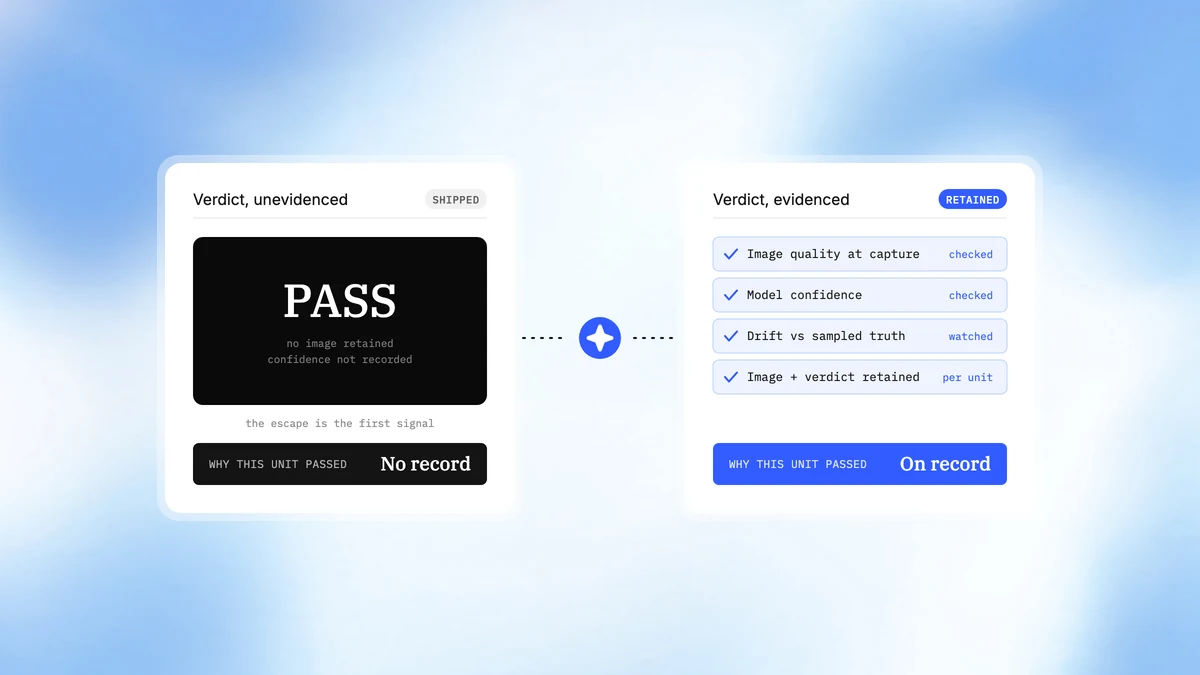
- One view across every agent, whoever built it. Actions from all vendors land in a single record.
- One rulebook applied to all of them. What each agent may touch is set once and enforced uniformly.
- One control that stops everything. A single off-switch that holds all agent action, without logging into each vendor's console.
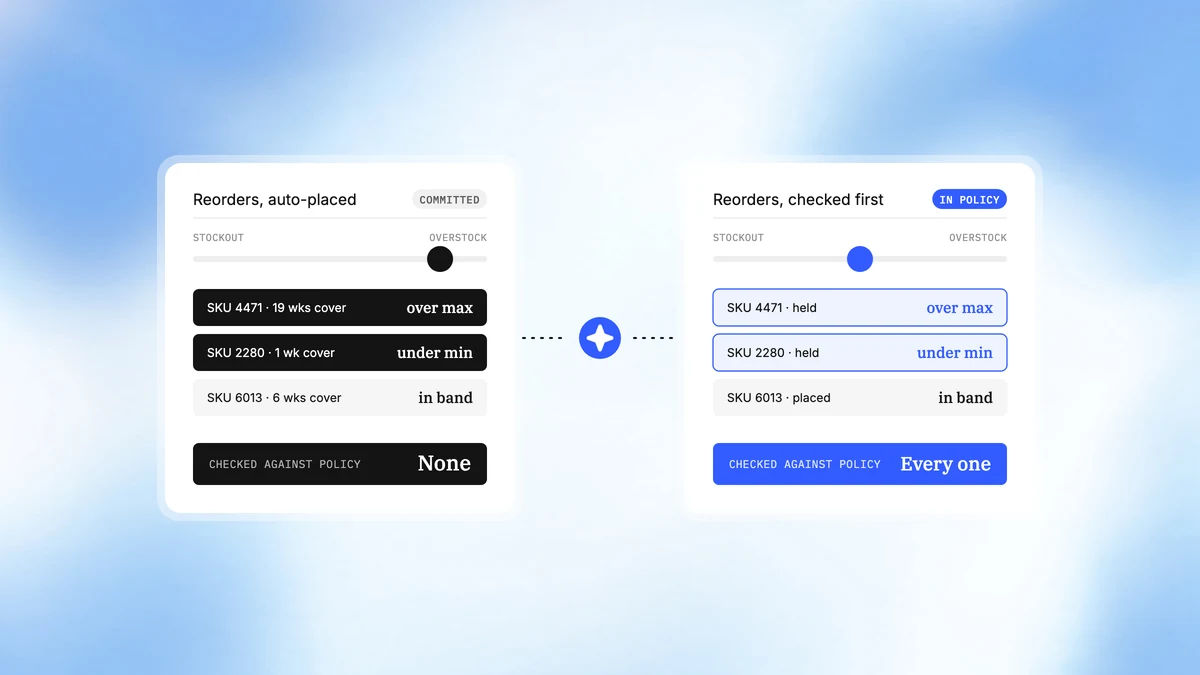
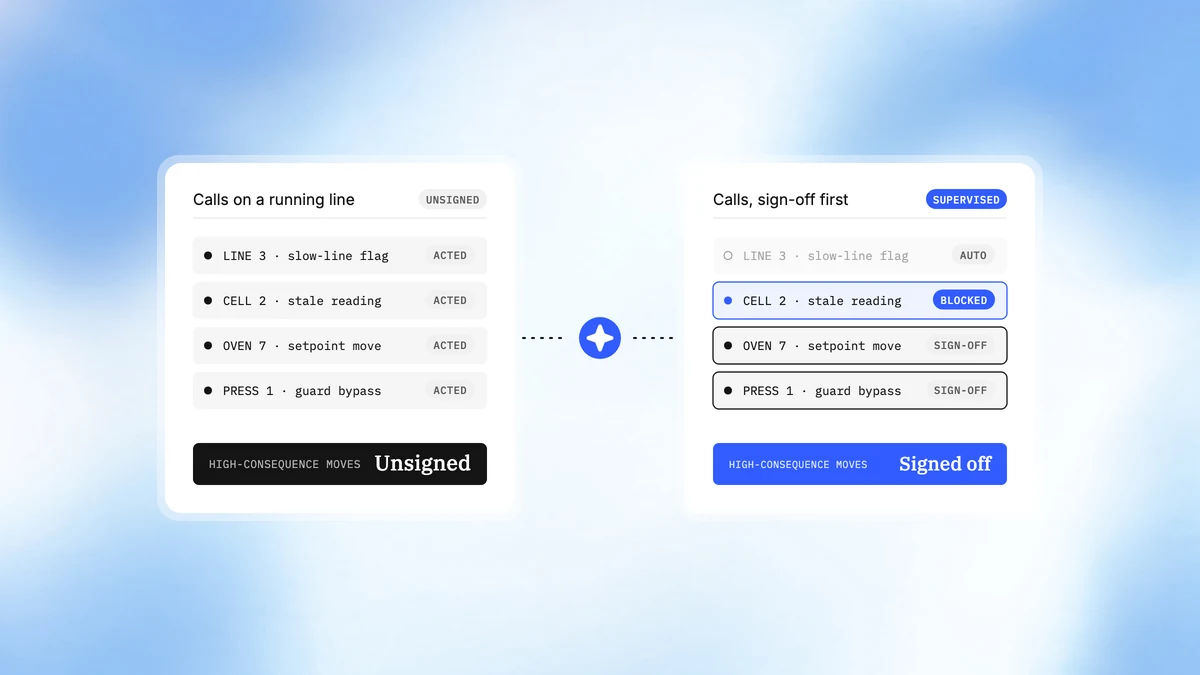
- Risky moves held regardless of origin. The rule attaches to the action, not to the tool that proposed it.
What One Rulebook Means Across Four Vendors
The rule attaches to the action, not to the tool that proposed it. That is the difference between governing an estate of agents and configuring each of them separately while hoping the settings agree.
- The boundary is written once. What may be touched, what needs a person, and what is never permitted, defined per system of record and per action type rather than once per vendor in a different console.
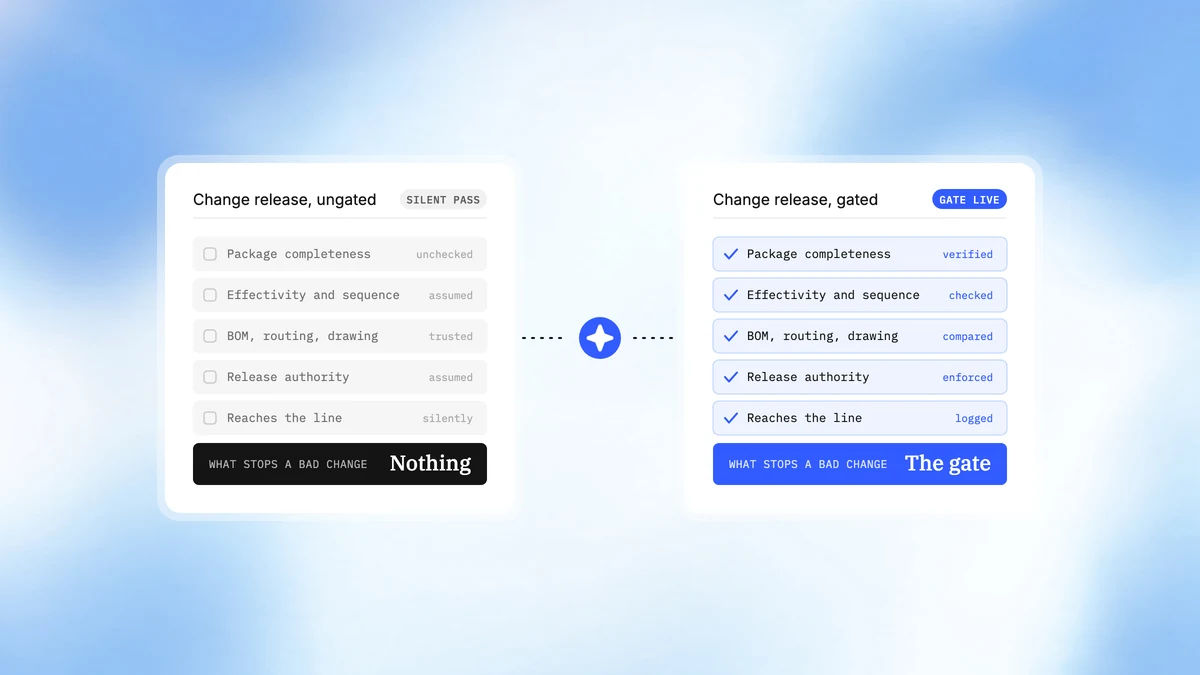
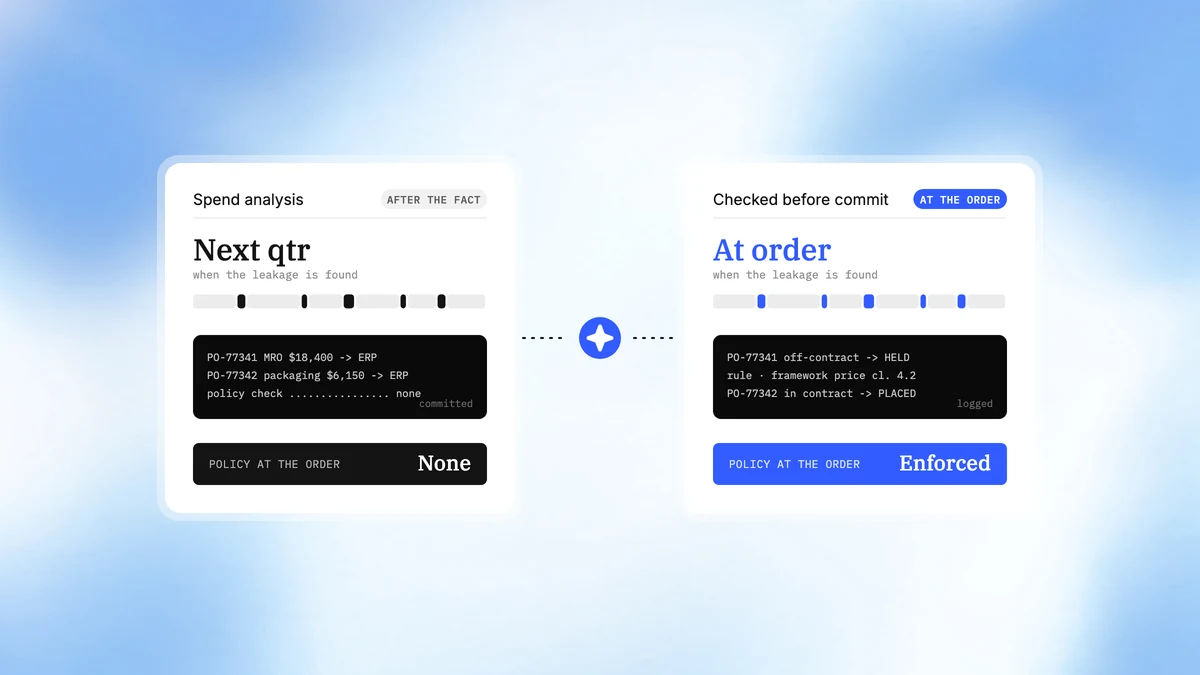
- It is enforced beneath the agents. Every agent clears the same checkpoint on the way to your systems, so a vendor's own permissive default cannot widen what its agent is allowed to do here.
- Interactions become visible. One agent's action is another's input. A chain no single console can show is exactly what a shared record exists for, and it is where the surprising failures live.
- A new agent inherits the rules. The next tool the plant buys arrives inside the same boundary on day one, rather than starting life as another separately-governed island to be reconciled later.
What the Off-Switch Actually Does
A stop that requires four logins is not a stop. In an incident the number that matters is the time between deciding to halt and everything actually being halted.
- Pause one agent, or all of them. From one place, without opening each vendor's console. Scope can be narrowed to a system, a site or an action class rather than being all or nothing.
- Held, not silently dropped. Stopped actions are recorded with their originating vendor and the reason, so restarting is a decision made against a list rather than a hope that nothing was lost in the halt.
- The state it leaves behind is defined. What happens to work already in flight is agreed per system of record before go-live, because an incident does not leave time to answer that question well.
- The record spans the estate. One incident review reads one record. Reconciling several consoles after the fact is how the interaction that caused the incident stays invisible until it happens again.
Any vendor selling floor agents can only ever govern its own.
One view and one stop across the estate has to come from a layer that competes with none of them.
Outcome Derived
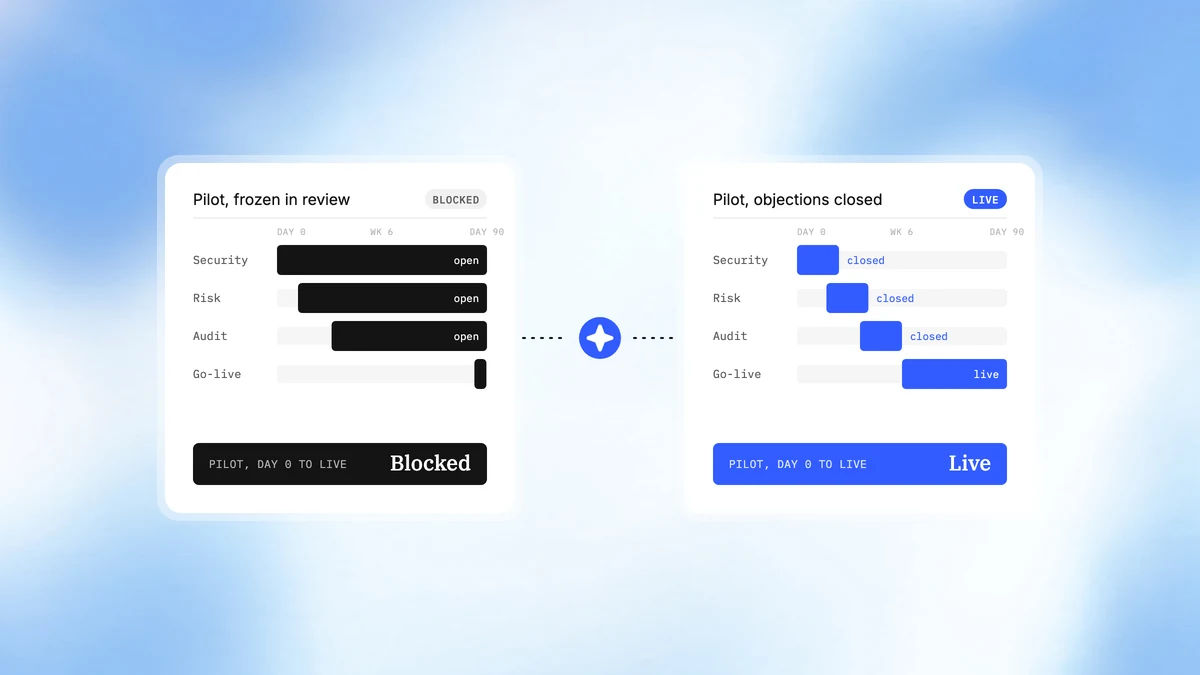
This is a 60 to 90 day pilot on a single line, cell, category or product family. The figures below are what the pilot measures against a baseline captured in its first two weeks. They are targets and instrumentation, not results already delivered.
- Risky actions caught before the floor. Counted across both agent groups in the pilot, with the originating vendor recorded.
- One record spanning vendors. Designed so an incident review does not require reconciling several consoles.
- Time to stop all agent action. Measured, because in an incident it is the number that matters.
Highlights
- Actions from every vendor's agents land in one record, before and as they happen, instead of in four consoles that have to be reconciled afterwards.
- One rulebook decides what any agent may do alone, what needs a person first, and what it may never do, applied identically whoever built the agent.
- One control pauses, scopes or stops all agent action at once, without logging into each vendor's tool.
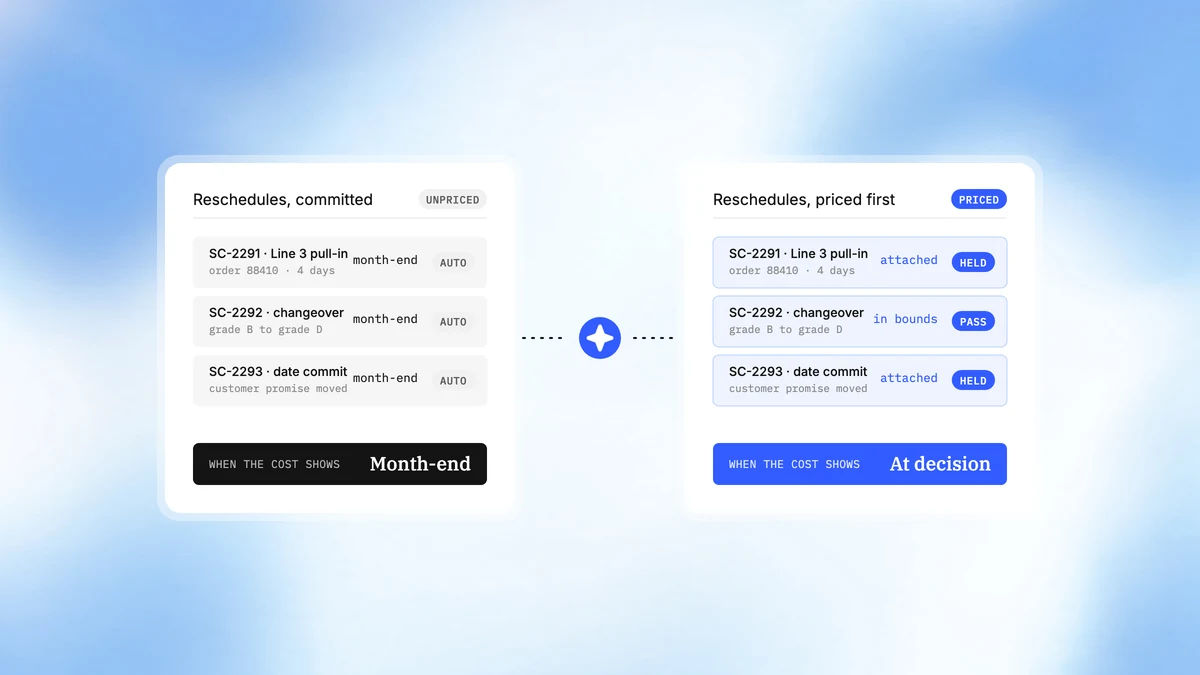
- Before a move reaches a system of record it is checked against what is true right now: inventory, machine status, open orders, approved supplier terms.
- A neutral layer is the only shape this can take. A vendor that builds floor agents can only ever govern its own.
Frequently asked questions
How do you govern AI agents for manufacturing when they come from different vendors?
By putting the rules beneath the agents rather than inside them. Every agent, whoever built it, clears the same checkpoint before it writes to a system of record, its actions land in one record, and one control stops all of them. A per-vendor console cannot do this, because it can only see and stop its own agent.
Do we have to remove the agents we already run?
No. The maintenance, planning and procurement agents keep running and the vendor relationships do not change. What is added is a single view, a single rulebook and a single stop across all of them, held by the person accountable for the P&L rather than by each supplier separately.
What does the off-switch actually do?
It pauses, scopes or fully stops agent action from one place, for one agent or for every agent at once, without logging into each vendor's tool. Stopped actions are recorded with their originating vendor and reason, and what happens to work already in flight is defined per system of record before go-live.
What is checked before an agent's move reaches our systems?
The move is compared to what is true right now: current inventory, machine status, open orders and approved supplier terms. A move that breaks a rule or does not match the live position is held for a person instead of reaching the floor, and both allowed and blocked actions are written to the same record.
Why can't our largest vendor provide this?
Because a company that builds its own floor agents can only govern its own floor agents. That is a property of its business rather than a gap in its roadmap. One view and one stop across every vendor has to be built by a layer that sells no floor agents of its own.