Chronology and Fact Reconstruction
Build a source-cited timeline from mixed matter files and flag the evidentiary gaps a lawyer needs to close.
What It Does
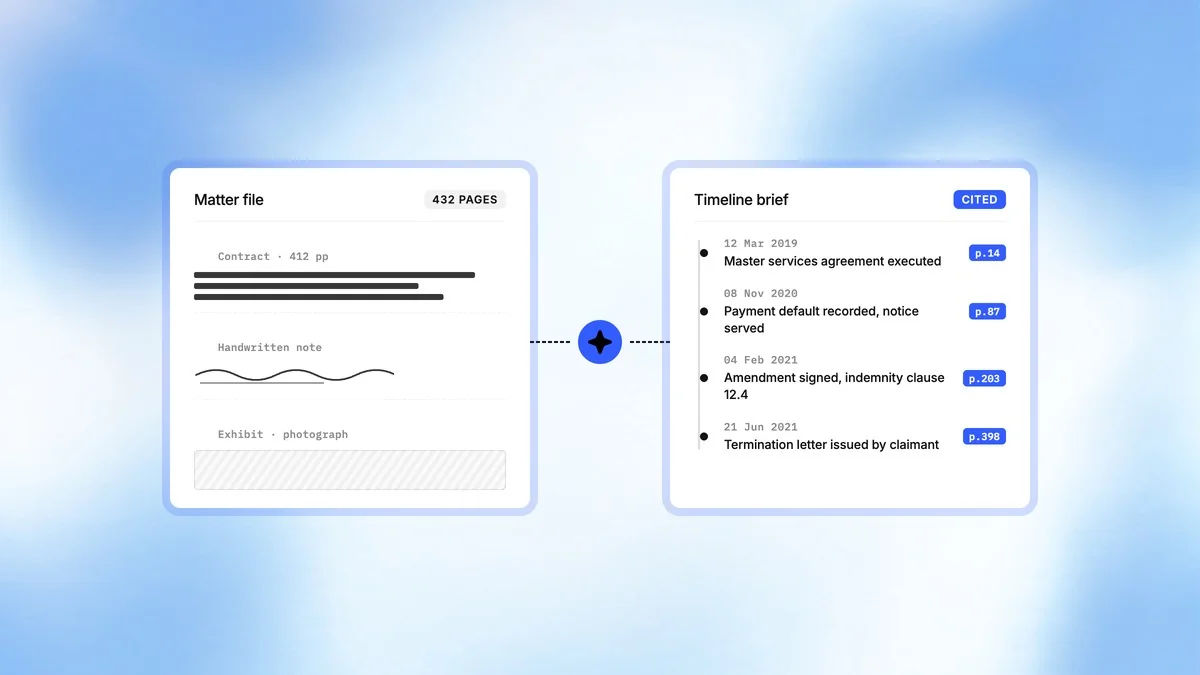
The agent reads the matter files, assembles the events into a timeline, and cites each fact to its document and page while flagging where the record is thin. A lawyer reviews and owns the brief.Without it: Reconstructing what happened across contracts, emails, notes, scanned notices, and filings is slow, and a single missed date can shift the whole story.
- Undated documents are placed by inference and marked as placed, not dated
- Conflicting dates across two sources stay side by side, neither one resolved
- Low-confidence text from scans and handwriting is flagged, not silently transcribed
- A later file drop merges into the existing chronology instead of starting a second one
Illustrative example
A client sends 412 pages for matter 2024-LT-118 as a mix of PDF scans, email exports, and photographed handwritten notes. The agent builds the timeline, keeps the termination notice twice because the letterhead reads 3 June and the courier receipt reads 6 June, and marks a four-month stretch with no documents at all. The associate opens a chronology with the conflict and the gap already on its face, and decides what to request from the client.
Document intake
Client file drops
OCR
Scan and handwriting text
Matter management
Matter number, parties
Case chronology
The existing timeline
Chronology and fact reconstruction
SuggestStarts when
Matter files land from the client in mixed formats
How far it goes
it proposes, and a person approves before anything commits
Timeline
Assembled, every fact cited
Evidentiary gaps
Marked on the timeline
Fact brief
Drafted for review
More Legal Agents
Litigation document review
Review large litigation document sets for relevance, issues, and risk, with every call cited and logged.
Contract review and redlining
Check contracts against your playbook, flag risky terms, and propose redlines for a lawyer to approve.
Clause extraction and comparison
Pull key clauses across a contract set and compare them side by side, each linked to the source.