Credit-Memo Drafting
Draft credit memos from financials and loan files, every figure traced to its source document.
What It Does
The agent reads the financials, spreads the numbers, and drafts the memo sections with each figure cited to its source. An analyst reviews and owns the recommendation.Without it: Analysts spend days re-keying financials and assembling memos before the credit committee can even meet.
- Spreads three years of statements onto your own template line items
- Add-backs and owner adjustments are listed for the analyst rather than applied
- Bureau pulls and covenant tests are stamped with the date they were run.
- Where a statement is unaudited or handwritten, the figure carries that caveat
Illustrative example
A $2.4M equipment facility for Redwood Fabrication arrives with three years of unaudited statements and a bookkeeping export. The agent spreads them, computes DSCR at 1.31x against the covenant grid, drafts the business description and financial analysis with every figure linked to the page it came from, and leaves the rating and recommendation blank. The analyst checks the spread against the statements and writes the rating and the recommendation.
LOS
Application, facility terms
Credit bureau
Pulls, stamped with dates
Document store
Statements, bookkeeping exports
Spreading tool
Your template line items
Credit-memo drafting
SuggestStarts when
A completed application or financial package reaches the credit team
How far it goes
it proposes, and a person approves before anything commits
Never
APPROVAL: enforced below the model, not asked of it
Memo sections
Drafted, rating left blank
Financials
Spread onto your template
Figures
Linked to source pages
More Financial Services Agents
Fraud-alert investigation
Triage fraud and anomaly alerts, assemble the evidence, and hand an analyst a decision-ready file.
KYC document intelligence
Read onboarding packets in full, extract what compliance needs, and flag gaps before review.
AML alert triage
Score and structure AML alerts with the supporting evidence, every decision logged for the audit file.
Case Studies
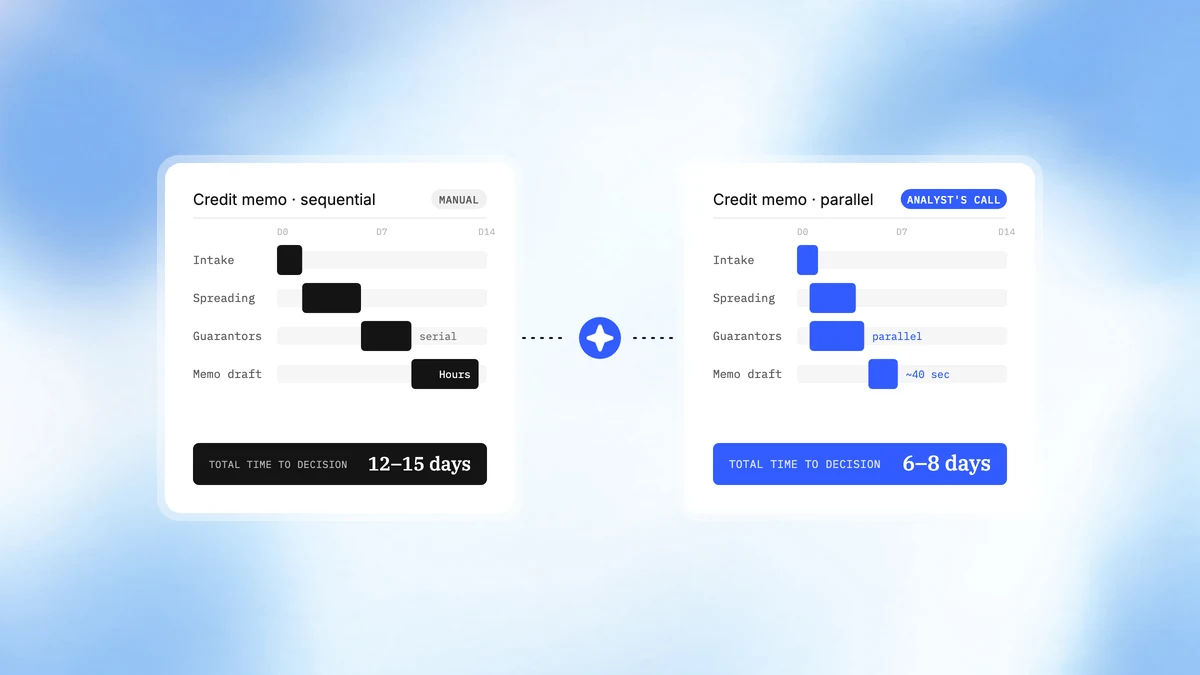
Giving Credit Analysts an Assembled File to Judge
Banking
Commercial files resist automation, yet 60% of the day was data assembly.
Read case study