Insurance Underwriting Submissions
Read the broker submission the moment it arrives, enrich it, check appetite, and price the standard risk.
What It Does
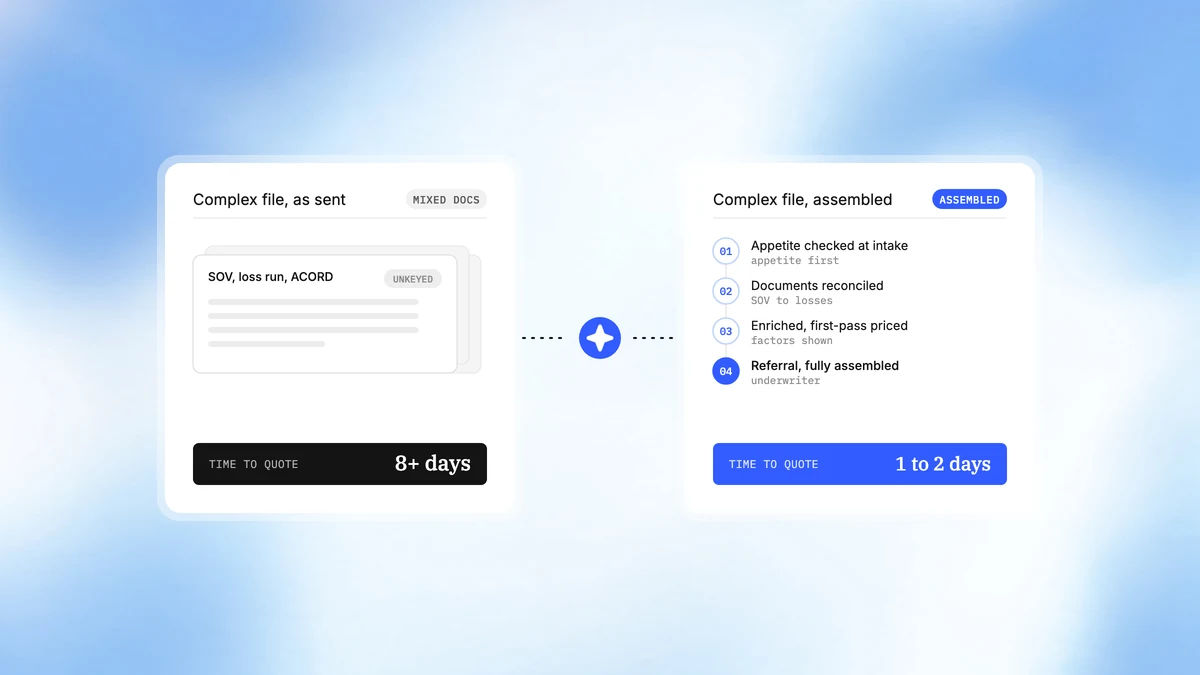
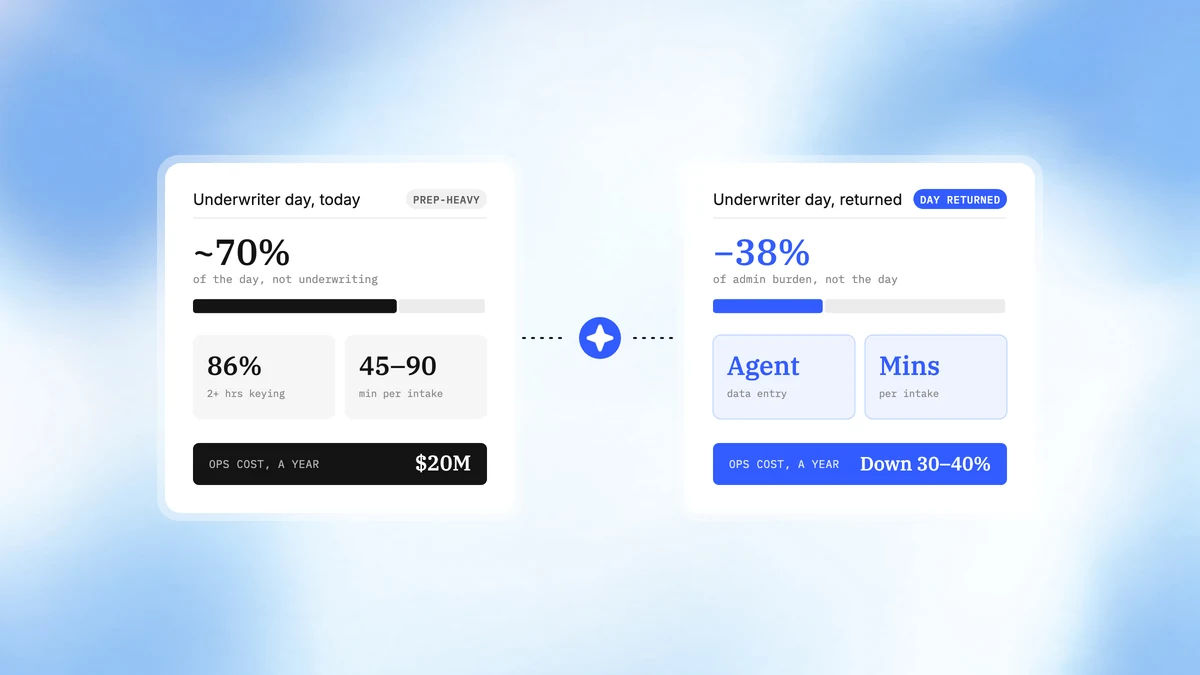
The agent reads the submission, enriches it from third-party data, reconciles the schedule of values against the loss runs, checks appetite, and prices a first pass. Every rating factor is logged as the price is set.Without it: Underwriters spend most of the day not underwriting, and nobody has capacity to write the complex book.
- Third-party hazard scores are stamped with the vendor and the date they were pulled.
- Locations on the schedule that appear in no loss year are listed out
- A missing loss year becomes a drafted request to the broker, not an underwriter question.
- Out-of-appetite risks reach the underwriter with the referral reason already written
Illustrative example
A broker emails a renewal for Cascade Foods: an ACORD 125, five years of loss runs, and a schedule of values with 34 locations. The agent enriches each address with wildfire and flood scores, identifies three locations that appear on the schedule but in no loss year, prices a first pass against the carrier's filed rates, and writes the referral reason for the one site outside appetite. The underwriter sees the number, the factors behind it, and the three unexplained locations, then decides what to quote.
Policy admin
Expiring terms, renewals
Rating engine
The carrier's filed rates
Broker inbox
ACORDs, loss runs, SOVs
Third-party data
Wildfire, flood scores
Insurance underwriting submissions
SuggestStarts when
A broker submission arrives by email or portal
How far it goes
it proposes, and a person approves before anything commits
Never
BIND: enforced below the model, not asked of it
Standard-risk quote
Priced same day, not bound
Loss runs
Reconciled to the schedule
Rating factors
Logged as priced
More Financial Services Agents
Fraud-alert investigation
Triage fraud and anomaly alerts, assemble the evidence, and hand an analyst a decision-ready file.
KYC document intelligence
Read onboarding packets in full, extract what compliance needs, and flag gaps before review.
AML alert triage
Score and structure AML alerts with the supporting evidence, every decision logged for the audit file.
Case Studies
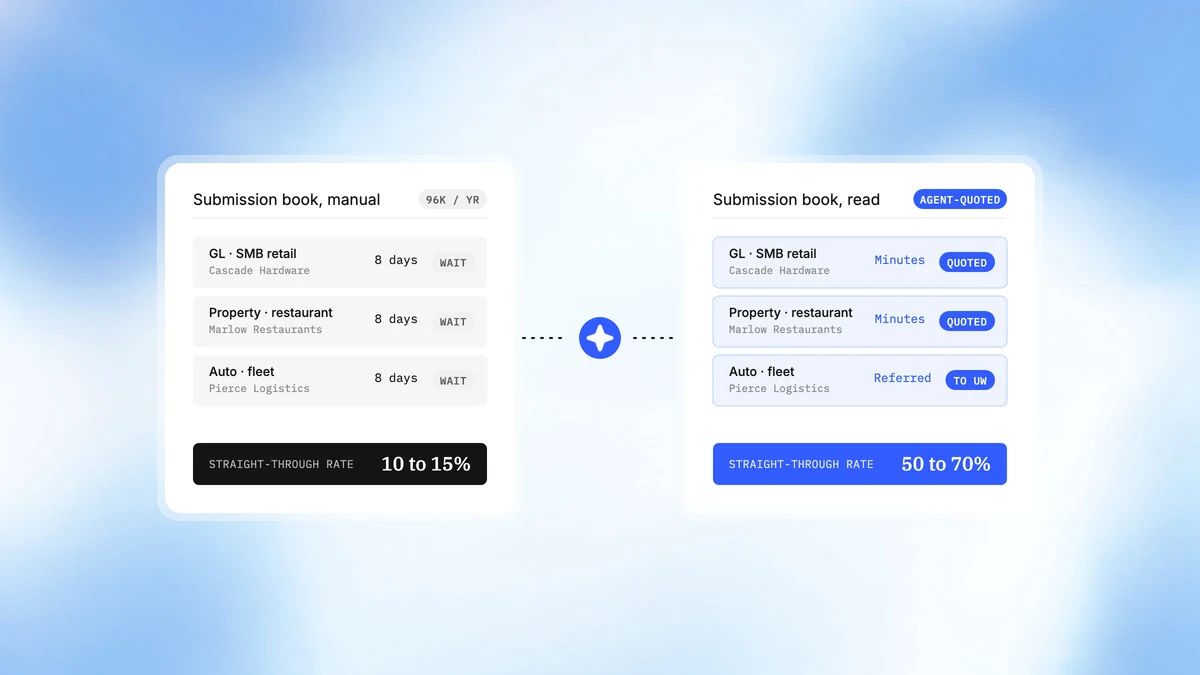
Reading a Broker Submission the Moment It Arrives
Insurance
Roughly 96,000 a year, each an email with attachments in no fixed shape.
Read case study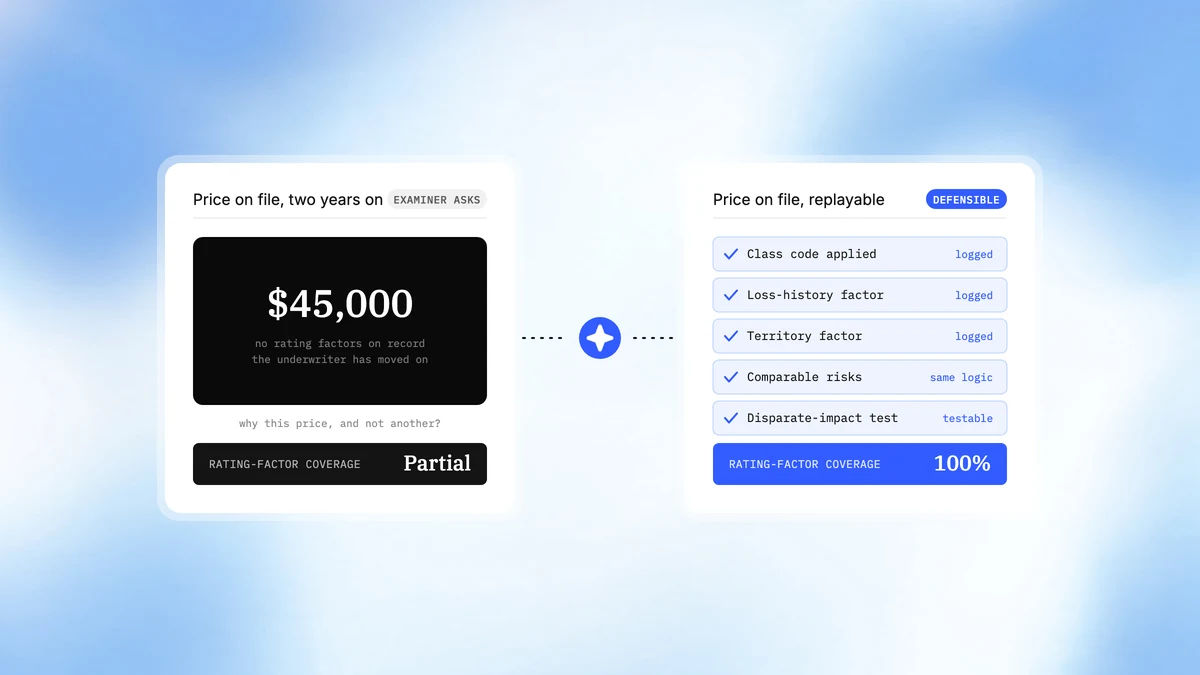
Defending a Price Two Years After It Was Set
Insurance
Rate regulation asks how the number was reached, not how fast it appeared.
Read case study