Loan-File Review
Check loan files for completeness and policy exceptions before underwriting touches them.
What It Does
The agent checks each file against your checklist and credit policy, flags missing documents and exceptions, and routes the file with its findings attached.Without it: Incomplete files bounce between teams, and policy exceptions surface late in underwriting.
- Flags documents that are present but stale, not only ones that are missing
- Separates hard policy exceptions from checklist gaps a processor can close
- Re-checks the file on resubmission and shows what changed since the last pass
- Findings post to the origination record, so the file travels with them
Illustrative example
File LN-2026-4471 comes back from processing carrying a 62-day-old appraisal and an LTV of 84% against a policy ceiling of 80%. The agent marks the appraisal stale, records the LTV as a hard policy exception with the section it breaches, and routes the file to underwriting with both findings on the origination record. The underwriter decides whether to order a fresh appraisal or take the exception upstairs.
LOS
File status, resubmissions
Document store
Appraisals, income docs
Credit policy
Ceilings, exception rules
Loan-file review
SuggestStarts when
A file is submitted for underwriting
How far it goes
it proposes, and a person approves before anything commits
Never
WAIVER: enforced below the model, not asked of it
Completeness check
Run against the checklist
Policy exceptions
Flagged, not waived
File
Routed with findings attached
More Financial Services Agents
Fraud-alert investigation
Triage fraud and anomaly alerts, assemble the evidence, and hand an analyst a decision-ready file.
KYC document intelligence
Read onboarding packets in full, extract what compliance needs, and flag gaps before review.
AML alert triage
Score and structure AML alerts with the supporting evidence, every decision logged for the audit file.
Case Studies
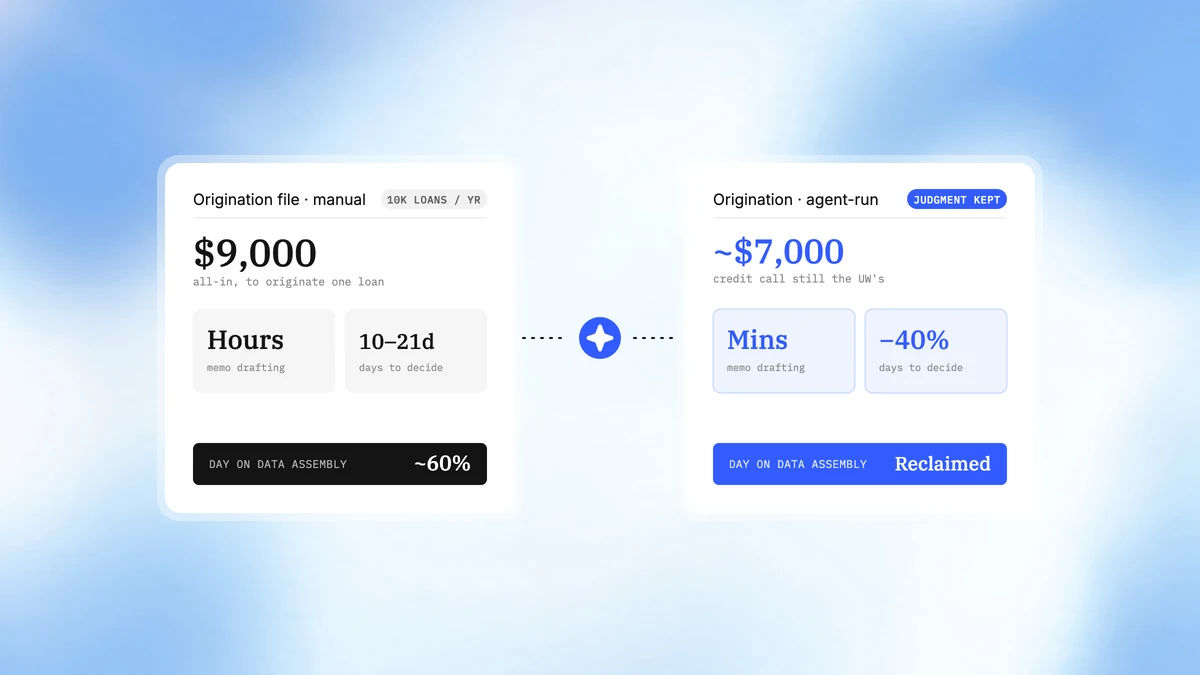
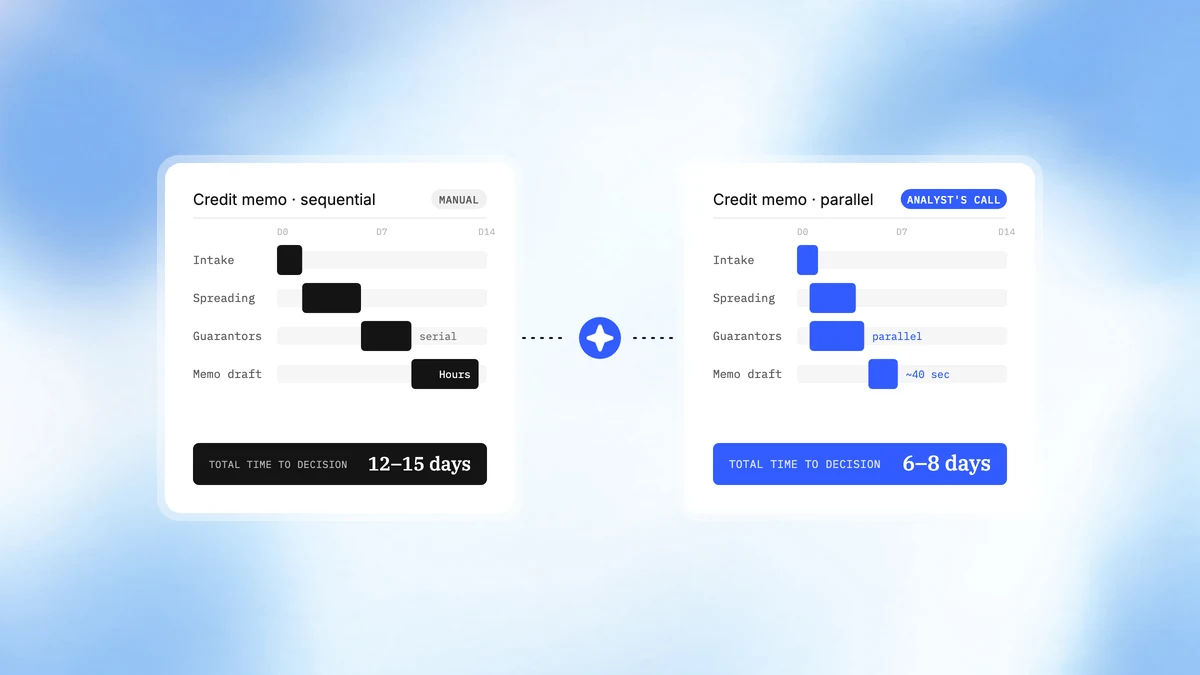
Giving Credit Analysts an Assembled File to Judge
Banking
Commercial files resist automation, yet 60% of the day was data assembly.
Read case study