On this page
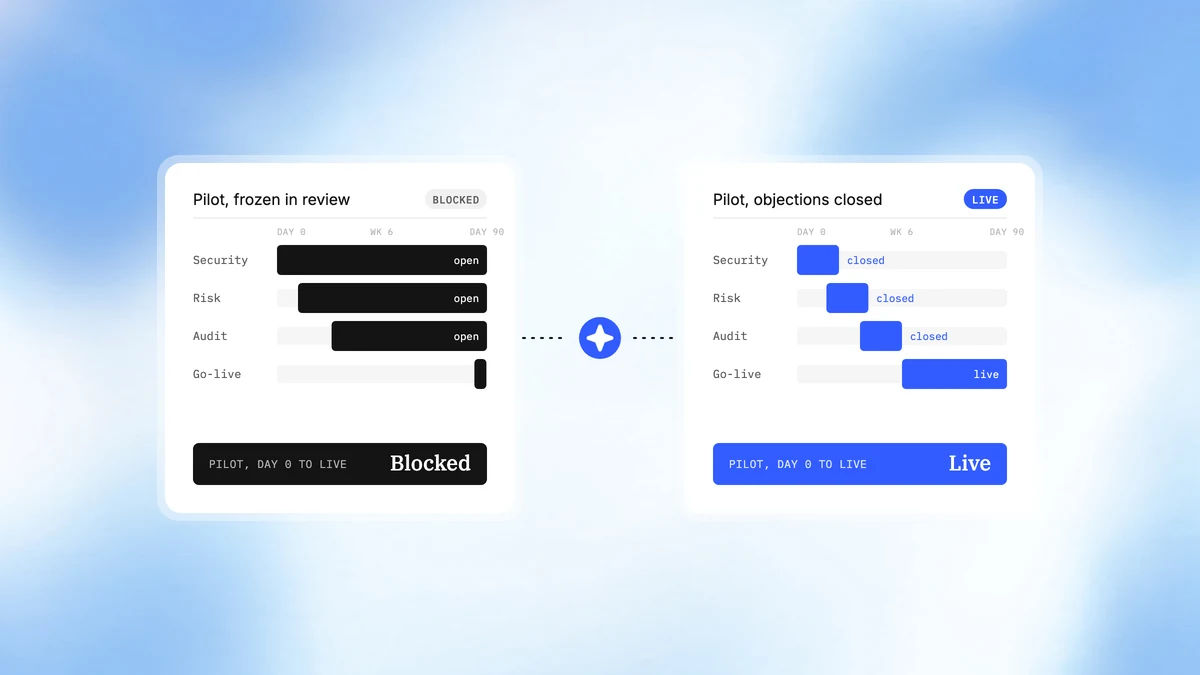
Pilot on one product family: baseline, watch-only, gate live, readout.
The gate observes every proposed change without touching the systems of record.
Every check, failure and release recorded against the change it belongs to.
Challenge
An engineering change that is incomplete, out of sequence or unauthorised does not fail visibly. It reaches the line and becomes scrap, rework, a slipped launch, or a warranty exposure discovered much later.
- The failure is silent at release. Nothing rejects an incomplete change; the line simply builds to it.
- Sequence matters as much as content. A correct change released against the wrong effectivity is still wrong.
- No single system sees the whole change. A revision touches the PLM, the ERP and the MES, plus supplier orders and the station. Each is authoritative for its own slice and blind to the rest, so every individual sign-off can be correct while the change as a whole is not.
- The cost lands far from the cause. Scrap and warranty surface weeks or months after the release that caused them.
What the gate compares before a change releases
- 01
The changed part itself
Reads The revision as proposed, across PLM, ERP and MES
Emits A complete picture no single system holds
- 02
Every dependent line
Reads Bills of materials, routings, work instructions, supplier orders
Held Incomplete changes stop here, not at the station
- 03
Effectivity against what is in flight
Reads Open and in-transit orders, and superseded revisions still circulating
Held A correct change against a wrong date is still stopped
- 04
Release authority
Reads Entitlement to release this class of change, checked not assumed
Emits The release, with every check and failure recorded against it
Solution
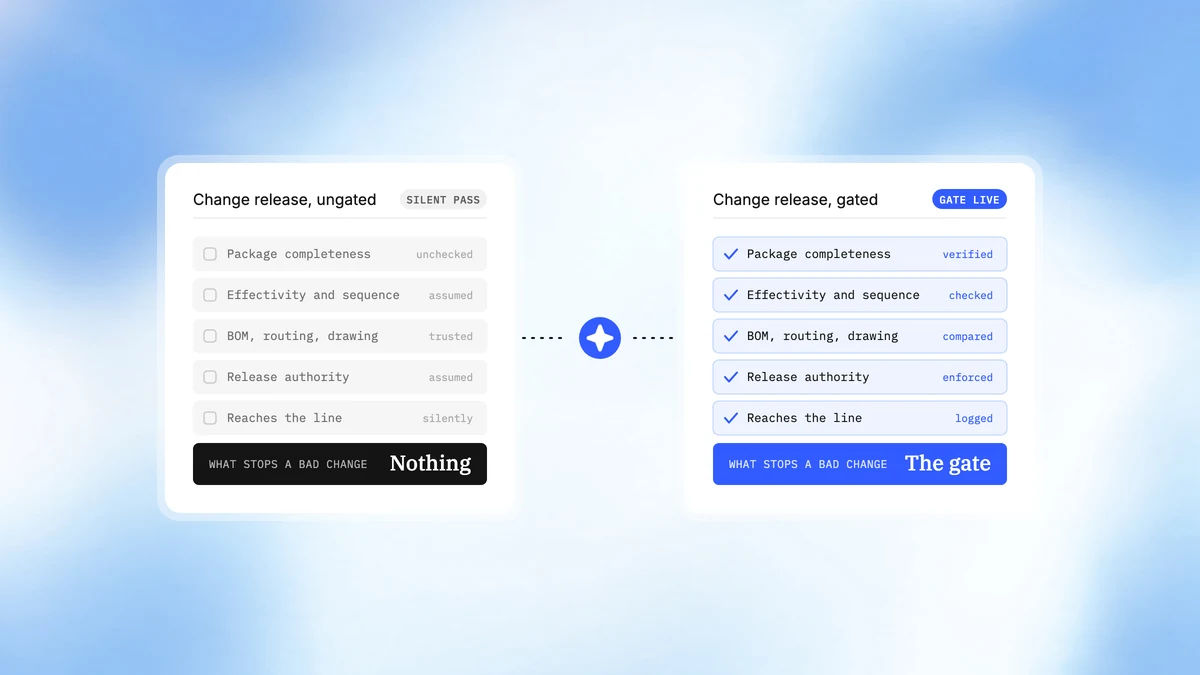
A change reaches the line once. The gate checks that it is complete, in sequence, and released by someone entitled to release it.
- A final check before release. Completeness, effectivity, sequence and authorisation are verified before the change reaches production.
- Cross-system consistency. Drawing, routing, bill of materials and work instruction are compared rather than trusted.
- Unauthorised changes stopped. Release authority is enforced at the gate, not assumed from the workflow.
- A full audit trail per change. What was checked, what failed, who released it.
What the Gate Compares, and Against What
A change is signed off one slice at a time. Engineering approves its slice, purchasing approves its slice, and the line finds out when the wrong parts arrive or a work instruction points at a revision that no longer exists.
- Every dependent line, not only the changed one. A revision to a part is checked for the bill-of-materials lines, routings, work instructions and supplier orders that depend on it. An incomplete change is the most common failure and it never announces itself.
- Effectivity against open and in-transit orders. A correct change released against the wrong effectivity date is still wrong. The date is checked against what is already ordered, already in transit, and already staged at the line.
- Superseded revisions still in circulation. Any downstream document still pointing at the revision being replaced is surfaced before release, because the line builds to whatever is at the station rather than to what the PLM believes is current.
- Release authority, enforced rather than assumed. Entitlement to release this class of change is checked at the gate. That a change passed through a workflow is not evidence that the person who released it was allowed to.
- What the gate does not do. It does not author changes, edit a drawing or choose an effectivity date, and it has no write path into PLM, ERP or MES beyond recording its own verdict. That is what keeps it an outside check rather than another system with an opinion.
Why Nothing Catches This Today
Each system is authoritative for its own slice and blind to the others, so nobody owns the only question that matters: is this change complete and in sequence everywhere at once.
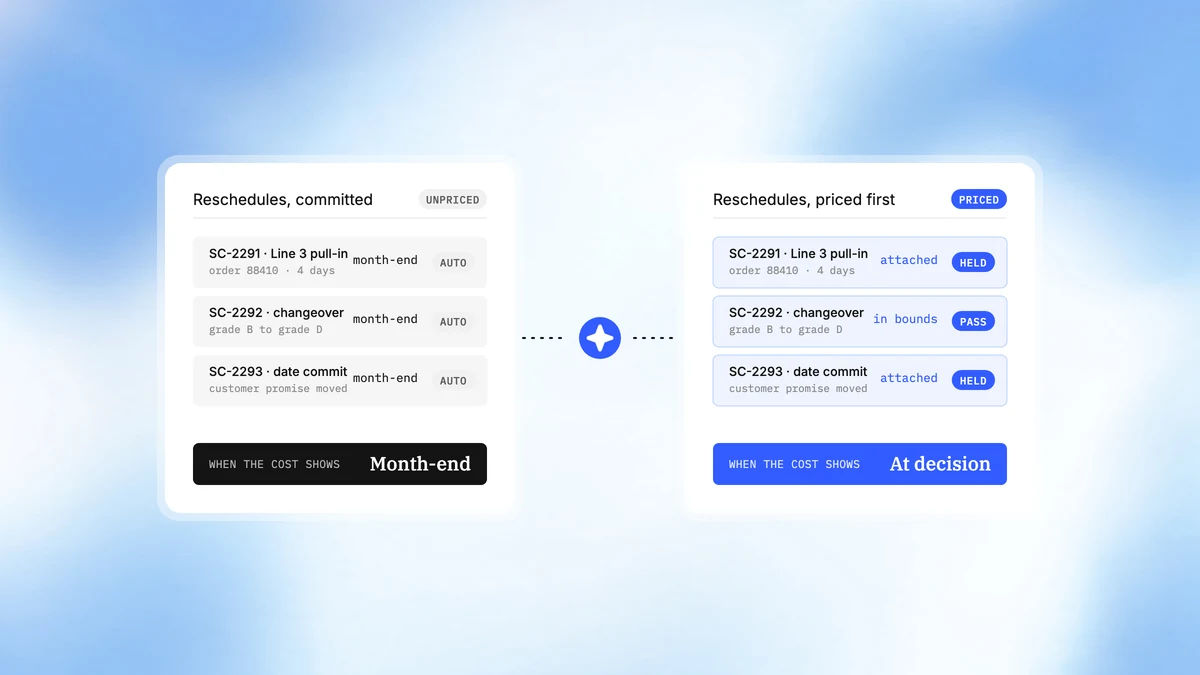
- The cost lands far from the cause. Scrap, rework and warranty surface weeks or months after release. By then the change is one of hundreds and the link back is an investigation rather than a lookup.
- Speed is not the problem. Tools that draft change records, propagate updates and generate work instructions make the change faster. Faster is useful and it is not a check.
- The gate must not become the delay. Change cycle time is measured through the pilot for exactly this reason. A gate that slows compliant changes gets worked around, and a gate that is worked around protects nothing.
- Watch-only comes first. For the first weeks the gate observes every proposed change and touches no system of record, so the plant sees what it would have caught before anything is enforced.
Every individual sign-off can be correct while the change is wrong.
That is the shape of the failure, and it is why the check has to sit outside all of the systems it reads.
Outcome Derived
This is a 60 to 90 day pilot on a single line, cell, category or product family. The figures below are what the pilot measures against a baseline captured in its first two weeks. They are targets and instrumentation, not results already delivered.
- Scrap and rework tied to change error. Measured against the baseline for one product family, captured before the gate goes live.
- Change cycle time. Tracked to show the gate is not adding delay to compliant changes.
- A complete release trail. Designed to make root cause on a change-related defect a lookup rather than an investigation.
Highlights
- One gate looks across the PLM, ERP and MES a change actually touches, which is the view no single one of them holds.
- Completeness, effectivity, sequence and release authority are verified before the change reaches production, not audited after the line has already built to it.
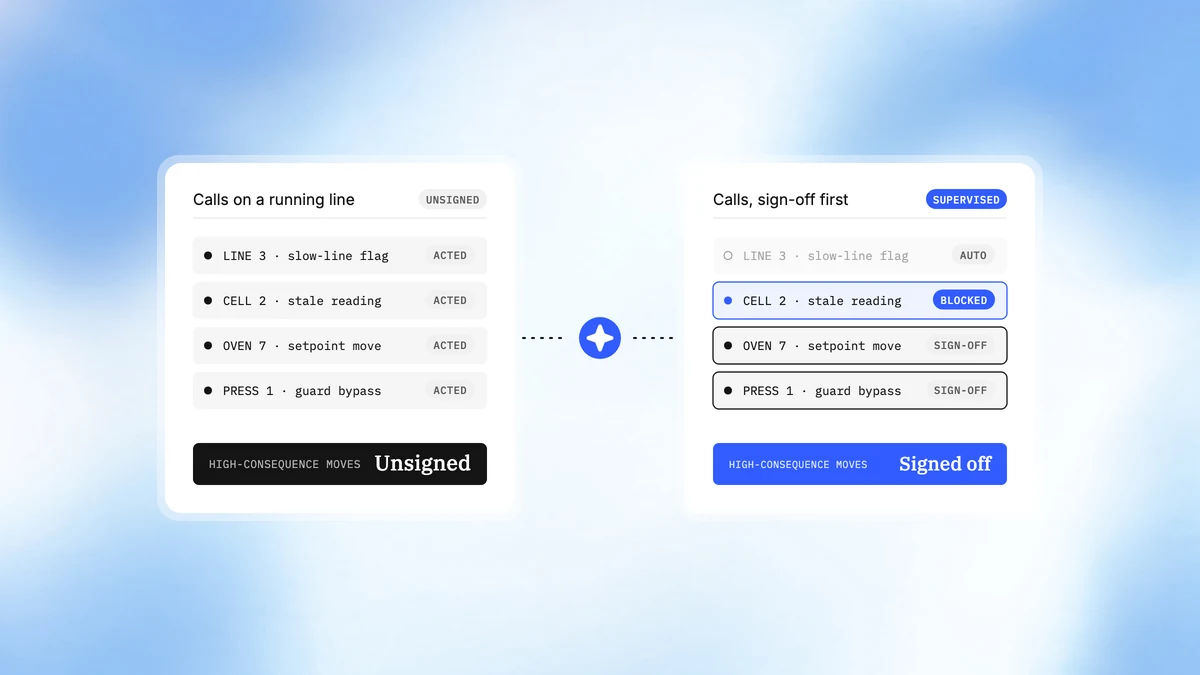
- A minor documentation edit flows through. Anything touching form, fit, function or a regulated characteristic stops for the named approver with the impact list attached.
- Every check, failure and release is recorded against the change it belongs to, so a field failure resolves to a change in one lookup.
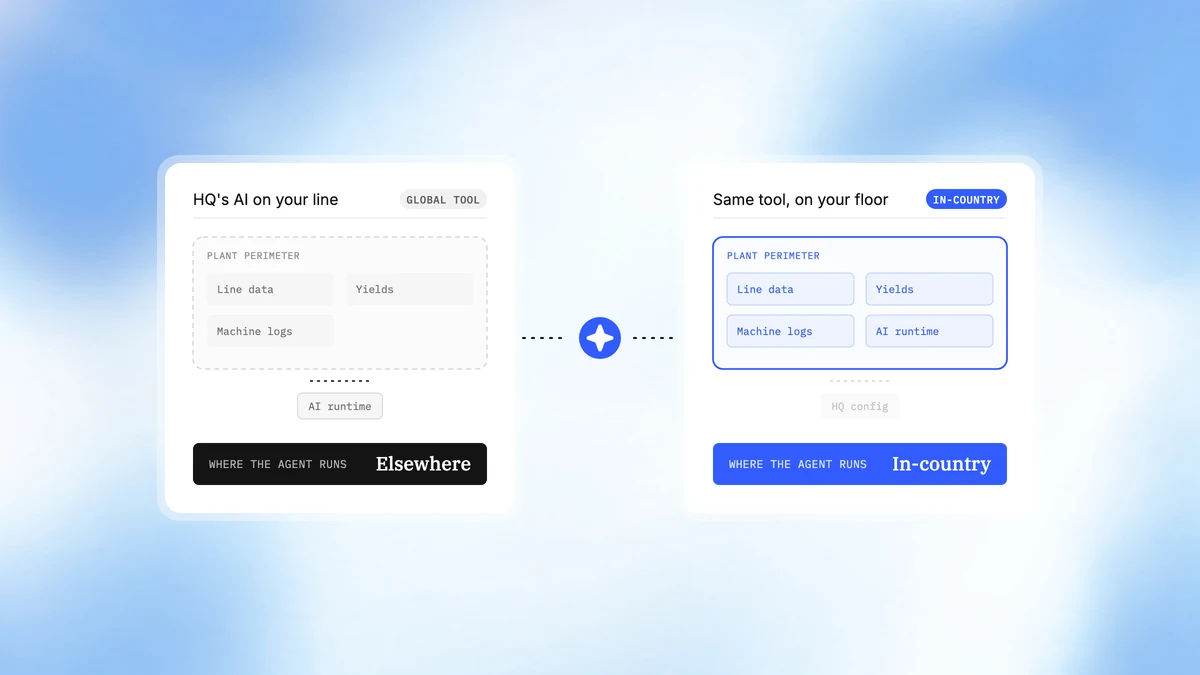
- Runs inside the manufacturer's own environment. Drawings, routings and change records do not leave.
Frequently asked questions
What does engineering change management software miss that causes scrap?
The cross-system view. A change touches the PLM, the ERP and the MES plus supplier orders and the station, and each system is authoritative only for its own slice. An incomplete or out-of-sequence change passes every individual sign-off and still reaches the line, where it becomes scrap, rework, a slipped launch or a warranty claim.
Do we replace our PLM or change-management tools?
No. The tools that draft and push changes keep doing it. This is a final outside check that sits across them and verifies completeness, effectivity, sequence and release authority before a change is released. Nothing is re-implemented and no engineer moves to new software.
What actually stops a change?
A dependent bill-of-materials line that was not updated, an effectivity date that does not work against open and in-transit orders, a downstream document still pointing at the superseded revision, or a release by someone without authority for that change class. The change is returned with the failing check named.
Will the gate slow down changes that are fine?
A minor documentation edit flows through. Anything touching form, fit, function or a regulated characteristic stops for the named approver with the impact list attached. Change cycle time is tracked through the pilot specifically to show the gate is not adding delay to compliant changes.
How does a field-failure investigation use this?
Every check, every failure and every release is recorded against the change it belongs to. A defect traced to a change becomes one lookup rather than a multi-week reconstruction across engineering, purchasing and the line, which is usually where the investigation cost actually sits.