Production Scheduling
Build production schedules that respect capacity, orders, and constraints, for a planner to approve.
What It Does
The agent proposes a schedule that fits capacity and due dates, explains the trade-offs, and lets a planner adjust and approve.Without it: Scheduling by spreadsheet cannot keep up with changing orders and machine availability.
- Sequences to cut changeovers, and shows what each reordering costs in due-date slack
- Material on hand and dated inbounds are checked before a job is seated
- Shift calendar closures and planned maintenance windows are seated before any job is placed
- Orders infeasible on every sequence are listed with the constraint that binds
Illustrative example
A rush order for 8,000 units lands on Thursday against a book already full through the following week. Two sequences come back: one pushes a non-committed job out two days, the other adds a Saturday shift on line 3, each shown with its changeovers and the yarn inbound it depends on. The planner takes the Saturday shift, edits the start time, and approves it into the execution system.
Order book
Open orders, due dates
MES
Jobs in progress
Shift calendar
Shifts, closures, maintenance
Material inventory
On hand, dated inbounds
Production scheduling
SuggestStarts when
A new order enters the book, or machine availability changes
How far it goes
it proposes, and a person approves before anything commits
Never
SCHEDULE: enforced below the model, not asked of it
Schedule
Proposed, not committed
Trade-off view
Shown per sequence
Planner approval
Queued for sign-off
More Manufacturing Agents
Fabric defect detection
Spot fabric defects on the line in real time, with every flag logged for quality review.
Visual quality inspection
Inspect products against your quality standard and route anything out of spec for a person to check.
CCTV compliance monitoring
Turn existing CCTV into governed, real-time compliance oversight, with privacy masking built in.
Case Studies
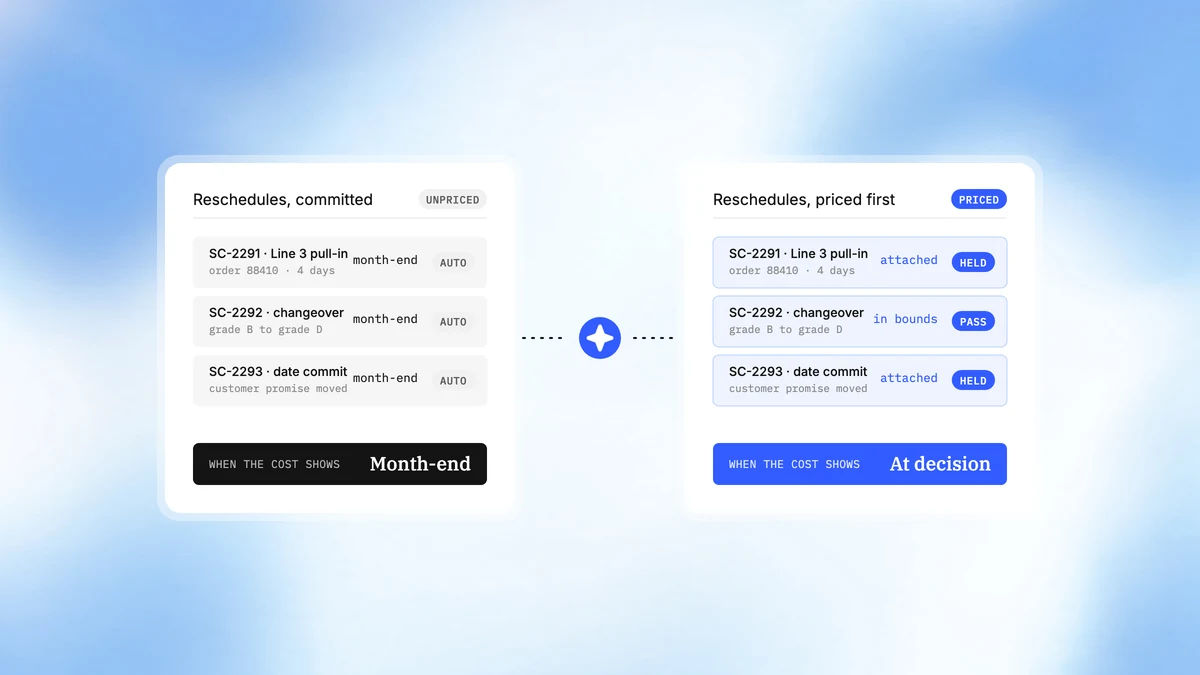
Every Reschedule Bleeds Expedite Freight
Manufacturing
Out-of-bounds schedule changes are held for a planner before they commit.
Read case study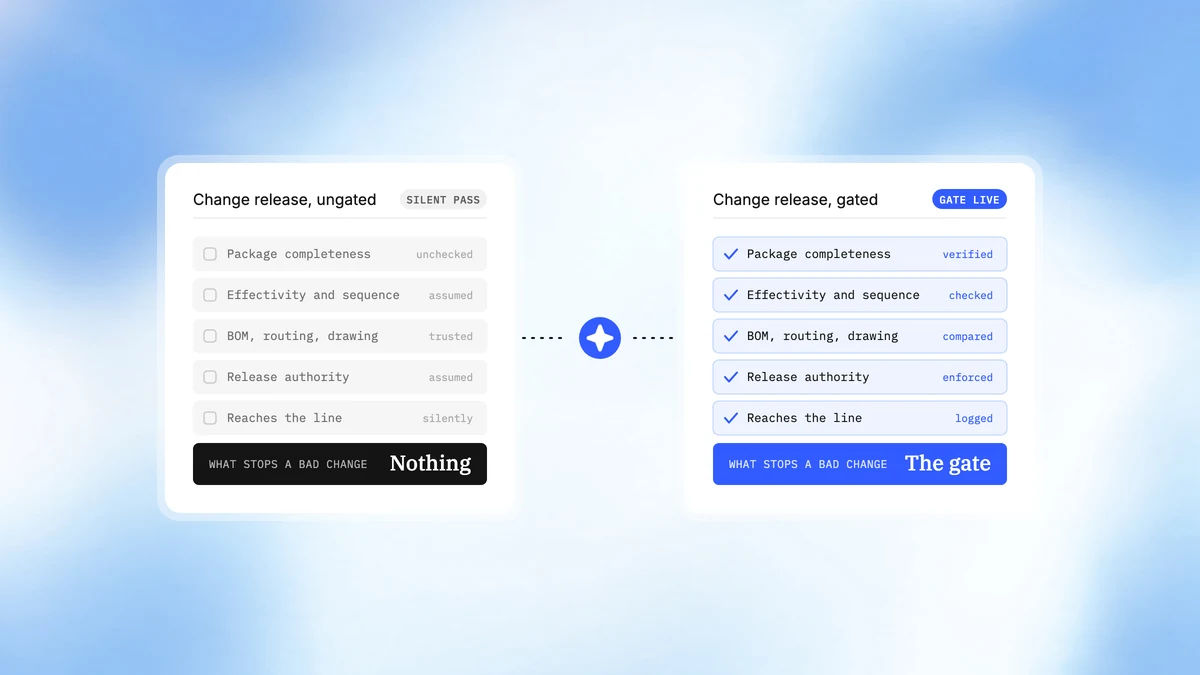
Engineering Change Management That Stops Scrap
Manufacturing
Changes are checked for completeness and sequence before they are released.
Read case study