On this page
Suppliers closed and average saving in the documented Walmart rollout (Harvard Business Review), cited as market evidence rather than a CreateOS result.
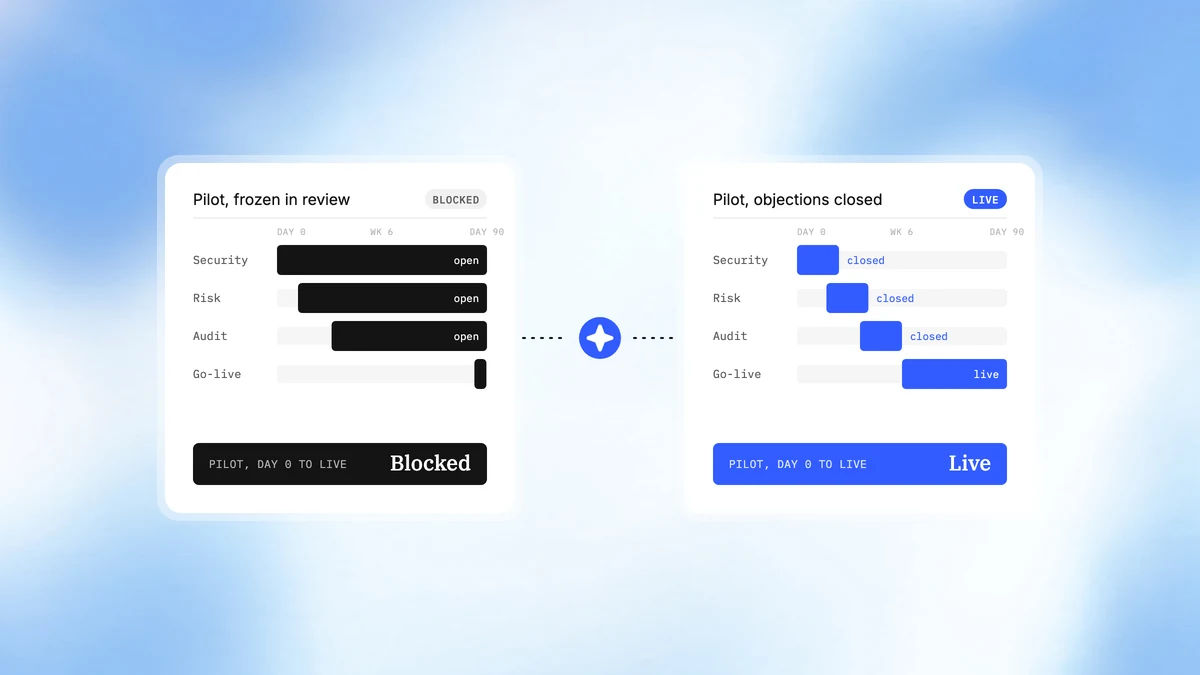
Pilot on one spend category: baseline, watch-only, enforce, readout.
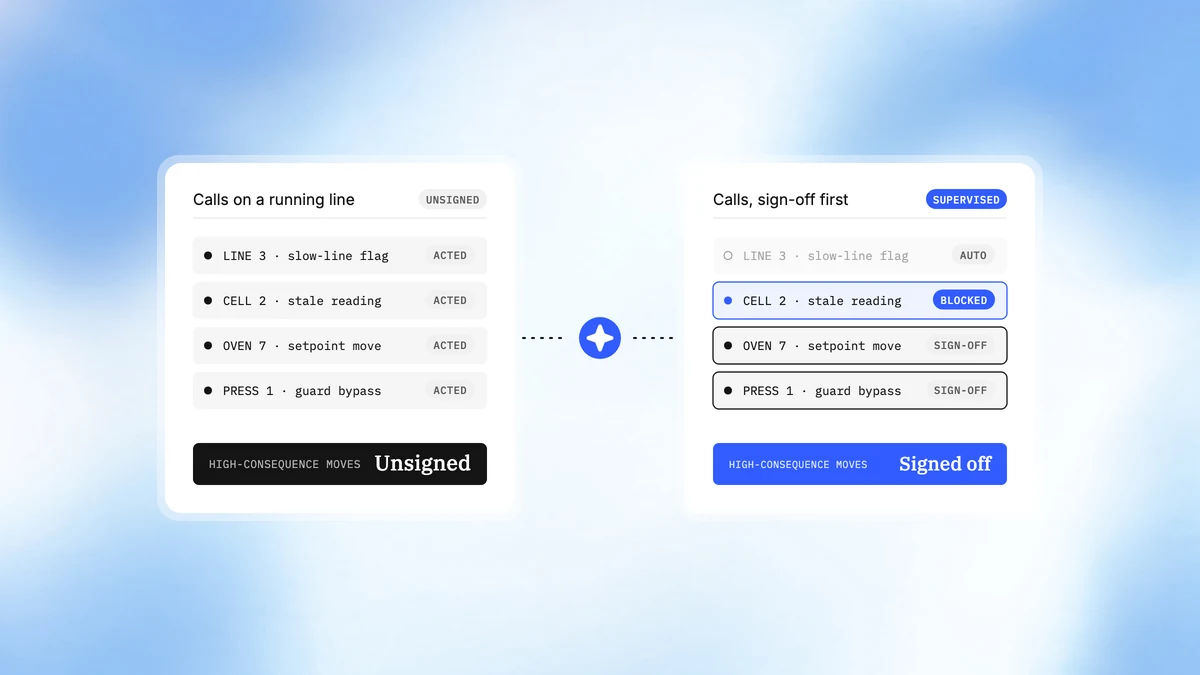
Limits enforced beneath the agent, outside anything the model can alter.
Challenge
Agents now negotiate price, payment terms and volume commitments directly with suppliers. The capability is documented rather than vendor-claimed, which is what makes the governance question urgent.
- The results are real and independently reported. Walmart's agent rollout closed with 68% of the suppliers it approached, averaging around 3% savings (Harvard Business Review).
- A signed term is a commitment, not a draft. Once an agent agrees payment terms, the company is bound by them.
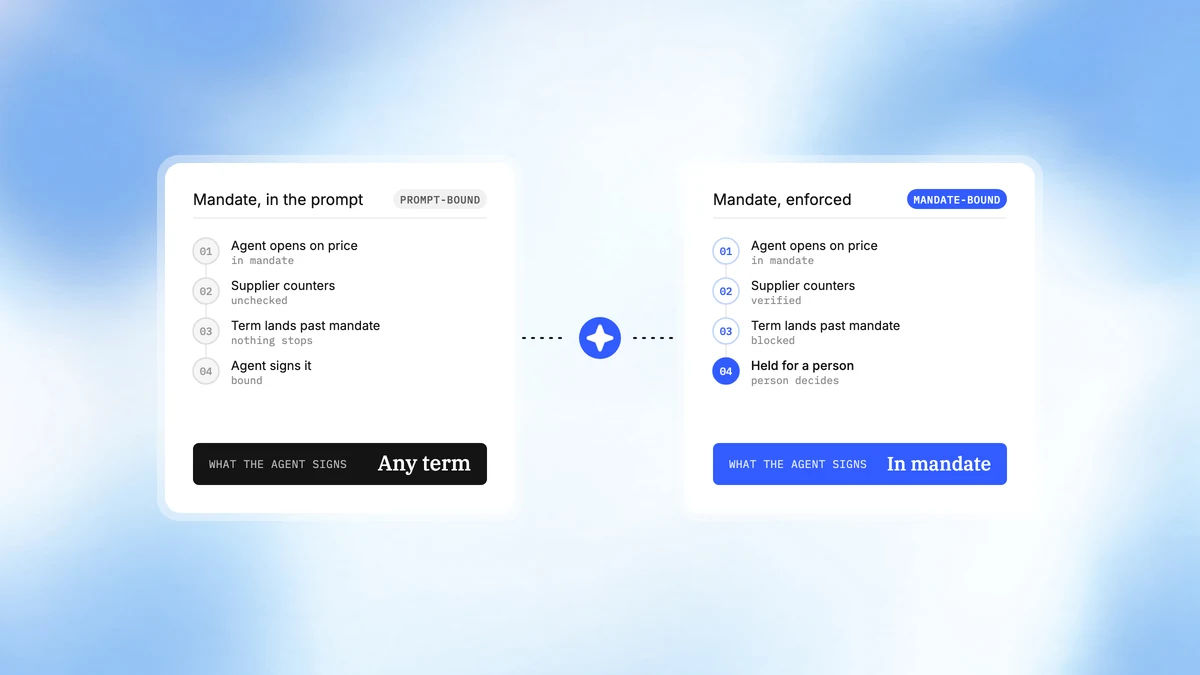
- Mandate limits live in a prompt, not a control. Instructing an agent to stay inside a band is not the same as preventing it from leaving one.
Where the mandate actually lives
Instructed in the prompt
- A request the agent may ignoreTold to stay inside a band, which is not the same as being unable to leave it.
- A signed term binds the companyOnce terms are agreed there is no draft to withdraw.
Enforced beneath the agent
- Price floors and term ranges outside itIn the layer below, where the agent cannot reach them.
- Out of band stops for a personA one-click approve or reject, with the exchange attached.
Solution
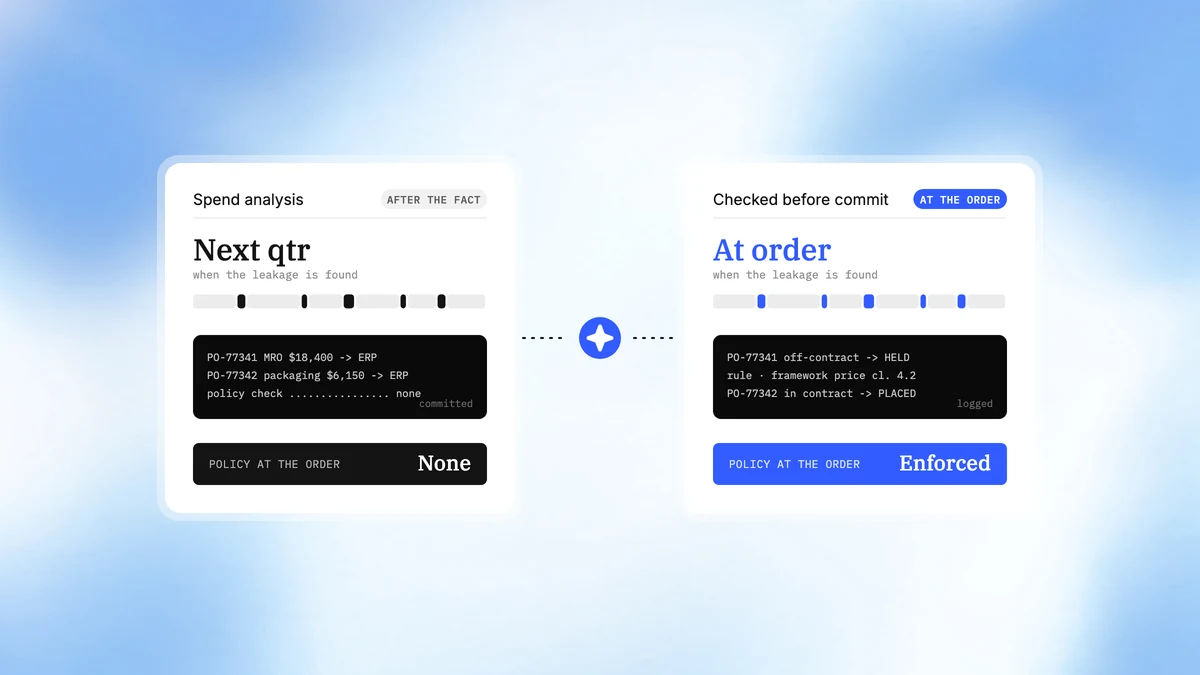
The agent still negotiates. What it cannot do is agree a number outside the mandate, because the mandate does not sit where the model can reach it.
- Limits enforced outside the agent. Price floors, term ranges and volume ceilings sit in the layer beneath, where the agent cannot rewrite them.
- Anything past the mandate stops for a person. Out-of-band terms become a one-click approve or reject with the exchange attached.
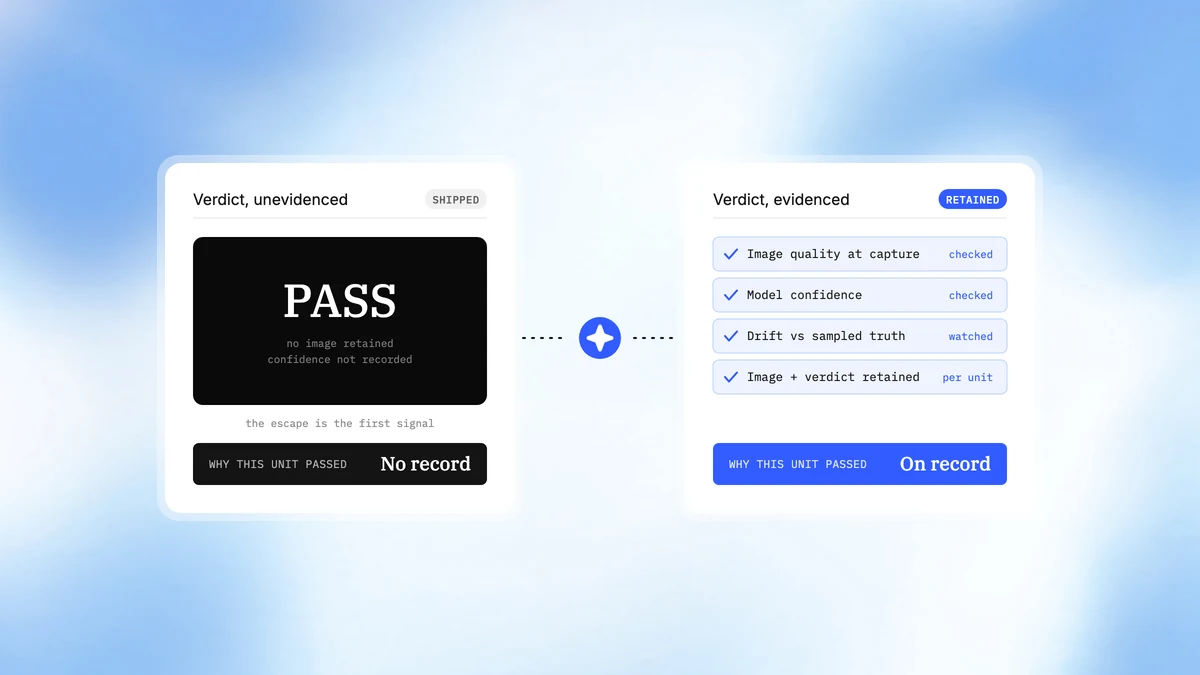
- The full negotiation is retained. Every offer, counter and concession is logged in sequence.
- Supplier-side claims are checked. Quoted references and prior terms are verified against the buyer's own records before they move a price.
Where the Mandate Actually Lives
An instruction inside a prompt is a request. A boundary the model cannot reach is a control. The distance between those two is the whole engagement.
Above the agent, your authority matrix
Spend limits by category, supplier risk tiers, payment-term and rebate boundaries, indexation rules, and who has to be pulled in past each threshold. Written once in procurement's own language, versioned, and owned by the person accountable for it.
Beneath the agent, the checkpoint
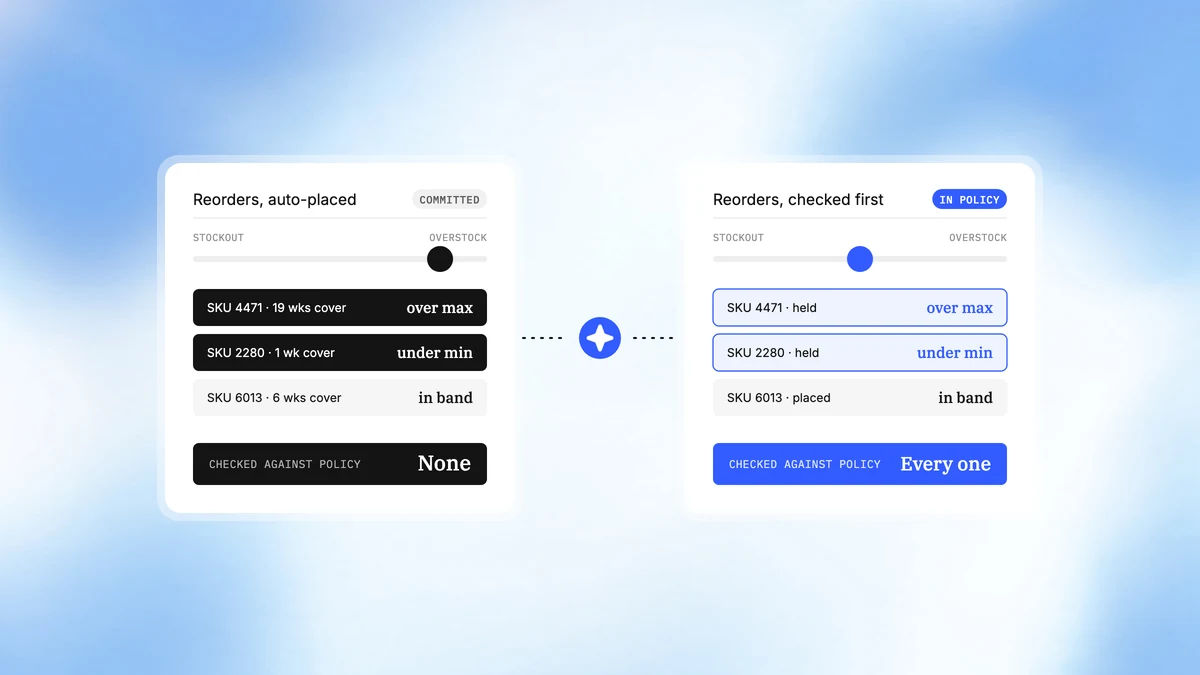
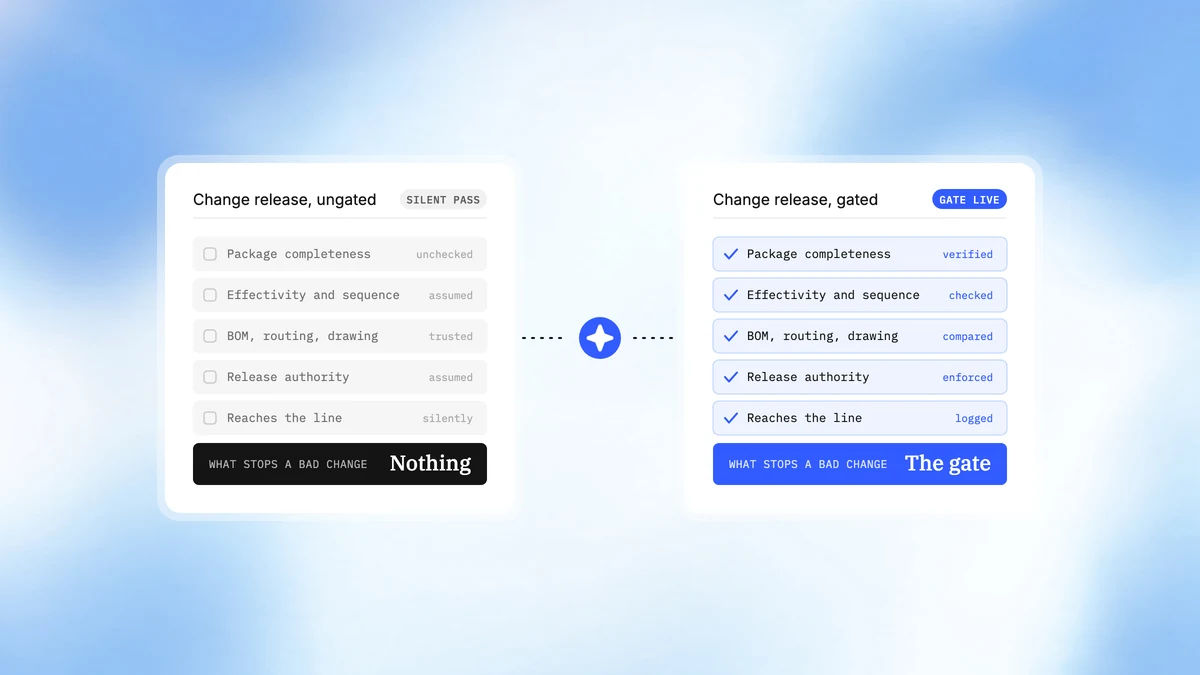
Every proposed term clears that matrix and a check against the buyer's own contracts and demand plan before signature. The agent negotiates freely inside the band and has no path to agree anything outside it.
Outside both, the record
The exchange is captured as it happens rather than reassembled later from a mailbox, and it is stored where the negotiating tool cannot edit it.
The Cases That Decide Whether You Can Run This
- The supplier quotes a reference you cannot see. A claimed prior price or a competitor's term moves a number only after it is checked against the buyer's own contract history. An unverifiable claim is grounds to escalate, not to concede.
- The deal is inside the mandate and still wrong. A price can clear every limit and clash with a frame agreement already held or a volume nobody needs. The pre-signature check compares the deal to open contracts and the demand plan, not only to the limits.
- The mandate has to change mid-negotiation. It changes above the agent, by the person who owns the authority, and the change is versioned. The agent is never the route by which its own boundary moves.
- The agent stops and nobody answers. An out-of-band term waits. It does not expire into acceptance. Silence closes no deal, which is the one default worth being explicit about.
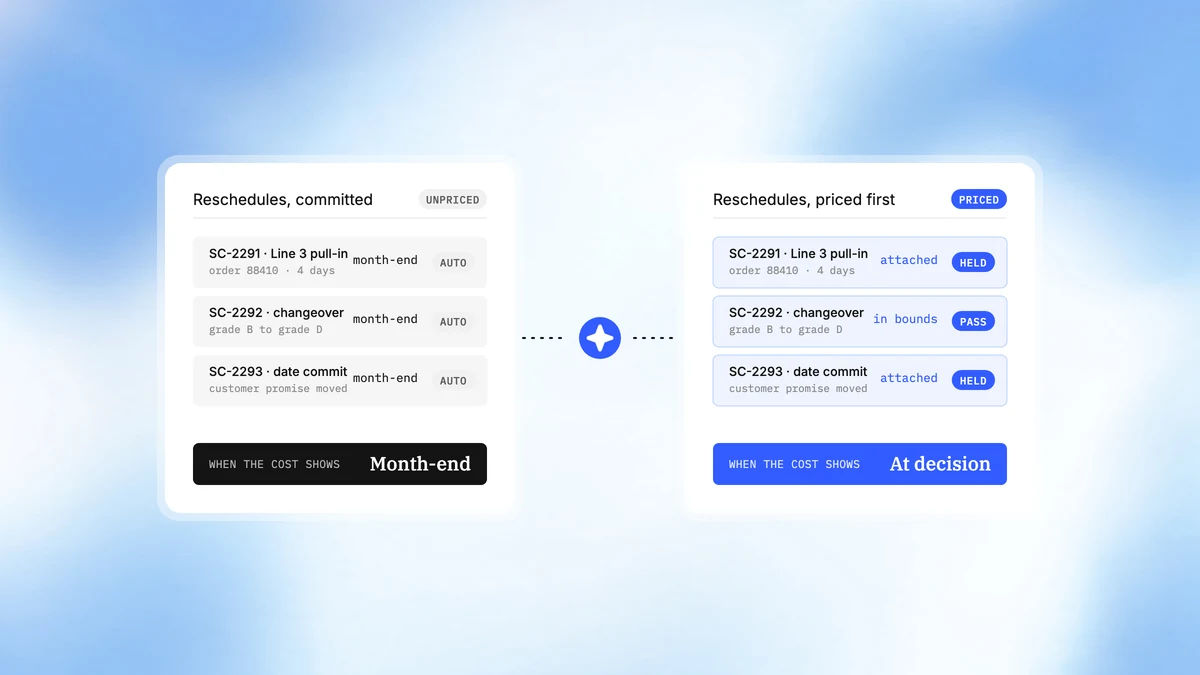
- The saving is claimed rather than measured. Outcomes are recomputed against the category's prior terms and actual invoices. CreateOS builds no negotiation agent and takes no share of the gain, which is why the figure is worth carrying upstairs.
The vendor whose agent signs the deal is not a neutral judge of the deal.
Independence is not a posture here. It is the reason the savings figure and the audit record mean anything.
Outcome Derived
This is a 60 to 90 day pilot on a single line, cell, category or product family. The figures below are what the pilot measures against a baseline captured in its first two weeks. They are targets and instrumentation, not results already delivered.
- Terms outside mandate, blocked at source. Structurally prevented rather than detected afterwards, and each block logged with its rule.
- Savings measured against your own baseline. Pilot compares agent-negotiated outcomes to the category's prior terms, not to a vendor benchmark.
- A complete exchange record per deal. Designed to answer, months later, why a given concession was made.
Highlights
- The delegation of authority stops being a document. Spend limits, category scope, term boundaries and escalation rules become the boundary an agent has to clear before terms can be agreed.
- Enforcement sits beneath the agent, in a layer it cannot rewrite, so an out-of-mandate term is structurally prevented rather than found in a contract review.
- Supplier vetting runs before the agent opens a negotiation, not after it closes one.
- Every offer, counter and concession is retained in sequence, so a disputed term is a lookup rather than a reconstruction.
- Claimed savings are recomputed against the category's own prior terms and actual invoices, not accepted from the vendor whose agent did the deal.
Frequently asked questions
What is an AI agent for procurement actually allowed to commit?
Whatever sits inside the mandate, and nothing else. Spend limits by category, approved suppliers and their risk tiers, payment-term and rebate boundaries, and escalation rules become live limits the agent has to clear before terms can be agreed. Anything outside them stops for a named person with the deviation shown.
Do we replace the negotiation agent we already run?
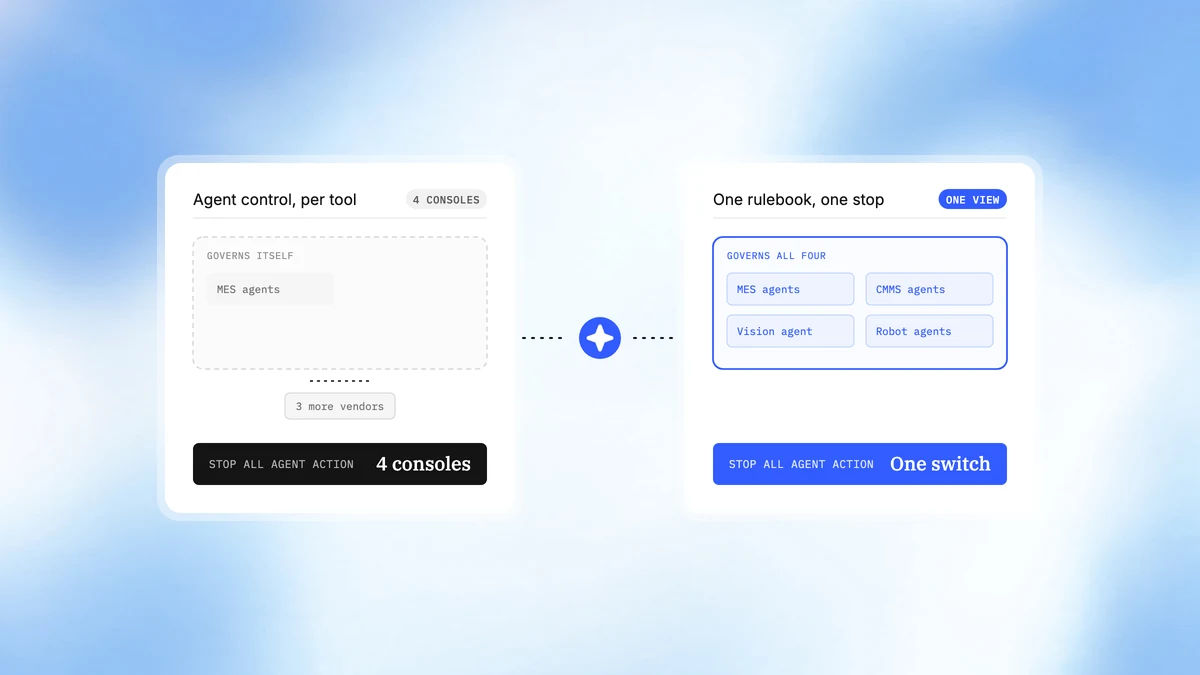
No. CreateOS builds no negotiation agent. It sits beneath whichever one you run, yours or a vendor's, and governs what that agent may commit in your name. You keep the tool and the buyers. What changes is that a binding term now clears your own authority matrix first.
How is this different from the controls inside the negotiation vendor's software?
Those controls are set and graded by the party doing the deal. Here the limits live outside the negotiating tool, in a layer it cannot rewrite, and the record is kept where it cannot be edited. CreateOS takes no share of the savings, so it has no reason to read a term generously.
What happens to the negotiation record?
Every offer, counter, concession and close is kept in sequence. Months later, when a supplier disputes a term or an auditor asks how a rebate was agreed, the answer is opening one record rather than reassembling a mailbox and hoping the thread is complete.
What does the pilot measure?
One spend category over 60 to 90 days. Weeks one and two capture current terms and cycle times. Weeks three to six run watch-only, with every would-be signature checked and logged and nothing blocked. Enforcement follows, and the readout compares agent-negotiated outcomes to that category's own prior terms.